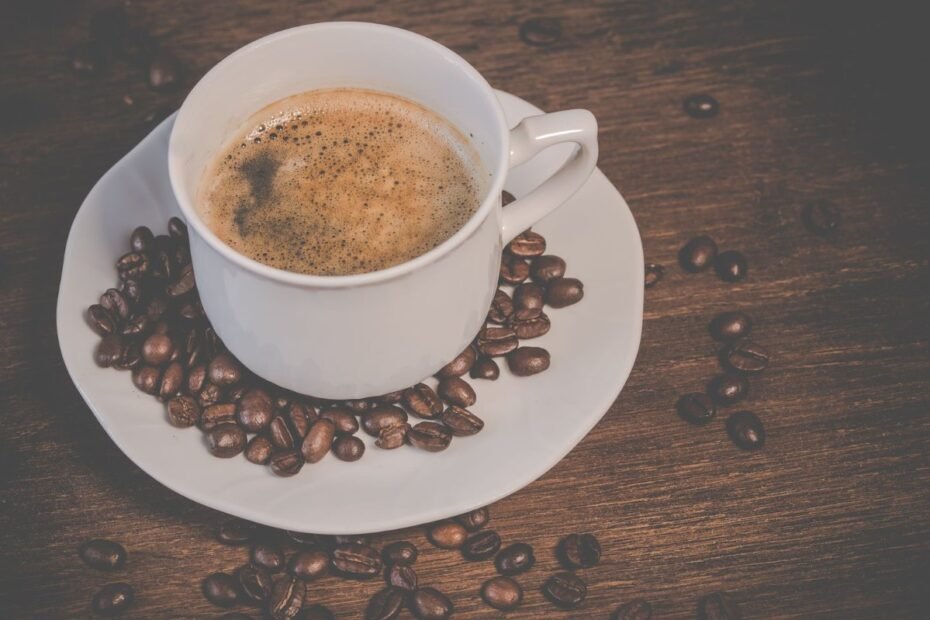
Decaf coffee goes through an extra step before the beans are roasted: most of the caffeine is removed from the green coffee beans. But how does that happen, and does removing caffeine change the flavor? This guide explains the main decaffeination methods, what happens to the beans during the process, and why decaf can taste different from one coffee to another.
What Is Decaf Coffee?
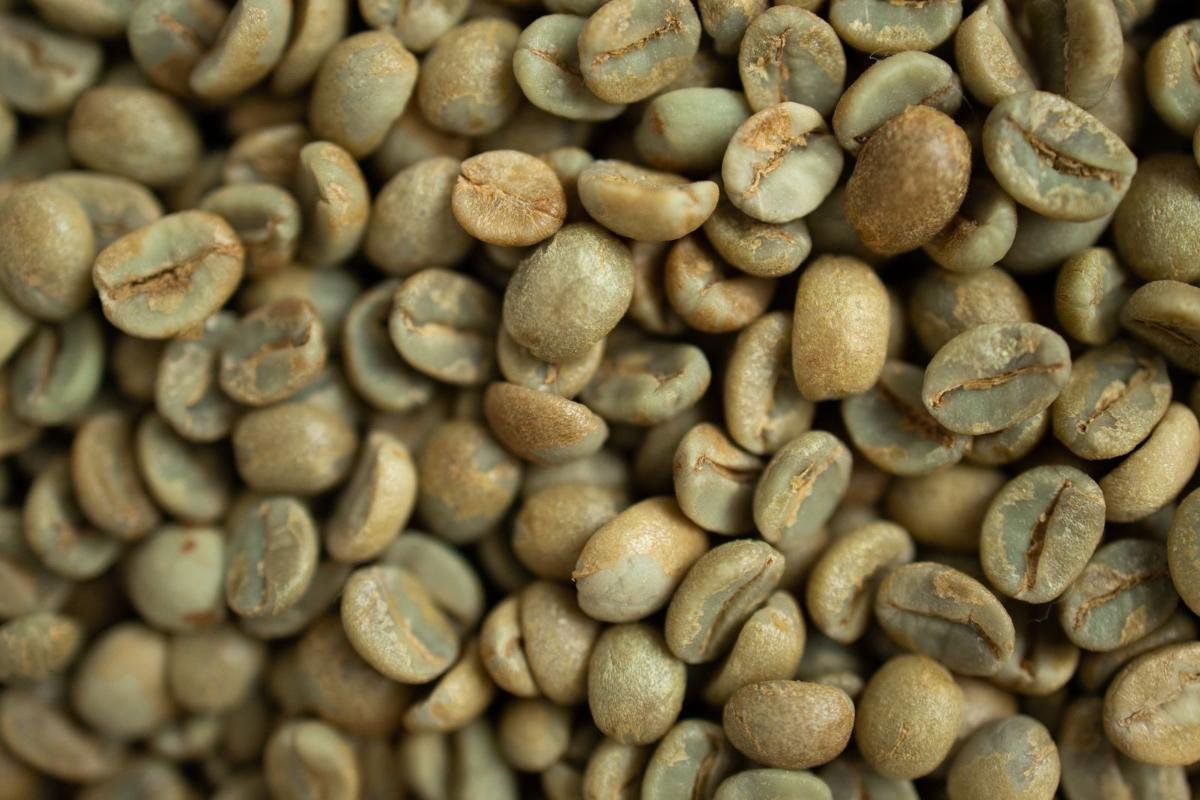
Decaf is coffee that has had most of its caffeine removed before the beans are roasted. The process generally starts with green coffee beans, meaning beans that have not yet been roasted. The beans are treated so that caffeine can be extracted, then they are dried again before being shipped for roasting. It is important to understand that decaf does not mean completely caffeine-free, because small amounts of caffeine can remain in the finished coffee.
How Much Caffeine Remains?
According to the U.S. Food and Drug Administration, decaf coffee typically has 2 to 15 mg of caffeine in an 8-fluid-ounce (about 240 ml) cup (FDA consumer update). For comparison, a regular cup usually has many times that amount. The exact figure depends on the coffee, serving size, brewing method, and decaffeination process. For that reason, it is more accurate to think of decaf as reduced-caffeine coffee rather than coffee containing absolutely no caffeine. The amount remaining in a cup can also vary considerably, so two decaf coffees prepared in different ways may not contain exactly the same amount.
When Does Decaffeination Happen?
Decaffeination normally happens while the beans are still green. The general sequence looks like this:
- Green coffee beans are prepared for processing.
- The beans are exposed to a substance or medium that helps remove caffeine.
- Caffeine is separated from the beans.
- The beans are dried back to an appropriate moisture level.
- The beans are roasted like other coffee.
- The roasted coffee is ground and brewed.
The details vary depending on the method used. If you’d like more background on how beans are handled before roasting, see how coffee is processed and how coffee roasting works.
How Is Caffeine Removed From Coffee?
There is no single decaffeination process. Different producers can use different approaches to separate caffeine from green coffee beans. Three broad categories you may encounter are solvent-based processes, water-based processes, and carbon dioxide processes. These are different technical approaches to the same basic goal: removing most of the caffeine while retaining as much of the coffee’s desirable characteristics as possible.
Solvent-Based Decaffeination
Solvent-based processes use a chemical solvent to help separate caffeine from the green coffee beans. There are different ways these processes can be carried out, but they generally involve allowing the solvent to interact with the beans or with a coffee extract so that caffeine can be separated. The solvent and process conditions are controlled during production, and the beans go through additional processing before they are dried and roasted. The two solvents most commonly used are methylene chloride (also called dichloromethane) and ethyl acetate (overview of decaffeination methods). In the United States, methylene chloride residues in decaffeinated roasted coffee are limited to 10 parts per million (21 CFR 173.255). Knowing which solvent was used does not by itself tell you whether the finished coffee will taste better or worse.
Water-Based Decaffeination
Water-based processes use water to help remove caffeine from green coffee. The best-known commercial version is the Swiss Water Process, in which a caffeine-free green coffee extract draws caffeine out of the beans, and carbon filters then trap that caffeine so the extract can be reused (Swiss Water: our process). The basic idea is more complicated than simply soaking beans in water. Coffee contains many water-soluble compounds, so the process needs to separate caffeine while retaining as much of the desirable coffee material as possible. A simplified version looks like this:
- Green coffee is exposed to water.
- Soluble coffee compounds move into the water.
- The caffeine is separated from the coffee material.
- The remaining coffee compounds can be used as part of the extraction process.
- The beans are dried before roasting.
Different water-based processes can use different techniques and filtration steps.
Carbon Dioxide Decaffeination
Another approach uses carbon dioxide (CO₂) under controlled conditions. Moistened green beans are placed in a high-pressure vessel with CO₂ that has been pushed past its critical point (roughly 300 atmospheres). In that supercritical state, CO₂ dissolves caffeine while leaving most flavor compounds in the beans; the caffeine is then washed out of the CO₂, which is recirculated. This method is technically different from both solvent-based and water-based processing. The equipment and conditions required are more specialized, so it is generally used in controlled industrial processing rather than something that can be reproduced in a home kitchen.
Are the Methods Completely Different in Flavor?
They can contribute to differences, but it would be misleading to assume that the decaffeination method alone determines the flavor of the finished coffee. The original green coffee, processing, roast, storage, grinding, and brewing all matter too. A well-made decaf using one method may taste more enjoyable to a particular person than another decaf using a different method simply because the underlying coffees are different.
Does Decaf Coffee Taste Different?
It can, but there is no universal “decaf flavor.” Some people notice a difference between regular and decaf coffee, while others find certain decaf coffees surprisingly similar to their usual coffee. Taste depends on several factors, including:
- The original coffee
- Coffee variety
- Growing conditions
- Processing method
- Decaffeination process
- Roast level
- Freshness
- Grind size
- Brewing method
- Coffee-to-water ratio
This is why comparing two coffees simply because one is decaf and one is regular can be misleading. If the coffees come from different origins, have different roast levels, and are brewed differently, there are many possible reasons for the difference in the cup.
Why Can Decaf Taste Different?
Decaffeination adds another processing stage to green coffee. Because coffee contains hundreds of compounds that contribute to aroma and flavor, processing can influence the characteristics that eventually appear in the roasted bean. The result can sometimes be perceived as:
- Less aromatic
- Slightly different in body
- Less bright
- More rounded
- Different in sweetness
- Different in acidity
These are tendencies that may appear in some coffees, not rules that apply to every decaf. Some modern decaf coffees can have a remarkably full and expressive flavor profile.
Roast Level Matters Too
Roasting has a major influence on how coffee tastes. A lighter roast may highlight acidity and delicate flavors, while a darker roast can emphasize deeper roasted characteristics. These differences exist in both regular and decaf coffee. If a decaf tastes noticeably different from a regular coffee, check the roast level before blaming the decaffeination process, because a light-roasted decaf compared with a dark-roasted regular coffee is not a particularly useful comparison.
Comparing the Main Decaffeination Approaches
The table below gives a simplified overview. Actual commercial processes can be more complicated than these descriptions suggest.
| Approach | General idea | Main point |
|---|---|---|
| Solvent-based | Uses a solvent to separate caffeine | Can be carried out through different industrial processes |
| Water-based | Uses water and separation techniques | Relies on water to extract and separate caffeine |
| Carbon dioxide | Uses CO₂ under controlled conditions | Uses pressure and temperature to help separate caffeine |
In every case, most of the caffeine is removed but small amounts remain. None of these categories should automatically be treated as a guarantee of better flavor, since the final cup depends on much more than the name of the decaffeination process.
How to Choose a Decaf That You Actually Enjoy
If you are trying decaf for the first time, focus on the coffee itself rather than assuming the word “decaf” tells you what it will taste like.
Look at the Roast Level
If you normally enjoy a particular roast style, starting with a similar roast can make the comparison easier. For example, if you enjoy lighter coffees, choosing a decaf with a similar roast profile gives you a better idea of how that style translates into a decaffeinated coffee. Our guide to reading a coffee bag label explains how to spot roast level and other details.
Pay Attention to Tasting Notes
Coffee tasting notes are descriptions of flavors and aromas that may be perceived in the coffee. You might see descriptions such as:
- Chocolate
- Caramel
- Nuts
- Citrus
- Berries
- Dried fruit
- Floral notes
- Spices
These are not ingredients added to the coffee. They are descriptions used to communicate the character of the roasted beans.
Consider the Brewing Method
The same decaf can taste quite different depending on how it is prepared. For example:
- Pour-over: can highlight acidity and clarity. See the V60 pour-over guide.
- French press: can produce a fuller, heavier cup. See the French press beginner’s guide.
- Drip coffee: offers a straightforward everyday preparation.
- Espresso: concentrates the coffee and changes how its flavors are perceived. See espresso at home.
If a decaf tastes disappointing with one method, it does not necessarily mean the coffee itself is unsuitable.
Buy an Amount You Can Use While It Is Fresh
Freshness affects both regular and decaf coffee. Rather than buying a large amount and storing it for a long time, it can be useful to choose an amount that fits your normal brewing routine. Store the beans in a dry, reasonably cool place away from direct light and excessive air exposure, as covered in how to store coffee beans.
How to Compare Decaf and Regular Coffee Fairly
If you genuinely want to know whether you can taste a difference, make the comparison as controlled as possible. Try to use similar roast levels, brewing methods, coffee-to-water ratios, grind sizes, water temperatures, and freshness, then taste the coffees side by side.
Change Only One Major Factor
If possible, compare coffees that are otherwise reasonably similar. For example, changing the coffee from regular to decaf while keeping the brewing method the same tells you more than changing the coffee, grinder, recipe, and brewing method simultaneously. Even then, remember that the coffees are not identical. The comparison is about your perception, not a scientific test of whether one process is universally better.
Taste Before Adding Milk or Sugar
If you want to notice differences between two coffees, tasting them black makes the comparison simpler. Milk, sugar, syrups, and other additions can change the flavor considerably. Of course, if you normally drink coffee with milk or sugar, tasting it that way is also a perfectly reasonable way to decide which coffee you enjoy.
Common Misconceptions About Decaf
“Decaf contains zero caffeine.”
Not necessarily. Decaffeination removes most of the caffeine, but small amounts can remain in the beans and therefore in the brewed coffee.
“All decaf tastes weak.”
There is no reason to assume that. Decaf coffee can have different levels of body, acidity, sweetness, and aroma, just like regular coffee. The particular coffee and how it was roasted and brewed have a major influence.
“The decaffeination method tells you the quality.”
Not by itself. The original green coffee, processing, roasting, storage, grinding, and brewing all contribute to the final cup.
“Decaf is always darker roasted.”
It does not have to be. Decaf coffee can be produced across different roast styles, and roast level is a separate characteristic from whether or not the coffee has been decaffeinated.
FAQ: Decaf Coffee Questions
Is decaf coffee completely caffeine-free?
No. Decaffeination removes most of the caffeine, but small amounts can remain in the finished coffee.
Does decaf taste worse than regular coffee?
Not necessarily. Taste differences depend on the original coffee, roast, decaffeination process, freshness, and brewing method, and whether someone prefers one cup is ultimately a matter of taste.
Which decaf method is the best?
There is no single method that can be called the best based only on the process. Solvent-based, water-based, and carbon dioxide approaches work differently, while the quality and character of the underlying coffee also matter.
Can I use decaf coffee in an espresso machine?
Yes. Decaf coffee can be prepared using espresso equipment just like other coffee. The recipe may need small adjustments depending on the particular beans and how they respond during extraction.
Can I use decaf in a French press or pour-over?
Yes. Decaf works with both methods, as well as drip brewing and other common preparation styles. Grind size and brewing time may need adjustment depending on the coffee.
Why does one decaf taste much better than another?
Different decaf coffees start with different green coffees and can have different roast levels, processing, freshness, and brewing requirements. The decaffeination method is only one part of the picture.
Final Thoughts
Decaf coffee is still coffee, but it goes through an additional processing stage to remove most of its caffeine. Solvent-based, water-based, and carbon dioxide methods take different approaches, and none of them automatically determines whether a coffee will taste better. If a decaf tastes different from your usual coffee, look at the whole picture, especially the original beans, roast, freshness, and brewing method, before deciding whether the difference is something you enjoy.
Related reading: How Much Caffeine Is in Your Coffee?
