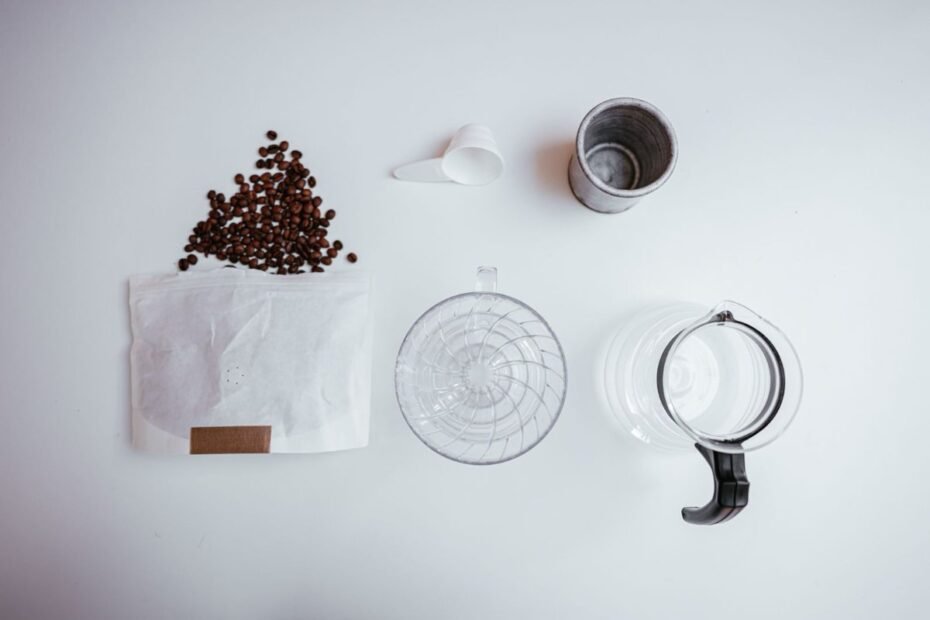
Making coffee with a V60 pour-over can look more complicated than it really is. You have a cone-shaped brewer, a paper filter, freshly ground coffee, and a kettle — then comes the pouring. But once you understand what each step is doing, the process becomes simple and enjoyable.
This guide walks through a practical V60 method for beginners, including the coffee-to-water ratio, grind size, pouring technique, brewing time, and the small adjustments that can make a noticeable difference in the cup.
What You Need to Make V60 Coffee
The V60 is a manual pour-over brewer designed to let water flow through a bed of ground coffee and a paper filter. The brewer’s cone shape and spiral ridges encourage a particular flow pattern, so the way you pour can affect the final result. Still, you don’t need expensive equipment to get started.
Basic equipment
You’ll need:
- A V60 brewer
- V60 paper filters
- Coffee beans
- A coffee grinder
- A kettle
- A scale
- A mug or server
- Fresh, clean water
A gooseneck kettle can make pouring easier because it gives you better control over the speed and direction of the water, though it isn’t essential while you’re learning. A scale is also one of the most useful pieces of equipment, since it lets you repeat a recipe instead of guessing how much coffee and water you’re using.
A simple starting recipe
For a beginner-friendly cup, try:
- 20 g of coffee
- 300 g of water
- Water temperature around 92–96°C (198–205°F)
- Medium-fine grind
- Total brew time of roughly 2½–3½ minutes
These numbers are a starting point, not strict rules. Different coffees, grinders, filters, and personal preferences can all change what works best.
How to Make Coffee with a V60
Once everything is ready, the brewing process is mostly about controlling the water flow and keeping the coffee bed evenly saturated.
1. Heat the water
Start by heating your water. If your kettle doesn’t show the temperature, bring the water to a boil and let it sit briefly before brewing, since the exact temperature isn’t something you need to obsess over when you’re starting. In general, hotter water can extract coffee more quickly, while cooler water can slow extraction.
2. Prepare the paper filter
Place the paper filter inside the V60 and rinse it thoroughly with hot water. Doing so does two things:
- It helps reduce the paper taste.
- It warms the brewer and your mug or server.
Just make sure to discard the rinse water before adding your coffee.
3. Grind your coffee
Grind the coffee shortly before brewing if possible. For V60, start with a medium-fine grind. The grounds should be finer than what you’d use for a French press but generally not as fine as espresso. The right grind depends heavily on your grinder, so use the brewing time and taste as your guide.
4. Add the coffee
Place the V60 on your mug or server and add 20 g of ground coffee. Give the brewer a gentle shake if necessary to create a relatively flat coffee bed, since a level bed makes it easier for the water to contact the grounds evenly.
5. Start the bloom
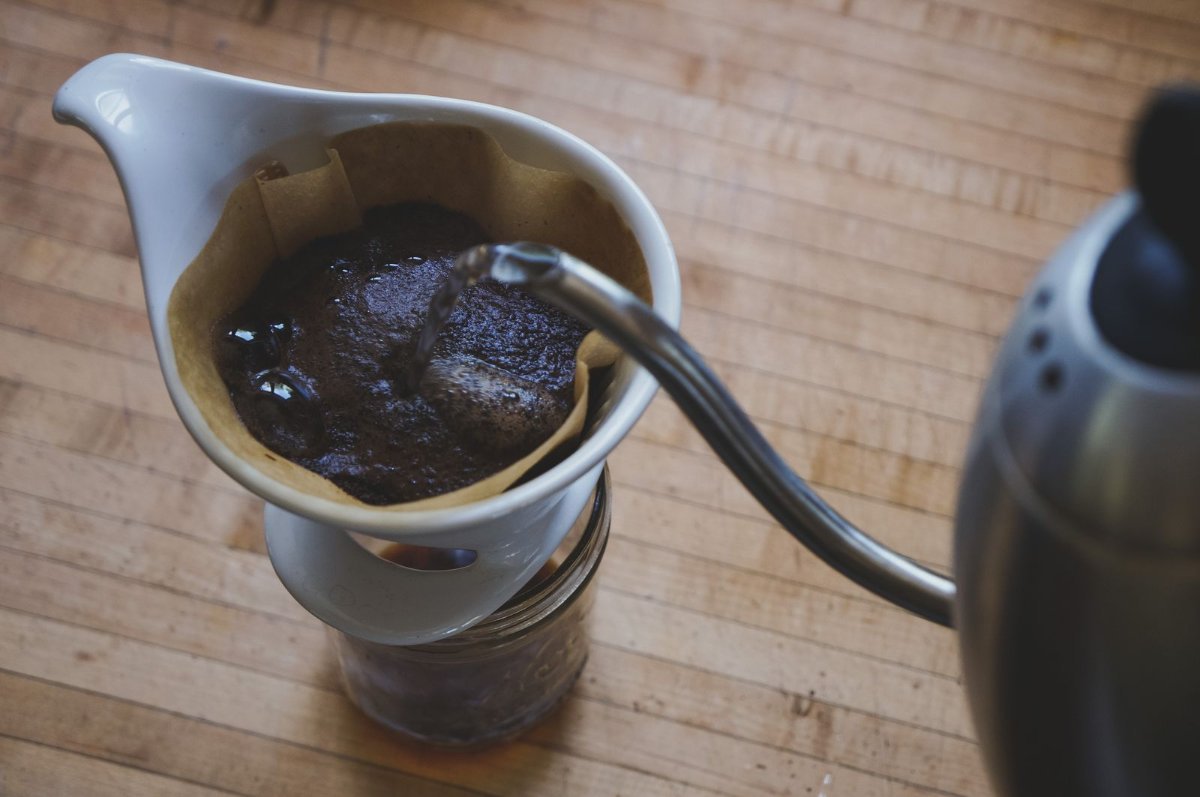
Start your timer and slowly pour approximately 40–60 g of water over the coffee, trying to wet all of the grounds. Then wait around 30–45 seconds.
That first pour is called the bloom. Fresh coffee releases carbon dioxide when it comes into contact with hot water, and allowing the coffee to bloom gives the grounds time to release some of that gas before the main extraction continues.
6. Continue pouring slowly
After the bloom, begin adding the remaining water. Pour slowly and steadily, using gentle circular movements, and try to keep the water mostly over the coffee bed rather than pouring aggressively around the edges. For the 20 g coffee and 300 g water recipe, you can work toward the final 300 g gradually rather than dumping all the water in at once. The goal is consistency.
7. Let the coffee drain
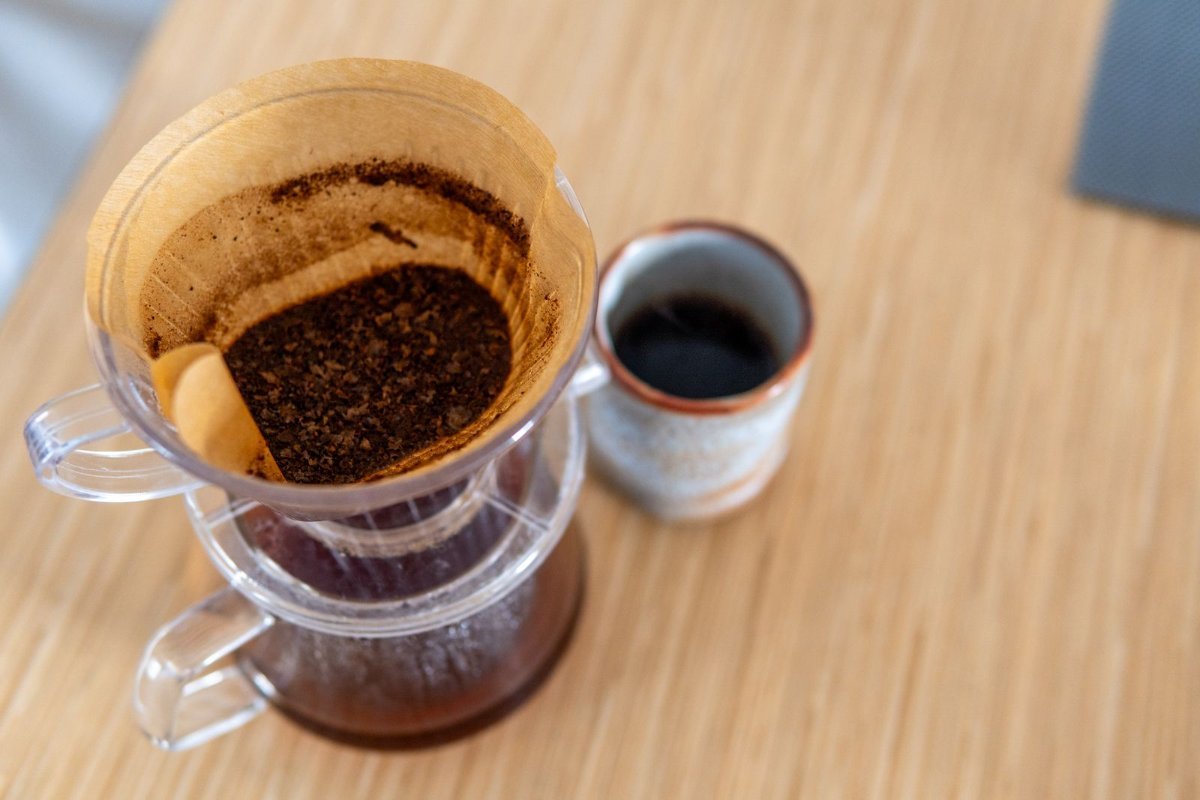
Once you’ve added all the water, allow the coffee to finish draining through the filter. A total brew time somewhere around 2½–3½ minutes can be a useful starting point, but don’t automatically assume that a longer or shorter brew is better. Taste the coffee first and use the result to decide what to change.
How to Adjust Your V60 Recipe
One of the most useful things about V60 brewing is how easy it is to adjust. If your coffee tastes too sour, bitter, weak, or dry, changing the grind size is usually one of the first things worth trying.
If the coffee tastes sour or bitter
On a V60, grind size is the main lever because it controls how fast the water drains. Use the total brew time as your clue. If the cup tastes sour or thin and the brew finished well before 2½ minutes, grind a little finer. If it tastes bitter or dry and the brew dragged past about 3½ minutes, grind a little coarser. Pouring very slowly or very aggressively also changes the drawdown, so keep your pouring consistent while you adjust. For a full checklist of causes, see bitter vs. sour coffee.
If the coffee tastes weak
A weak cup isn’t necessarily caused by the coffee itself. Check:
- How much coffee you’re using
- How much water you’re using
- Your grind size
- Whether the water is actually reaching all of the grounds
Beyond those checks, you can also try using a slightly higher coffee-to-water ratio.
How Much Coffee and Water Should You Use?
There isn’t one universal V60 recipe, but a useful starting point is around 1 gram of coffee for every 15 grams of water. That gives you recipes such as:
| Coffee | Water |
|---|---|
| 15 g | 225 g |
| 20 g | 300 g |
| 25 g | 375 g |
| 30 g | 450 g |
These are simply proportional starting points. If you prefer a stronger or lighter cup, adjust the ratio to suit your taste.
Why the ratio matters
Using significantly more water with the same amount of coffee generally produces a lighter cup, while using more coffee relative to the water generally produces a stronger cup. The important part is being consistent enough to notice what changes when you adjust the recipe.
Common V60 Mistakes Beginners Make
V60 brewing doesn’t require perfection, but a few habits can make the process unnecessarily difficult.
Pouring too aggressively
Pouring very quickly can disturb the coffee bed and make the brewing process harder to control, so a calm, controlled pour is usually easier when you’re learning.
Changing several variables at once
If you change the grind, water temperature, ratio, and pouring technique simultaneously, you won’t know which change affected the coffee. Instead, change one variable and taste the result.
Obsessing over the exact brew time
Brew time is useful information, but it isn’t the only thing that matters. Two coffees can finish at different times and still taste good, so use time as a reference rather than a target that must be hit perfectly.
Using stale coffee
Coffee loses freshness over time, especially after grinding. As a better starting point, keep your beans stored in an airtight container away from excessive heat, light, and moisture. For more detail, see our guide on how to store coffee beans to keep them fresh longer. Grinding shortly before brewing can also help preserve aroma.
FAQ
Is V60 coffee difficult to make?
Not really. The technique takes a little practice, but the basic process is straightforward: rinse the filter, add coffee, bloom, pour gradually, and let it drain.
What grind size should I use for V60?
Start with a medium-fine grind. If the coffee tastes too sour and under-extracted, try going slightly finer. If it tastes bitter or overly dry, try going slightly coarser.
Do I need a gooseneck kettle for V60?
No. A gooseneck kettle makes controlled pouring easier, but you can learn the basic technique with a regular kettle. More control simply gives you more consistency.
How hot should the water be?
Around 92–96°C (198–205°F) is a useful starting range. The best temperature can vary depending on the coffee and your brewing preferences.
Why does my V60 coffee taste bitter?
Bitterness can have several causes, including grinding too fine, extracting for too long, or using water that’s too hot. Try making a small adjustment rather than completely changing the recipe.
How long should a V60 take?
For a recipe using around 20 g of coffee and 300 g of water, roughly 2½–3½ minutes can be a reasonable starting point. Don’t worry if your coffee falls outside that range if it tastes good.
Final Thoughts
V60 brewing is less about finding one perfect recipe and more about learning how coffee responds to small changes. Start with a simple ratio, a medium-fine grind, controlled pours, and a consistent process. Once you’re comfortable with those basics, you can experiment with different coffees, grind sizes, temperatures, and pouring patterns to find the cup you enjoy most.
