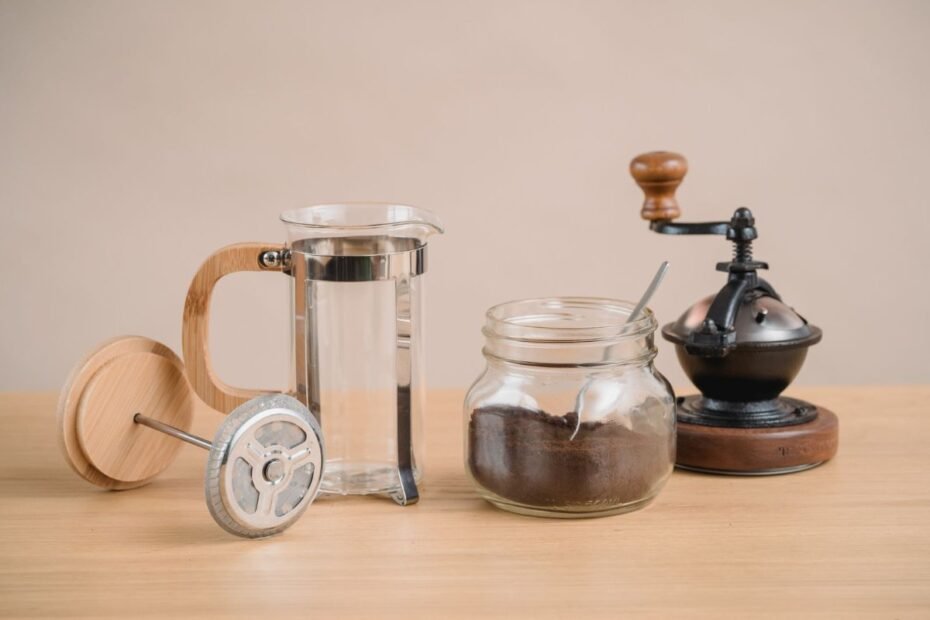
French press coffee is one of the simplest ways to make a rich, full-bodied cup at home. You don’t need an espresso machine, complicated equipment, or a long list of techniques. With good coffee, hot water, and a few minutes, you can make a satisfying brew with very little fuss.
In this beginner’s guide, we’ll cover what a French press is, how to choose coffee and grind size, the basic brewing method, common mistakes, and a few easy ways to adjust the recipe to your taste.
What Is French Press Coffee?
A French press is a simple brewing device that uses immersion brewing. Instead of water passing quickly through coffee grounds, the coffee grounds sit directly in hot water for several minutes before being separated with a metal filter. This style produces a cup that usually feels heavier and more textured than coffee made with a paper filter.
What you need
To make French press coffee, you only need a few things:
- A French press
- Fresh coffee beans or ground coffee
- Hot water
- A spoon for stirring
- A timer
- A grinder, if you’re using whole beans
- A kitchen scale, if you want more consistent results
A scale isn’t essential when you’re starting. However, it can make it much easier to repeat a recipe once you find a combination you like.
Why does French press coffee taste different?
The metal filter allows more of the coffee’s natural oils and very fine particles to remain in the finished drink, and that’s one reason French press coffee can feel:
- Rich
- Full-bodied
- Smooth
- More textured than paper-filtered coffee
If you prefer a very clean and light cup, a paper-filter brewing method like V60 may suit you better. If you like a heavier mouthfeel, French press is worth trying.
How to Make French Press Coffee
The basic method is straightforward. The most important things to pay attention to are the coffee-to-water ratio, grind size, water temperature, and brewing time.
A simple starting recipe
For one generous serving, try:
- 20 grams of coffee
- 300 grams of water (a 1:15 ratio)
- Coarse-ground coffee
- About 4 minutes of brewing time
This is a starting point rather than a strict rule. You can adjust the recipe once you know how the coffee tastes to you.
Step 1: Heat the water
Heat your water until it’s very hot but not aggressively boiling. If you don’t have a thermometer, simply bring the water to a boil and let it sit for a short moment before pouring. Very hot water helps extract the coffee, but extremely high temperatures can make an already bitter coffee taste harsher.
Step 2: Grind the coffee
If you’re using whole beans, grind them shortly before brewing, and for French press, use a coarse grind. The particles should look noticeably larger than the grind you would use for espresso. A grind that’s too fine can make the coffee difficult to press and may leave a muddier cup with more sediment.
Step 3: Add the coffee and water
Place the ground coffee in the empty French press, then slowly pour the hot water over all of the grounds, making sure they become evenly wet. Give the mixture a gentle stir with a spoon. The goal isn’t to aggressively mix everything; you simply want to make sure there aren’t dry pockets of coffee floating on top.
Step 4: Let the coffee brew
Put the lid on the French press with the plunger pulled all the way up, and let the coffee steep for around four minutes.
If you prefer a stronger cup, you can experiment with a slightly longer brew. However, simply increasing the brewing time isn’t always the best way to make coffee stronger. Adjusting the coffee-to-water ratio can also make a noticeable difference.
Step 5: Press slowly
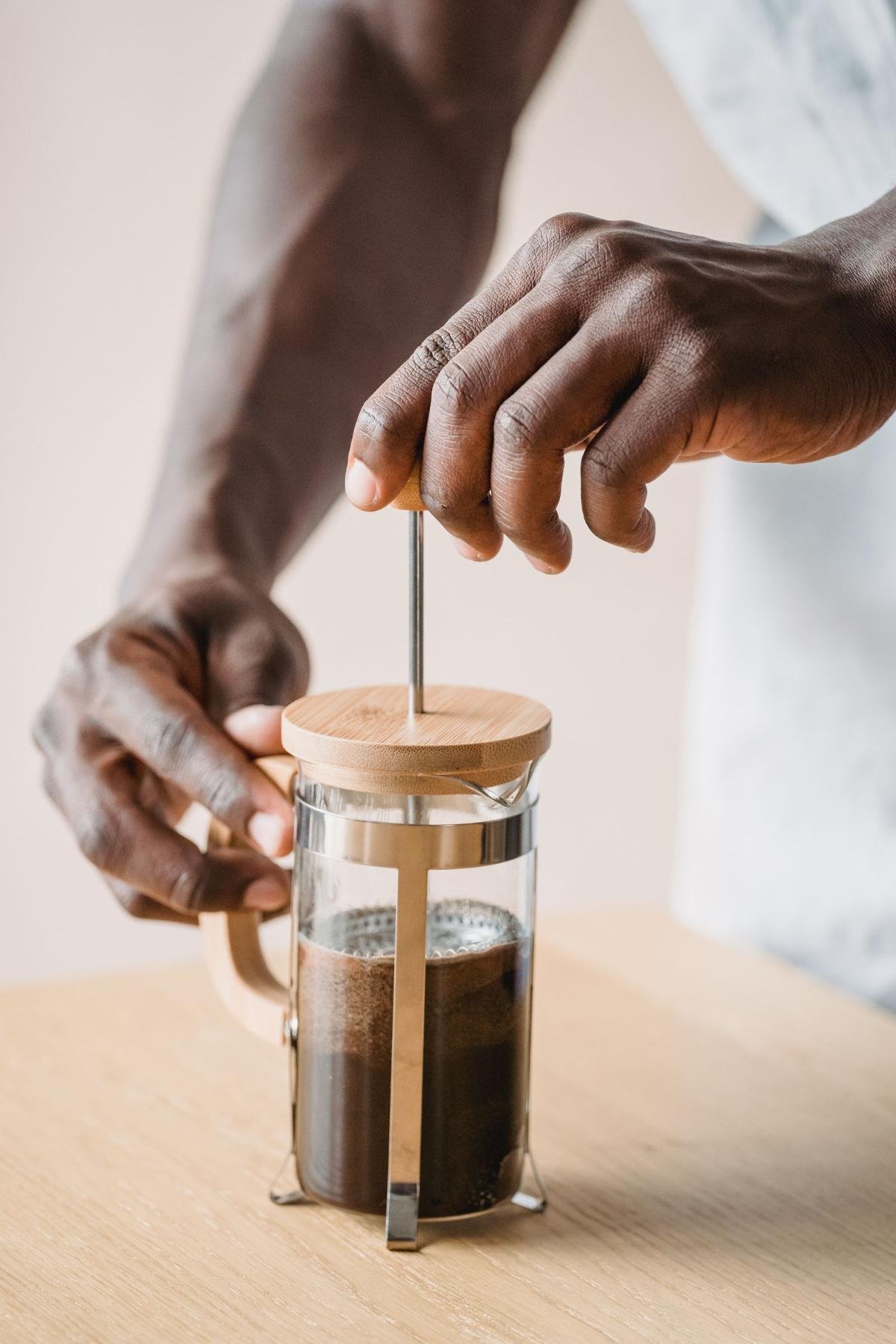
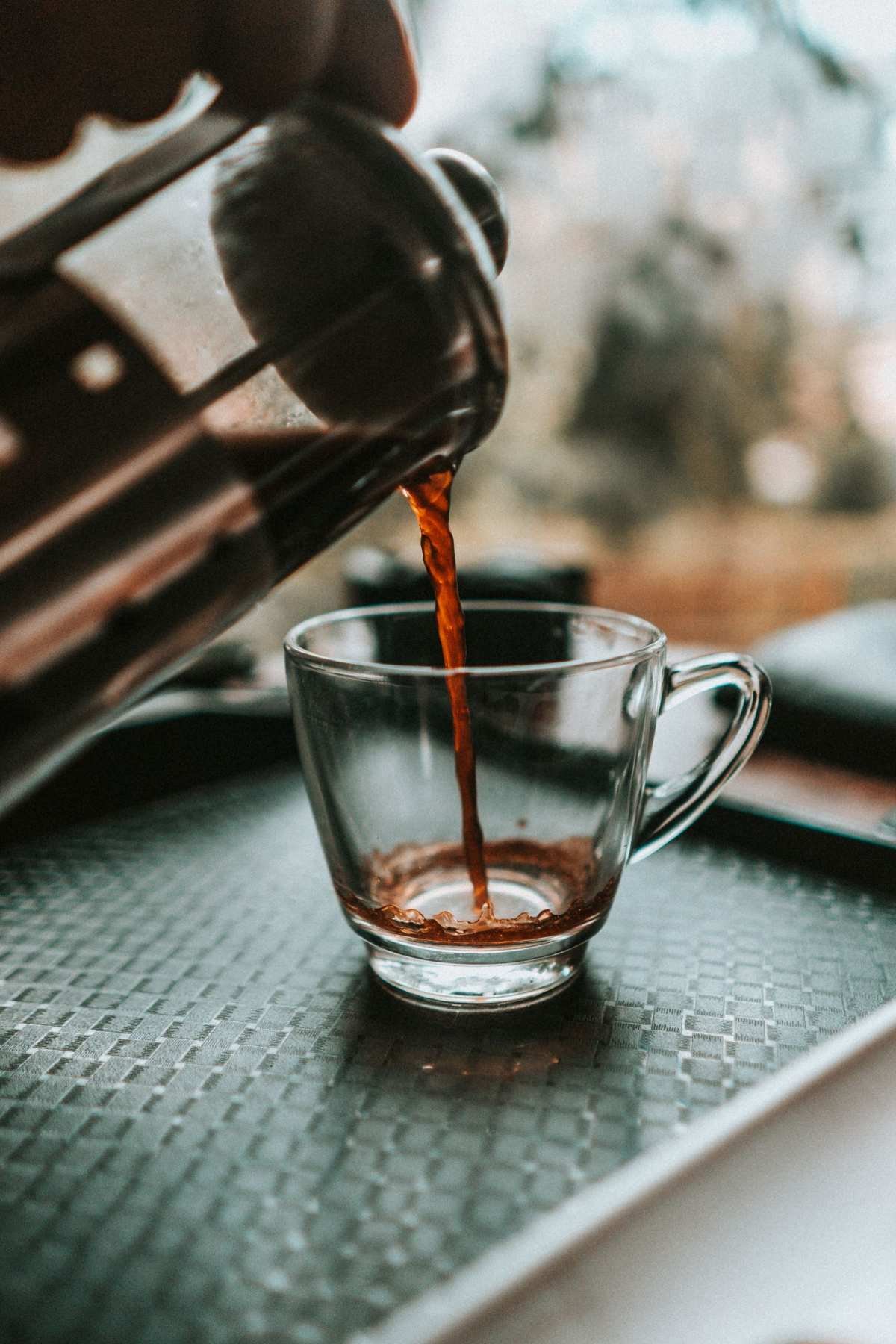
When the brewing time is finished, press the plunger down slowly and steadily, and don’t force it. If the plunger feels unusually difficult to push, the coffee may have been ground too finely. Once it reaches the bottom, pour the coffee into your cup rather than leaving it sitting in the French press.
Step 6: Taste and adjust
Your first French press doesn’t need to be perfect, so take a sip and think about what you notice. If the coffee tastes:
- Too bitter: Try a slightly coarser grind, shorter brewing time, or lower water temperature.
- Too weak: Try using more coffee or slightly extending the brewing time.
- Too sour or sharp: A little more extraction may help, such as a slightly longer brew.
- Too muddy: Check your grind size and avoid pressing too aggressively.
Change only one thing at a time when possible. That makes it much easier to understand what actually improved the cup.
Choosing Coffee and Grind Size for a French Press
The French press is flexible enough to work with many different coffees, so you don’t need to buy a special “French press coffee.”
Whole beans vs. pre-ground coffee
Whole beans are generally a good choice if you have a grinder because you can grind them shortly before brewing. Pre-ground coffee is perfectly practical too, especially if convenience matters more to you, and when you’re buying it, look for one intended for French press or coarse brewing.
What roast should you use?
There’s no single correct roast for French press, but you can try:
- Light roast: Often brighter and more acidic, with more noticeable origin characteristics.
- Medium roast: A balanced starting point with a mix of sweetness, acidity, and roast flavor.
- Dark roast: Usually more intense, with deeper roasted and bitter notes.
Your preference matters here. If you already know that you enjoy a particular roast, there’s no reason to avoid it just because you’re using a French press.
Why grind size matters
Grind size has a major effect on extraction. For French press, coarse grounds are usually recommended because the coffee remains in contact with the water for several minutes. Coffee that’s too fine can extract more quickly and let the metal filter pass more fine particles through, while coffee that’s too coarse may brew up under-extracted and thin.
A good starting point is a grind that resembles coarse sea salt, although grinders and beans vary enough that the exact appearance isn’t a perfect measurement.
Common French Press Mistakes
Simple as French press is, a few small mistakes can make a surprisingly big difference.
Using coffee that is too finely ground
It’s one of the most common problems, and fine coffee can make pressing difficult and can contribute to a cup with excessive sediment. If your French press feels like you’re pushing against a wall, check the grind before changing everything else.
Leaving the coffee in the press
After pressing, the coffee is still sitting in contact with the grounds, so extraction continues if you leave it there for a long time. For a cleaner and more consistent result, pour the coffee into your mug or a separate serving container after brewing.
Guessing the amount every time
Using a spoon isn’t wrong, but coffee grounds can vary in density. When you have a scale, weighing your coffee and water makes it easier to repeat a recipe, and once you’ve found a combination you enjoy, you can keep using those measurements.
Pressing too quickly
The plunger doesn’t need to be forced down, and a slow, gentle press helps keep the process controlled and reduces the chance of stirring up a lot of sediment.
Using old coffee
Coffee doesn’t stay at its best forever, so if your beans have been sitting open for a long time, even a carefully prepared French press may taste flat.
Store coffee in a well-sealed container away from heat, moisture, and direct light. See our full guide on how to store coffee beans to keep them fresh longer.
How to Adjust Your French Press Recipe
Once you’ve learned the basic method, experimenting becomes much easier. Instead of changing everything at once, adjust one variable at a time.
If you want a stronger cup
Try one of these:
- Increase the amount of coffee while keeping the water amount similar.
- Reduce the amount of water while keeping the coffee amount similar.
- Experiment with a slightly longer brewing time.
Of these options, using more coffee is often the simplest place to start.
If you want a lighter cup
You can:
- Use slightly less coffee.
- Add a little more water.
- Try a lighter roast.
- Experiment with a shorter brewing time.
The best adjustment depends on whether the coffee tastes weak, bitter, sour, or simply too intense.
If you don’t like sediment
Some sediment is normal with a French press because it uses a metal filter rather than a paper filter, but you can reduce it by:
- Using a consistent coarse grind
- Avoiding very aggressive stirring
- Pressing slowly
- Pouring carefully
- Allowing the coffee to settle briefly before drinking
A paper-filter brewing method may be a better fit if you want an almost completely sediment-free cup.
French Press FAQ
How much coffee should I use for a French press?
A useful starting point is around 20 grams of coffee for 300 grams of water (1:15). For a lighter cup, you can go up to about 1:17 (around 340 grams of water). You can adjust that ratio depending on how strong you like your coffee.
How long should French press coffee steep?
Around four minutes is a practical starting point for many recipes. Taste is the final judge, so you can experiment with shorter or longer brewing times.
What grind size is best for French press?
A coarse grind is generally the easiest place to start. Very fine grounds can make pressing difficult and may produce more sediment.
Should I use boiling water for French press?
You can bring the water to a boil and let it cool briefly before brewing. If you have a thermometer, water around 90–96°C is a common starting range.
Why is my French press coffee bitter?
Bitterness can come from several factors, including over-extraction, very fine grounds, very hot water, or a long brewing time. Try changing one variable at a time to identify what works better with your coffee.
Can I make cold brew in a French press?
Yes. A French press can be used for small batches of cold brew because the coffee grounds can steep directly in cold water. The brewing time is much longer than hot French press coffee, so the recipe needs to be adjusted accordingly. If you would rather brew hot and chill it, see our iced coffee recipe.
Final Thoughts
French press coffee is a great place to start if you want a simple brewing method that still gives you plenty of room to experiment. Start with a coarse grind, a straightforward coffee-to-water ratio, and about four minutes of brewing time, then adjust based on what you actually taste. There is no need to make the process complicated — good coffee should be enjoyable, not stressful.
Related reading: How to Make Cowboy Coffee
