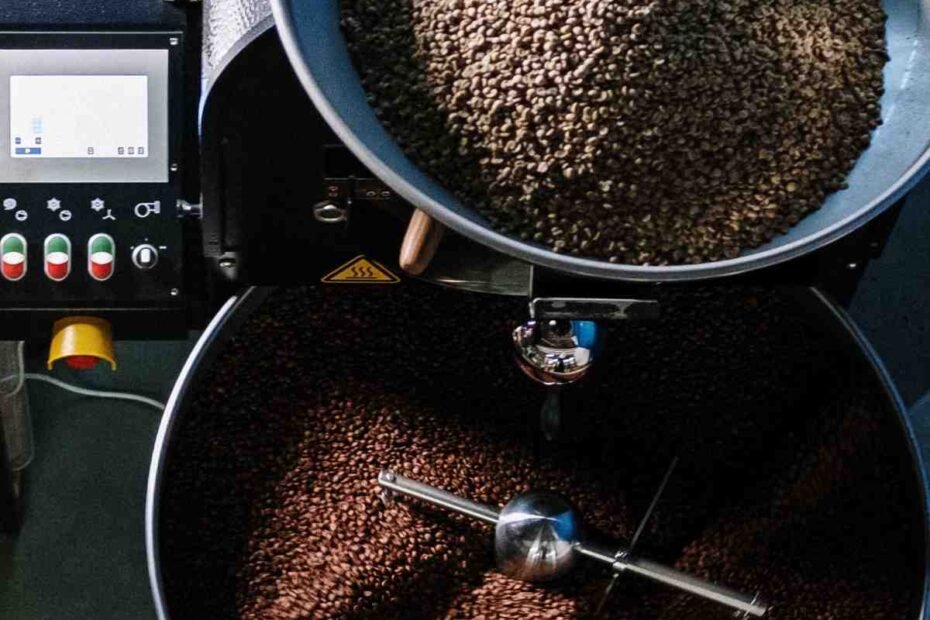
Roasting turns hard, grassy-smelling green coffee seeds into the brown, aromatic beans you grind and brew. How far the roast is taken (light, medium, or dark) changes the color, the flavor, how easily the coffee extracts, and even how much a scoop of beans weighs. This guide explains what happens inside the roaster, how the roast levels differ, and where those differences are reliable patterns rather than fixed rules.
What Happens During a Roast
Green coffee is the dried seed of the coffee fruit. Before export it usually contains around 10–12% moisture. In the roaster, heat drives a series of overlapping changes:
- Drying. Water inside the seed heats and starts to escape. The beans turn from green to yellow.
- Browning. Sugars and amino acids react in the Maillard reaction, and sugars caramelize. These reactions build the brown color and most of the aromas we recognize as coffee.
- First crack. Steam and gas pressure inside the bean build until the structure cracks with a popping sound. Roasters use it as a landmark: very light roasts are taken out around this point.
- Development. After first crack, the roaster decides how much longer to go. Each extra moment darkens the bean and shifts the flavor from origin character toward roast character.
- Second crack. If the roast continues, a second, quicker crackling begins. Coffees taken into or beyond second crack are generally considered dark roasts, and oil starts to appear on the surface.
Researchers at the University of Texas at Austin recorded the two cracks in a small drum roaster and found clearly different sounds: the first crack was louder, deeper, and slower, like popcorn, while the second was a rapid, softer crackle. In that roaster, first crack came 400–600 seconds into the roast and second crack 620–730 seconds in. Those times depend on the roaster, batch size, and heat, so they show the sequence rather than a universal schedule.
Beans Lose Weight as They Roast
Roasting drives out moisture and burns off some of the bean’s material, so roasted coffee weighs less than the green coffee that went in. According to green coffee importer Royal Coffee, very light roasts dropped at the start of first crack lose about 10% of their green weight, while roasts taken well past second crack can lose as much as 25%. This is one reason darker coffee and lighter coffee do not weigh the same per scoop.
Roast Levels Compared
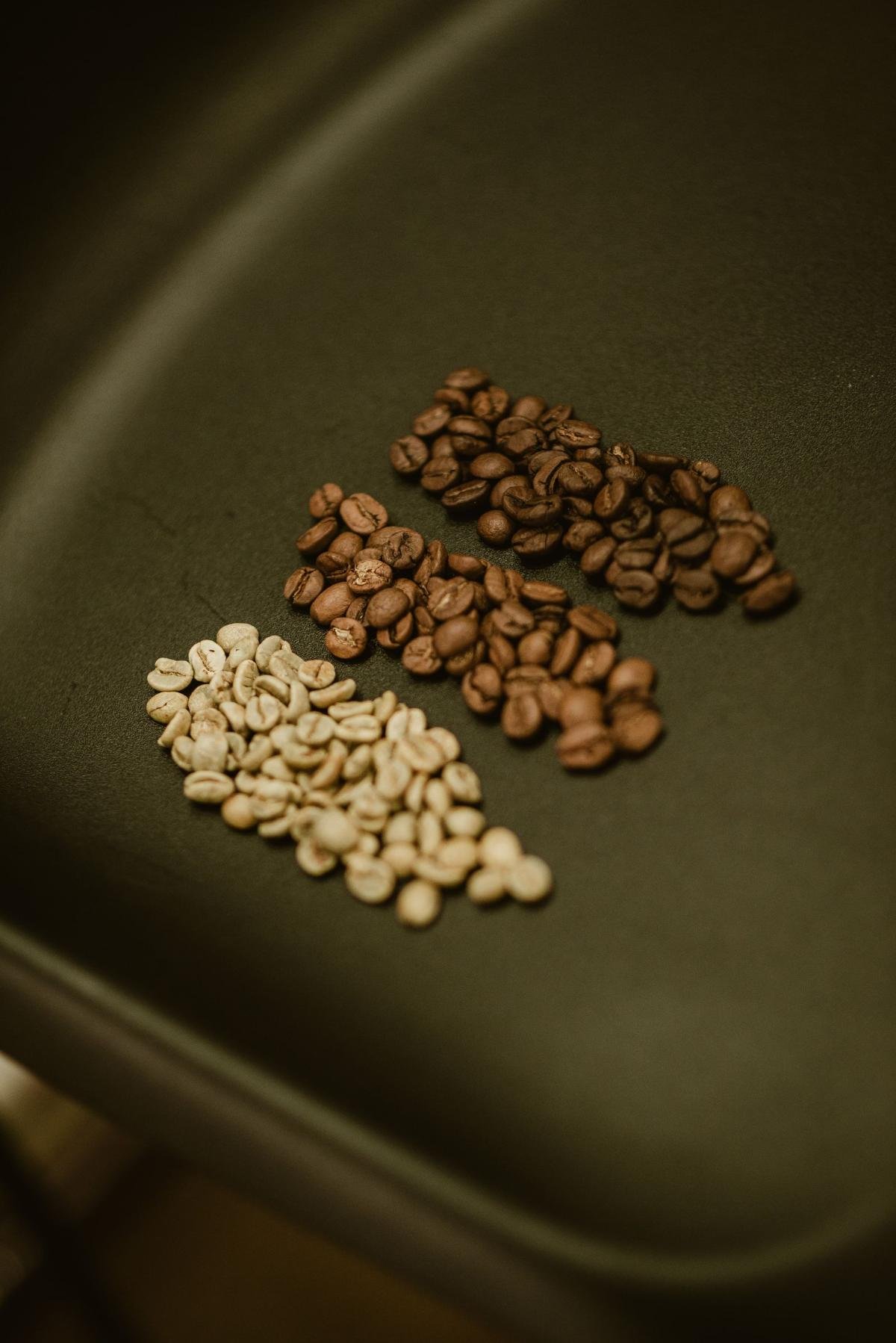
Roast names are not standardized. One company’s “medium” can be darker than another’s “espresso roast,” and names like “French” or “Vienna” mean different things to different roasters. Professionals often measure roast color with an instrument such as an Agtron meter, where higher numbers mean lighter coffee. The ranges below follow Coffee Review’s roast definitions, which are based on SCA terminology:
| Roast (Agtron) | Appearance | Typical tendencies |
|---|---|---|
| Light (over 80) | Light brown, dry surface | Lighter body; origin flavors and acidity most noticeable |
| Medium-light (70–80) | Moderately light brown, dry | Bright, sweet acidity |
| Medium (60–70) | Medium brown, generally dry | Balanced acidity, fuller body |
| Medium-dark (50–60) | Rich brown, possible oil droplets | Chocolate and roast bittersweetness; acidity muted |
| Dark (40–50) | Deep brown to black, spots of oil | Bittersweet, roasty; acidity muted |
| Very dark (under 40) | Black, oily | Bitter, burnt tones dominate; body thins |
The “tendencies” column describes how roast degree usually shifts flavor, not what every coffee will taste like. Origin, variety, processing, the roaster’s profile (how fast or slow the roast was), and your brewing all change the result. Two light roasts from different farms can taste very different, while two very dark roasts from different origins tend to taste more alike, because roast flavors increasingly mask what came from the bean.
How Roast Level Changes Brewing
Lighter roasts are less porous than darker ones, which makes them harder to extract. The same recipe can therefore taste sour with a light roast and bitter with a dark one.
| Light roast tastes sour or thin | Dark roast tastes harsh or bitter | |
|---|---|---|
| Grind | Slightly finer | Slightly coarser |
| Water temperature | Hotter, near the top of your range | A few degrees cooler |
| Brew time | A little longer | A little shorter |
Manufacturers build this into their recipes too: AeroPress, for example, suggests 85°C water for medium and light roasts and 80°C for dark roasts. Our guides to water temperature and grind size cover the adjustments in more detail. Note that some bitterness in very dark roasts comes from the roast itself, not from brewing, and no adjustment will remove it entirely.
Does Roast Level Change Caffeine or Strength?
“Strong” can mean more caffeine, more concentrated coffee, or more roasted flavor, and these do not move together. A dark roast tastes more intense, but that does not mean it has more caffeine.
On caffeine itself, the evidence points toward darker roasts having slightly less, not more:
- A 2022 study on roast defects in Molecules notes that caffeine content falls as the roast degree rises, and attributes the small changes to some caffeine being lost (sublimating) at high roasting temperatures.
- A 2025 study led by physicists at Berry College, reported by the college, found that light and medium roasts typically gave higher caffeine levels under identical brewing, with extraction tending to peak at medium. The researchers point to two competing effects: caffeine lost late in roasting, and lighter beans being less porous, which makes their caffeine harder to extract.
In practice, how much coffee you use and the type of coffee matter more than roast level. Robusta, for instance, generally contains more caffeine than arabica (see arabica vs. robusta). Measurement also matters: because darker beans have lost more weight, a scoop of dark roast holds less coffee by weight than a scoop of light roast. Weighing your dose removes that difference (see the coffee-to-water ratio guide).
Finding the Roast You Like
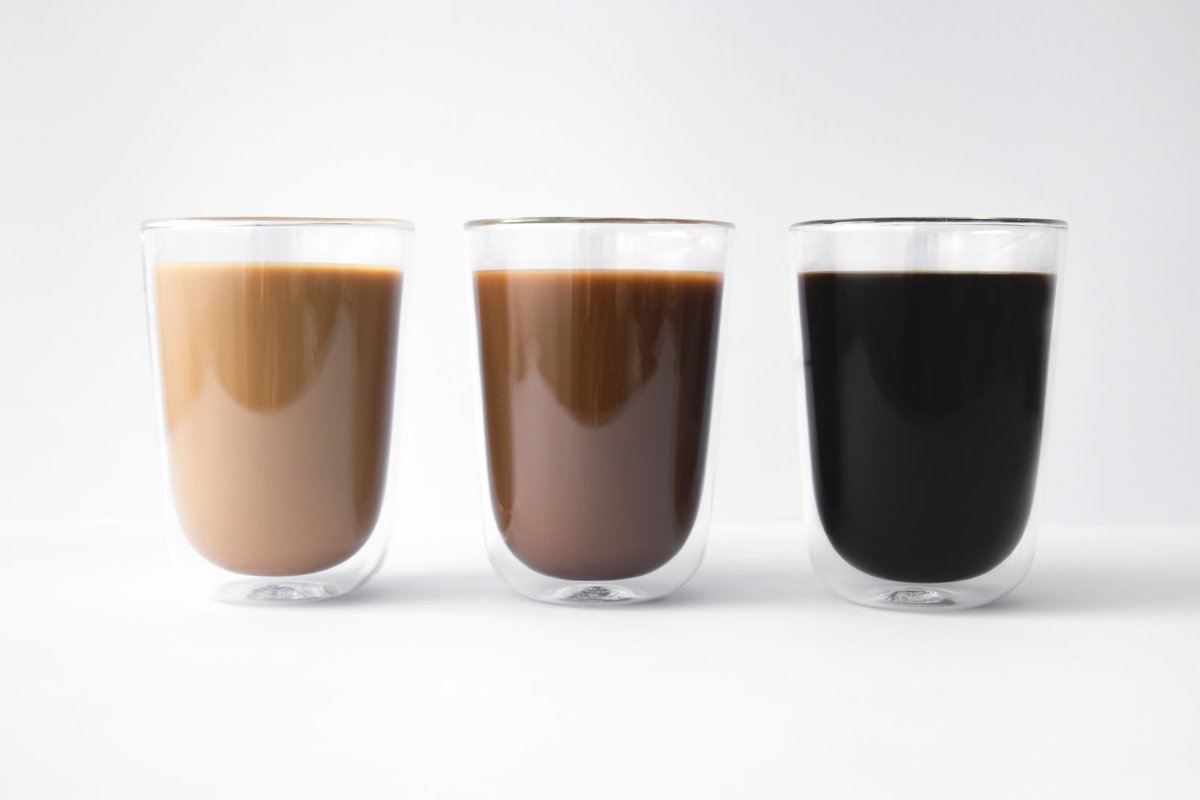
Because roast names vary between companies, tasting is more useful than reading labels. A simple comparison:
- Buy a light, a medium, and a dark roast, ideally from the same roaster so their naming is consistent.
- Brew all three the same way, with the same weight of coffee and water.
- Taste them black first, side by side, and note acidity, sweetness, bitterness, and body.
- If one tastes sour or bitter, adjust that coffee’s grind using the table above before deciding you dislike it.
- If you usually drink coffee with milk, try them that way too, since milk changes how each roast comes across.
When shopping, the roast date and the roaster’s own description of the coffee tell you more than a generic roast name. See how to buy coffee beans for what to look for on the bag.
Sources
- Royal Coffee (The Crown: Royal Coffee Lab). Understanding Roast Yield and Loss. Source for green coffee moisture (10–12%) and roast weight loss (about 10% to as much as 25%).
- Science News (2014). Coffee beans sing distinct tune, reporting P. S. Wilson’s study in the Journal of the Acoustical Society of America. Source for the sound and timing of first and second crack in that roaster.
- Coffee Review. Roast Definitions. Source for the Agtron ranges, appearance and flavor tendencies by roast level, and the lack of standard roast names.
- Rusinek, R., et al. (2022). How to Identify Roast Defects in Coffee Beans Based on the Volatile Compound Profile. Molecules 27(23), 8530. Source for caffeine decreasing with roast degree.
- Berry College (2025). News report on the coffee roast caffeine study. Source for the caffeine findings by roast level and the lower porosity of light roasts.
- AeroPress. What’s the optimal brewing temperature for AeroPress coffee makers? Source for the 80°C and 85°C recommendations.
