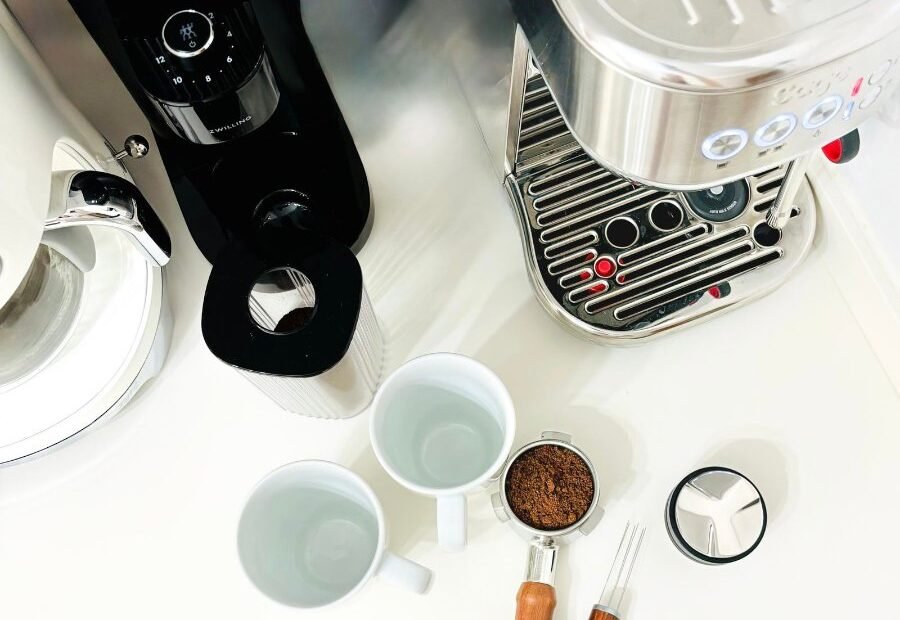
Making espresso at home can seem complicated at first, especially when you see people weighing coffee, timing shots, and adjusting grinders. But the basic idea is simple: use finely ground coffee, hot water, and enough pressure to produce a concentrated shot. This guide walks through the equipment, basic recipe, grinding, tamping, and the small adjustments that make home espresso easier to understand.
What You Need to Make Espresso at Home
You do not need a professional café setup to start making espresso. A basic home machine and a decent grinder are enough to learn the fundamentals and improve over time.
The essential equipment
For a beginner, the most useful equipment is:
- Espresso machine: Choose a machine that can maintain stable brewing temperature and provide adequate pressure.
- Espresso grinder: A burr grinder with fine adjustment is much more useful than a blade grinder.
- Fresh coffee beans: Whole beans are preferable because they retain their flavor better than pre-ground coffee.
- Digital scale: A small coffee scale makes it easier to repeat a recipe.
- Tamper: This compresses the coffee evenly inside the portafilter.
- Timer: You can use the timer on your phone if your scale does not have one.
- Small espresso cup: Helpful for observing the shot as it comes out.
The grinder deserves particular attention. Espresso is very sensitive to grind size, so a grinder that only offers a few settings can make dialing in much harder. If you are still shopping, our guide to choosing a coffee grinder for home use covers what to look for.
Do you need an expensive machine?
Not necessarily. A more expensive machine may offer better temperature control, convenience, or consistency, but the machine is only one part of the process. For a beginner, having a grinder that can make consistent, fine adjustments can be more useful than spending all of the budget on the espresso machine itself.
How to Pull Your First Espresso Shot
There are many espresso recipes, but starting with a simple, repeatable recipe makes the learning process much easier. A good starting point is:
- Coffee: 18 grams
- Espresso yield: 36 grams
- Ratio: 1:2
- Target time: around 25–30 seconds
- Water temperature: roughly 90–96°C (194–205°F)
These numbers are a starting point, not a set of rules that every coffee must follow. Different beans, machines, grinders, and personal preferences can produce better results with different settings.
Step 1: Warm up the machine
Allow the espresso machine to heat properly before brewing. Depending on the machine, this may take several minutes. If your machine has a portafilter that stays attached during heating, leaving it in place can help keep the metal warm. A warm cup is also useful because espresso cools quickly.
Step 2: Weigh and grind the coffee
Measure around 18 grams of whole coffee beans and grind them finely. The grounds should be fine enough for espresso but not so fine that water struggles to pass through the coffee bed. Place the ground coffee into the portafilter and distribute it as evenly as possible.
Step 3: Tamp the coffee
Place the portafilter on a stable surface and press the tamper straight down. The goal is to create a level, compact coffee bed. You do not need to put your entire body weight into the tamper.

What matters most is that the coffee is evenly distributed and the surface is reasonably level. An uneven puck can encourage water to find easier paths through the coffee.
Step 4: Lock in the portafilter and start brewing
Place the portafilter into the group head and start the shot. At the same time, start your timer and place your cup on the scale if you are measuring the espresso yield. Watch both the time and the amount of espresso coming into the cup.
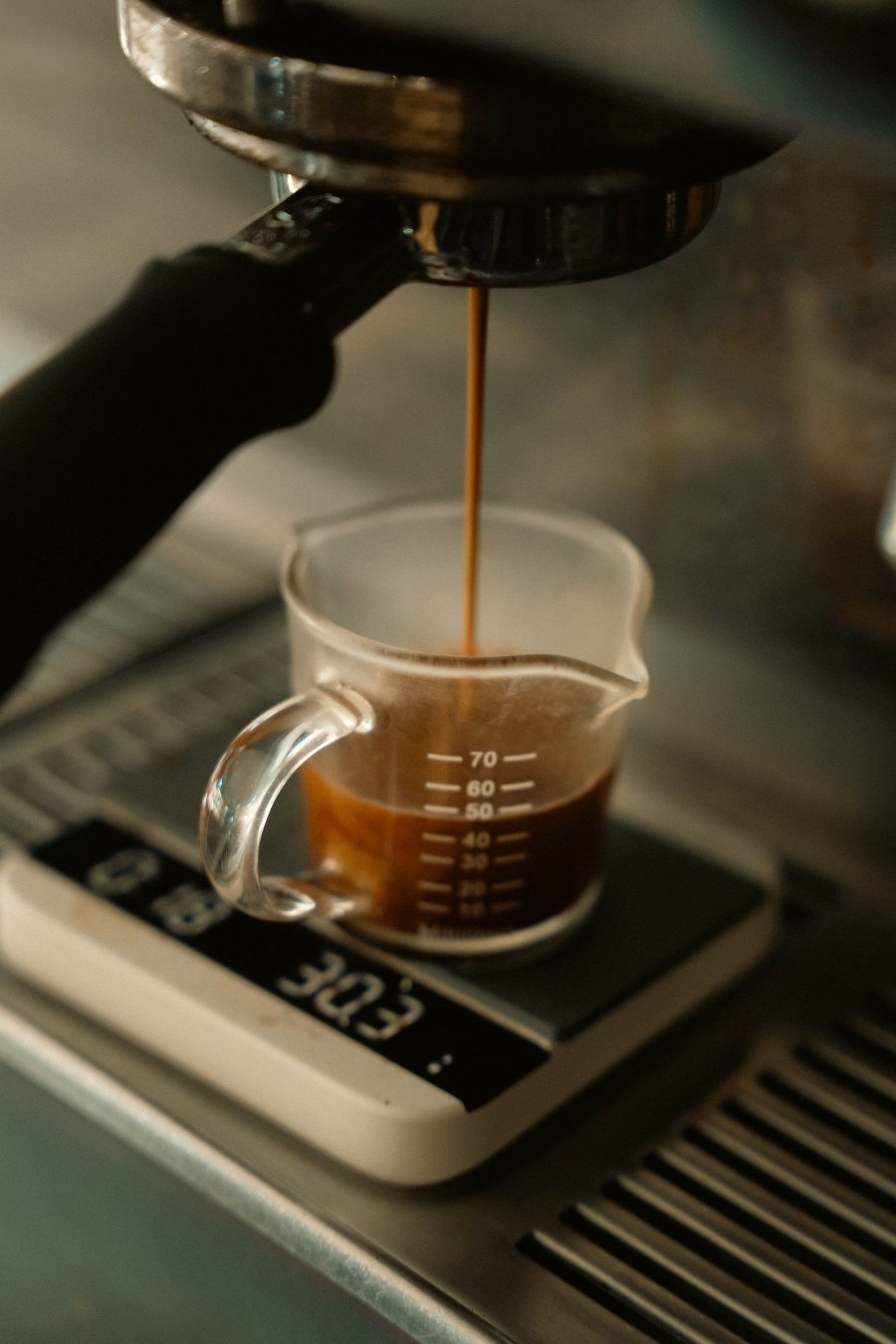
Step 5: Stop at your target yield
For an 18-gram dose and a 1:2 ratio, stop the shot when you have approximately 36 grams of espresso. Do not worry if your first attempts are not perfect. The first few shots are often more useful as information than as finished drinks.
Taste the espresso and take note of what you would change next time.
How to Adjust Espresso When It Doesn’t Taste Right
This is where making espresso becomes more interesting. Instead of changing several things at once, make one adjustment and see what happens. The grinder is usually the best place to start.
If the espresso runs too quickly
Suppose you use 18 grams of coffee and reach 36 grams of espresso in only 15–20 seconds. The water is passing through the coffee relatively quickly. Try grinding a little finer. A finer grind creates smaller spaces between the particles, which generally increases resistance and slows the flow.
If the espresso runs too slowly
If the shot takes a very long time to reach your target yield, try grinding slightly coarser. A grind that is too fine can restrict the flow and make the shot taste harsh or unpleasantly bitter. Make small changes rather than turning the grinder dramatically from one extreme to another.
If the timing looks right but the coffee tastes wrong
Time is useful, but it does not tell you everything. Two espresso shots can both take 28 seconds and taste completely different. Pay attention to the flavor:
- Sour or sharply acidic: The coffee may be under-extracted, although acidity can also be a natural characteristic of the bean.
- Bitter, dry, or harsh: The coffee may be over-extracted.
- Thin or weak: The recipe, dose, yield, or coffee itself may need adjustment.
- Balanced and pleasant: You are getting closer to a recipe that works well for your taste.
Taste should ultimately guide the process. The numbers help you reproduce what worked, but they should not completely replace your palate.
Understanding Grind Size, Dose, and Yield
Espresso becomes much easier to troubleshoot once you understand how the main variables interact.
Grind size
Grind size controls how quickly water can move through the coffee. As a general starting point:
- Finer grind → more resistance → slower flow
- Coarser grind → less resistance → faster flow
The exact adjustment needed depends heavily on the grinder and coffee. For a deeper look, see why coffee grind size matters.
Dose
The dose is the amount of dry coffee you put into the portafilter. For example, if you use 18 grams of coffee, that is your dose. The basket size matters here. A basket designed for a different dose may not perform well if you consistently fill it with too much or too little coffee.
Yield
Yield is the amount of liquid espresso produced. With an 18-gram dose and 36-gram yield, you have a 1:2 brew ratio. You can experiment with different ratios later. Some coffees may taste better with a shorter yield, while others may become more enjoyable when extracted a little further.
Time
Shot time tells you how quickly the espresso reached the target yield. It is useful for comparing shots, but it should not be treated as the only measurement of quality. A shot taking 25 seconds is not automatically good, and one taking 32 seconds is not automatically bad.
Common Espresso Mistakes Beginners Make
Many frustrating espresso problems come from a handful of simple mistakes. (For mistakes that apply to any brew method, see our guide to common coffee brewing mistakes.)
Changing too many variables at once
If you change the grind, dose, yield, and coffee simultaneously, it becomes difficult to understand what actually improved the shot. Instead, keep most things consistent and adjust one variable at a time.
Using old or poorly stored coffee
Coffee gradually loses freshness after roasting. While older beans can still produce coffee, they may behave differently in an espresso machine and can be harder to dial in consistently. Store beans in a cool, dry place away from excessive light, heat, and moisture.
Using an inconsistent grinder
Espresso requires fairly precise grinding. A blade grinder produces a mixture of particle sizes, which makes controlling extraction more difficult. A burr grinder designed for espresso gives you much better control.
Tamping unevenly
Tamping does not need to be extremely forceful. A level and consistent puck is more important. If one side of the coffee bed is noticeably higher than the other, water can favor certain paths through the grounds.
Chasing the perfect number
It is easy to become obsessed with getting exactly 25 seconds. Use time, dose, and yield as reference points, but taste the espresso too. Coffee is something you drink, not just something you measure.
A Simple Espresso Routine for Beginners
Once you understand the basics, a repeatable routine makes the process much easier.
Try this starting recipe
- Weigh 18 grams of coffee beans.
- Grind them finely for espresso.
- Distribute the grounds evenly in the portafilter.
- Tamp level and consistently.
- Lock the portafilter into the machine.
- Start the shot and timer together.
- Stop around 36 grams of espresso.
- Aim for roughly 25–30 seconds as a starting point.
- Taste the espresso.
- Adjust the grind slightly for the next shot if necessary.
The most important part is to record what you do. If a particular combination tastes especially good, write down the coffee, dose, grind setting, yield, and approximate time. That turns espresso from guesswork into a process you can repeat.
Once you are happy with your shots, you can use them in milk drinks too, like a classic cappuccino.
FAQ
Can I make espresso with any coffee beans?
You can make espresso with many different coffee beans and roast levels. Espresso is a brewing method rather than a specific type of bean, so the best choice depends largely on the flavor you enjoy.
Do I really need an espresso grinder?
A good grinder makes a significant difference because espresso needs a consistent and adjustable fine grind. If your grinder cannot make small enough adjustments, dialing in a shot can become frustrating.
How many grams of coffee should I use for one espresso?
There is no single universal dose, but 18 grams is a practical starting point for many double-shot baskets. Always check the capacity of your specific basket and adjust from there.
Why does my espresso taste sour?
A sour or sharply acidic espresso can be a sign that the coffee was under-extracted. Try grinding slightly finer or allowing a little more extraction, then taste again.
Why does my espresso taste bitter?
Bitterness can occur when too much of the coffee has been extracted. Grinding slightly coarser or reducing the yield may help, although the coffee’s roast level and natural flavor characteristics also matter.
Does espresso have to take exactly 25 seconds?
No. Around 25–30 seconds is a useful starting range, but it is not a rule. The final taste matters more than hitting one exact number.
Final Thoughts
Learning to make espresso at home is mostly about learning how small changes affect the cup. Start with a simple recipe, keep your measurements consistent, adjust the grinder gradually, and taste every shot. Once you stop expecting the first attempt to be perfect, espresso becomes much less intimidating and a lot more enjoyable to work with.
Related reading: Espresso Tonic · How Much Caffeine Is in Your Coffee?
