
Choosing a coffee grinder can be confusing when two common options look so similar on the shelf: burr grinders and blade grinders. Both turn whole coffee beans into grounds, but they do it in very different ways, and that difference can affect how evenly coffee brews. This guide explains how each grinder works, what changes in the cup, and what to consider before choosing one for your home setup.
How Burr and Blade Grinders Work
The biggest difference comes down to what actually happens to the coffee beans inside the grinder. A blade grinder uses a spinning blade to chop the beans into smaller pieces. A burr grinder, on the other hand, uses two abrasive surfaces called burrs to crush and grind the beans between them. That sounds like a small mechanical difference, but it has an important effect on the size and consistency of the coffee grounds.
How a blade grinder works
Blade grinders have a small motor connected to a sharp spinning blade. When the grinder is turned on, the blade moves quickly through the beans, breaking them apart. The longer the grinder runs, the smaller the grounds generally become. However, the process is not especially precise, and some pieces can become very fine while others remain noticeably larger. With a blade grinder, the final grind depends heavily on how long it runs and how the beans move around inside the container.
How a burr grinder works
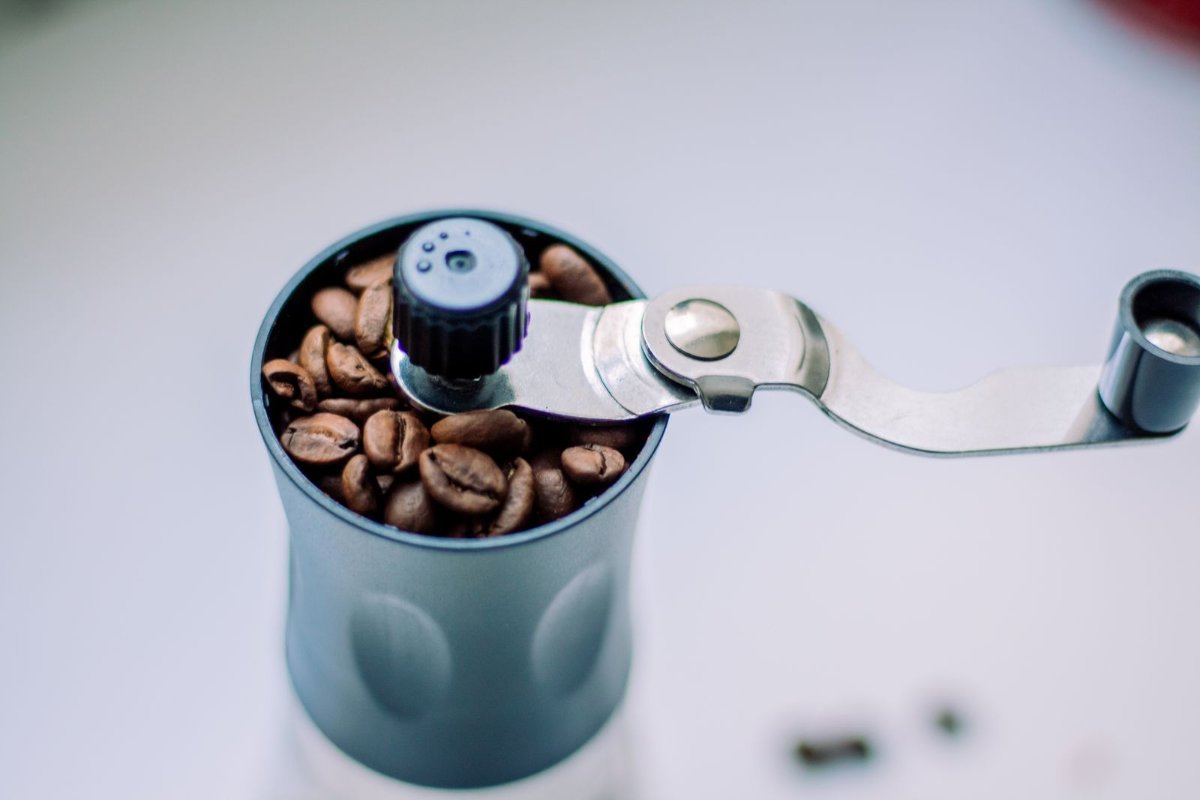
Burr grinders use two burrs with a small space between them. Coffee beans pass through this space and are broken down as the burrs rotate. The distance between the burrs determines the approximate grind size, which makes it much easier to produce a repeatable grind for different brewing methods. Burr grinders can be found in both manual and electric versions, and they can offer different levels of adjustment.
The basic difference
In simple terms:
- Blade grinder: chops beans with a spinning blade, controls grind size mainly by grinding time, and tends to produce a wider range of particle sizes.
- Burr grinder: crushes beans between two grinding surfaces, controls grind size mainly by the burr setting, and is designed to produce a more consistent particle size.
Why Grind Consistency Matters
Coffee brewing works by allowing water to extract compounds from the ground coffee, and the size of the particles influences how quickly that happens. When a batch contains very fine and very coarse pieces together, the smaller particles can extract more quickly while the larger pieces take longer. This can make it harder to get a balanced result. A more consistent grind gives the brewing process a more predictable starting point. (We go deeper on this in why coffee grind size matters.)
Fine particles and larger pieces
A grinder does not necessarily produce grounds that are all exactly the same size. Even good grinders produce some variation, so the issue is the amount of variation. A blade grinder can create a mixture where some grounds are powdery while others are relatively large, and during brewing these different particles do not behave in exactly the same way. This matters particularly with methods where grind size has a strong influence on brewing time, such as pour-over, French press, and espresso.
Why consistency helps
A consistent grind makes it easier to:
- Repeat the same recipe.
- Adjust the coffee when something tastes unbalanced.
- Match the grind to a particular brewing method.
- Compare different coffees more fairly.
- Make small changes without changing several variables at once.
This does not mean that a blade grinder cannot make drinkable coffee. It simply means that controlling the grind is more difficult.
Burr vs. Blade: A Simple Comparison
Here is a quick way to see the main differences without getting lost in technical details.
| Feature | Burr grinder | Blade grinder |
|---|---|---|
| Grinding method | Crushes beans between burrs | Chops beans with a spinning blade |
| Grind adjustment | Usually adjustable | Mainly controlled by grinding time |
| Grind consistency | Generally more consistent | Generally more uneven |
| Brewing control | Easier to repeat | More difficult to repeat precisely |
| Manual options | Common | Less common |
| Ease of basic operation | Usually straightforward | Very simple |
| Best suited to | People who want more control | Simple, occasional home brewing |
The table describes general differences rather than every grinder on the market. Grinder design and quality can vary considerably within both categories.
Which Grinder Is Better for Different Brewing Methods?
The right grind depends on how the coffee will be brewed. Different methods generally call for different particle sizes, so having reliable control can become more useful as you explore different brewing styles.
French press
French press coffee is commonly prepared with a coarse grind. A burr grinder makes it easier to select and repeat a coarse setting, while a blade grinder can produce coarse pieces but may also create a noticeable amount of finer material at the same time. For someone who regularly prepares French press coffee, consistent grind adjustment can make the process easier to control. Our French press beginner’s guide covers the full method.
Pour-over
Pour-over methods such as V60 and Chemex are particularly sensitive to grind size because water flows through the coffee bed during brewing. A grind that is too fine can slow the flow, while a grind that is too coarse can allow water to pass through more quickly. A burr grinder makes small adjustments much easier to reproduce, which can be useful when dialing in a pour-over recipe. See how to make coffee with a V60 and our Chemex guide for examples.
Espresso
Espresso generally requires a very fine and carefully controlled grind. This is where the difference between burr and blade grinders becomes especially important, because espresso brewing involves relatively short extraction times and is highly sensitive to changes in grind size. A blade grinder is generally not designed to provide the fine, controlled adjustment needed for dialing in espresso, so a suitable burr grinder is a much more practical type of grinder to consider. If that is your goal, start with our espresso at home beginner’s guide.
Drip coffee
Drip coffee sits somewhere in the middle. A blade grinder can certainly be used for basic drip brewing, especially if convenience is the main priority. However, a burr grinder makes it easier to repeat the same grind and adjust it when the coffee needs a little more or less extraction. For a comparison of methods, see drip coffee maker vs. pour-over.

Are Burr Grinders Always Better?
It is tempting to say that burr grinders are simply better and leave it there, but the decision depends on what you actually need from your coffee setup. A burr grinder offers more control and consistency, which can be valuable if coffee preparation is something you want to refine. But a blade grinder can still make sense for someone who wants a simple way to grind beans occasionally.
When a blade grinder can make sense
A blade grinder may be suitable if:
- You only grind coffee occasionally.
- You mainly use a simple brewing method.
- You are not interested in adjusting recipes precisely.
- You already own one and are happy with the coffee it produces.
- Keeping the setup simple is more important than having precise grind control.
There is no need to replace equipment simply because another type exists.
When a burr grinder becomes more useful
A burr grinder is worth considering when:
- You brew coffee regularly.
- You use different brewing methods.
- You want to make repeatable recipes.
- You are learning to adjust grind size.
- You want more control over extraction.
- You are getting into pour-over or espresso.
The more you pay attention to brewing variables, the more useful consistent grind control tends to become.
What to Look for in a Burr Grinder
Once the decision moves toward burr grinding, a few points matter most. The grinder should offer useful adjustment for the brewing methods you actually use; a huge number of settings is not automatically better. A manual model suits one or two cups at a time, while an electric one is more convenient for larger amounts. And the burr area should be easy to reach for cleaning (see how to clean your coffee maker and grinder). For a full buying guide, including burr materials, capacity and noise, see our guide to choosing a coffee grinder for home use.
Common Mistakes When Using a Coffee Grinder
Even a good grinder cannot completely fix poor preparation habits. A few simple mistakes can make the results less consistent.
Grinding too much coffee at once
It is generally easier to measure the beans before grinding than to guess how much ground coffee you need afterward. For a repeatable recipe:
- Measure the whole beans.
- Grind the amount needed for the brew.
- Use the grounds immediately for your recipe.
- Keep the remaining beans stored appropriately.
Changing the grind and the recipe at the same time
When you are dialing in a new grinder or a new setting, keep the coffee dose, water amount, and brewing time the same and change only the grind setting, in small steps. That way you can tell what the grinder change actually did. For a fuller troubleshooting guide, see bitter vs. sour coffee.
Assuming one grind size works for everything
Coffee grinders exist partly because different brewing methods need different grind ranges. A setting that works well for a French press is unlikely to be the right choice for espresso, and a pour-over recipe may need a different grind from a drip coffee maker. Think of grind size as part of the recipe rather than a permanent setting.
FAQ
Is a burr grinder really better than a blade grinder?
A burr grinder generally provides more consistent grounds and more control over grind size. A blade grinder can still work for simple home brewing, but it is harder to produce a repeatable grind.
Can I make good coffee with a blade grinder?
Yes. A blade grinder can produce perfectly drinkable coffee, especially if you are not trying to make highly precise recipes. The main limitation is that the grounds tend to be less uniform.
Does a burr grinder make coffee taste better?
The grinder itself does not automatically make coffee taste better. More consistent grounds can make brewing easier to control, which may help produce a more balanced and repeatable cup.
Is a manual burr grinder worth using?
It can be a practical choice if you do not mind grinding the beans by hand. Manual burr grinders can provide adjustable grind control without requiring an electric motor.
Do I need a burr grinder for French press coffee?
You do not need one, but it can make it easier to produce and repeat a coarse grind. A blade grinder can be used, although the grounds may contain more fine particles.
Do I need a burr grinder for espresso?
For espresso, precise grind adjustment is particularly important. A suitable burr grinder is generally much better suited to this type of brewing than a blade grinder.
Final Thoughts
The difference between burr and blade grinders comes down mainly to control and consistency. A blade grinder can be perfectly adequate for simple, occasional brewing, while a burr grinder becomes more useful when you want repeatable recipes, different grind sizes, or more control over your brewing process. The best choice is the one that fits the way you actually make coffee at home.
