
If you’re choosing between a drip coffee maker and a pour-over setup, the question isn’t really which method is “better.” Both can make a very good cup, but they ask different things from you. A drip machine handles most of the work automatically, while pour-over puts more of the brewing process in your hands.
That difference becomes important when you think about how you actually drink coffee. If you want several cups ready with minimal effort, a drip coffee maker is hard to beat. If you enjoy weighing your coffee, controlling the water, and adjusting the recipe, pour-over gives you much more room to experiment.
How Drip Coffee and Pour-Over Work
Both methods use hot water and ground coffee, usually with a paper filter, but the way the water reaches the coffee is different.
A drip coffee maker heats the water and distributes it over the coffee grounds automatically. The brewed coffee passes through the filter and collects in a carafe, so once you’ve added the coffee and water, the machine takes care of most of the process.
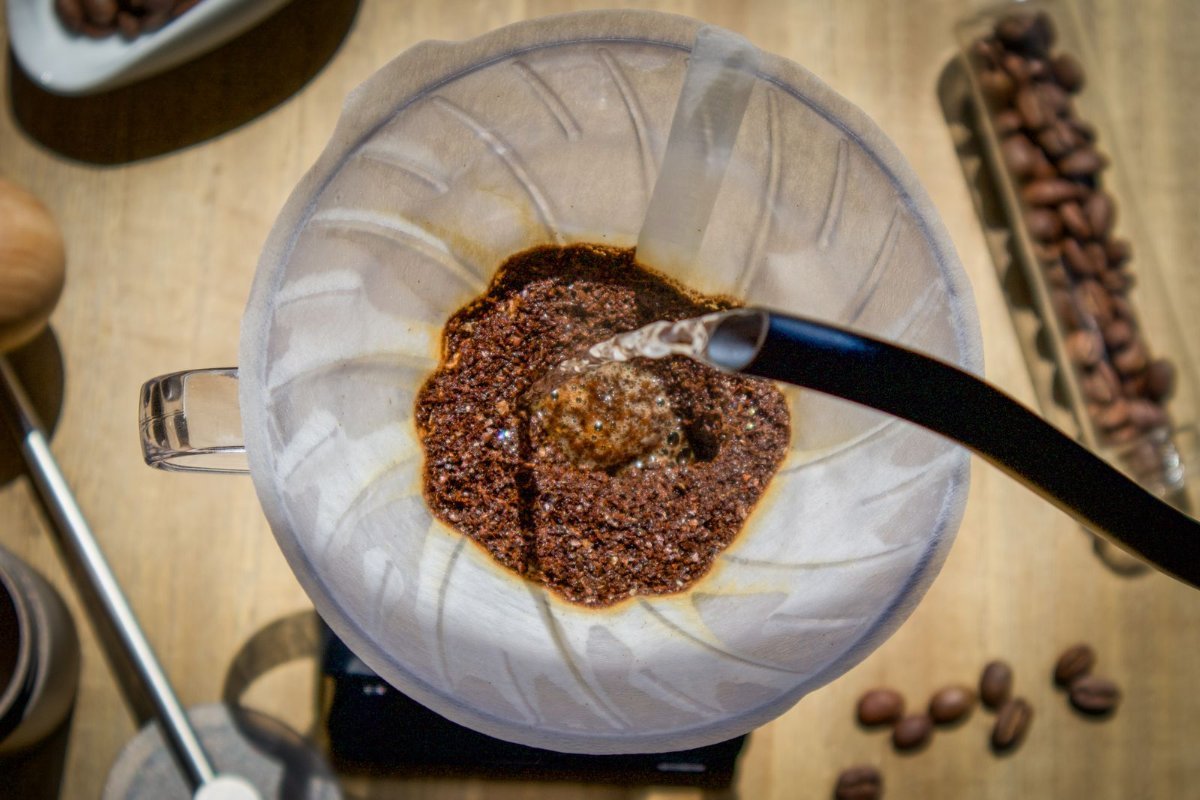
With pour-over, you control the water yourself. You place coffee in a filter, wet the grounds with hot water, and continue pouring in a controlled way until you’ve reached the amount of water in your recipe. That extra control can be useful, but it also means there’s more room for inconsistency while you’re learning.
The basic comparison
| Factor | Drip Coffee Maker | Pour-Over |
|---|---|---|
| Effort | Low | Moderate |
| Brewing control | Limited | High |
| Typical batch | Several cups | 1–2 cups |
| Consistency | Usually high | Depends on technique |
| Brewing involvement | Mostly automatic | Hands-on |
| Cleanup | Easy | Very easy |
| Best for | Convenience | Control and experimentation |
Neither method automatically produces better coffee. Your beans, grinder, water, recipe, and technique still matter.
Drip Coffee Maker: Best for Convenience
A drip coffee maker is designed to make the brewing process easier. Add a filter, measure the coffee and water, press the button, and you can move on to breakfast, getting ready for work, or whatever else your morning requires.
A useful starting point for many drip brewers is around 60g of coffee per 1 liter of water. For a smaller batch, that’s approximately 30g of coffee for 500g of water. This isn’t a universal recipe because machines differ. Some brewers distribute water more evenly than others, and brewing temperature and contact time can vary between models.
Why choose a drip coffee maker?
A drip machine makes sense if you:
- Want several cups at once.
- Prefer a low-effort morning routine.
- Regularly make coffee for more than one person.
- Want a repeatable recipe.
- Don’t want to manually pour water throughout the brew.
It’s particularly convenient when you’re making coffee for a group. A carafe can provide several servings from a single brewing cycle, while pour-over generally requires you to brew each batch manually.
What are the disadvantages?
The biggest trade-off is control. You generally can’t decide exactly where the water lands on the grounds, how quickly it flows, or how long each part of the coffee bed stays saturated. The quality of the machine also matters. A well-designed brewer can produce consistent results, while a less capable one may leave parts of the coffee bed wetter than others.
Still, you shouldn’t assume that automatic means inferior. A good drip coffee maker, fresh coffee, an appropriate grind, and a sensible ratio can produce an excellent everyday cup.
Pour-Over: Best for Control
Pour-over takes a little more attention, but that’s also its main attraction. You’re responsible for how the water moves through the coffee, which gives you more opportunities to adjust the flavor.
A practical starting recipe is 20g of coffee with 300–320g of water, using water around 90–96°C (194–205°F). Depending on the brewer, grind size, and pouring technique, the total brew time may be around 2.5–4 minutes. You don’t need perfect pouring technique to make good coffee. The more important goal is consistency: use the same basic recipe several times and make small changes based on how the coffee tastes.
Why choose pour-over?
Pour-over is a good fit if you:
- Usually make one or two cups.
- Enjoy preparing coffee manually.
- Want more control over extraction.
- Like experimenting with different beans.
- Don’t mind spending a few extra minutes brewing.
It’s also a useful method for learning about coffee because changes are easy to notice. If a cup tastes too bitter, for example, you can adjust the grind or brewing time and compare the next cup.
What are the disadvantages?
Pour-over requires your attention. You need to heat the water, grind the coffee, pour at a controlled rate, and keep track of the recipe. For some people, that’s enjoyable. For others, especially on a rushed weekday morning, it can feel like one more task.
There’s also a learning curve. Your pouring technique can change the result, particularly if you pour too quickly, too slowly, or unevenly across the coffee bed.
Drip Coffee vs. Pour-Over: What Changes in the Cup?
The differences become easier to understand when you compare flavor, control, convenience, and consistency.
Flavor
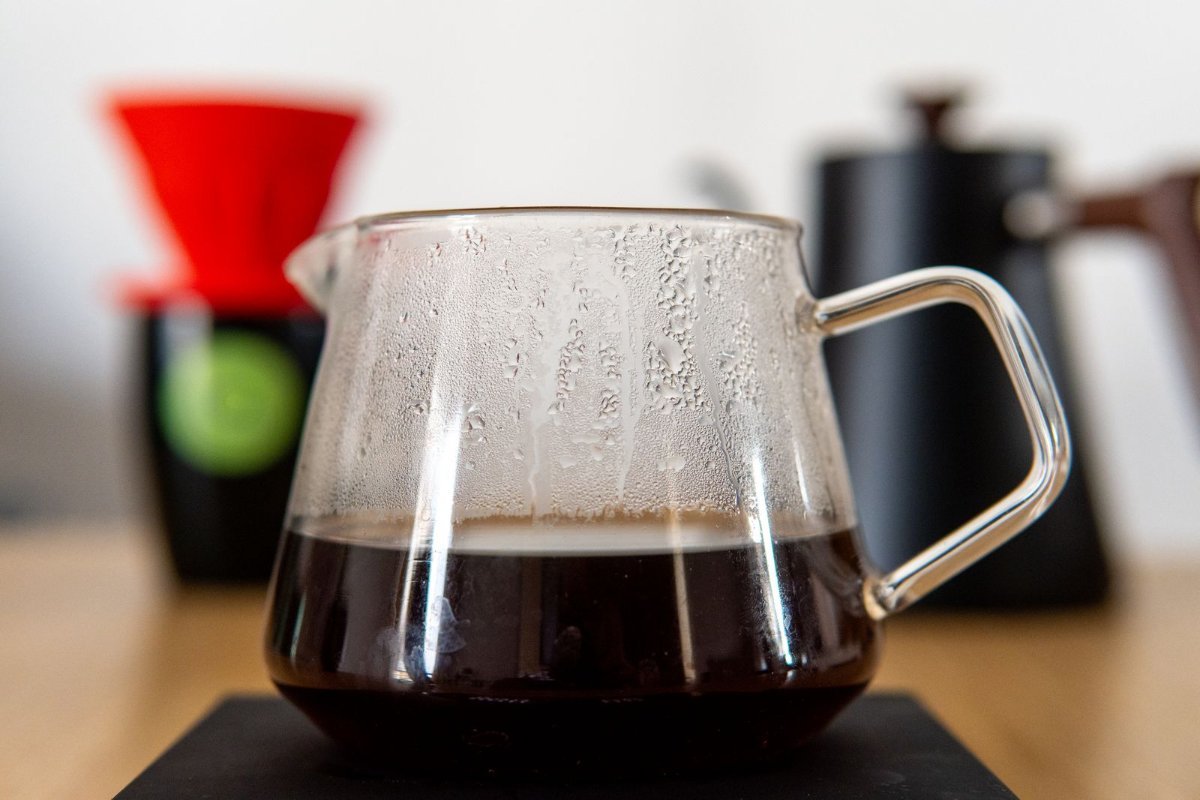
Both methods can produce clean, flavorful coffee. The difference is that pour-over gives you more direct control over the brewing process. You can adjust your pouring pattern and water flow to suit different coffees. That’s particularly useful if you enjoy comparing beans from different origins or roast levels.
Drip coffee can also be excellent, but more of the brewing process depends on the machine. Once you’ve found a good combination of coffee, grind, and water, that consistency can actually be a major advantage.
Control
Pour-over wins if control is your priority. You can change:
- Coffee-to-water ratio
- Grind size
- Water temperature
- Pouring speed
- Pouring pattern
- Total brew time
With a drip machine, most of those variables are determined by the brewer. That isn’t necessarily a problem. If you don’t want to think about six different variables before breakfast, having fewer decisions can be exactly what you want.
Convenience
This is where drip coffee has the obvious advantage. If you’re preparing coffee for four people, a drip machine can brew a full carafe while you’re doing something else. With pour-over, you’ll need to prepare a larger batch manually or brew multiple servings. For one person with a few spare minutes, however, the difference in convenience is much smaller.
Consistency
A good drip coffee maker can be extremely consistent because the machine repeats the same process each time. Pour-over can also be consistent, but you need to repeat your own technique. Small differences in pouring, grind size, water temperature, or timing can change the result.
That’s not necessarily a disadvantage. If you enjoy adjusting recipes, that variability gives you something to work with.
Cost and Equipment
You don’t need expensive equipment for either method.
A basic pour-over setup requires:
- Pour-over brewer
- Paper filters
- Kettle
- Grinder
- Scale
A drip setup generally requires:
- Drip coffee maker
- Paper filters
- Grinder
- Scale, if you want more precise recipes
The grinder can be one of the most important purchases in either setup. A consistent grind makes it easier to control extraction and reproduce a recipe. You also don’t have to buy a specialized gooseneck kettle immediately. It gives you better control over the flow of water, but a regular kettle can work while you’re learning.
If you’re starting from scratch and already own a drip machine, there’s little reason to replace it simply because pour-over is popular. If you’re curious about manual brewing, a basic pour-over brewer is relatively simple to add to your kitchen.
How to Get Better Coffee With Either Method
The brewing method matters, but your basic habits matter just as much.
- Measure. Weigh coffee and water instead of guessing. Good starting points are 30 g coffee to 500 g water for drip and 20 g to 320 g for pour-over; the coffee-to-water ratio guide explains how to adjust.
- Match the grind. Medium for most drip machines, medium to medium-fine for pour-over. See why grind size matters for how to adjust it by taste.
- Use good water. If your tap water tastes strong, filtered water gives a cleaner cup. More in does water matter for coffee.
- Keep it clean. Old coffee oils build up in drip machines and on drippers and affect flavor; see how to clean a coffee maker and grinder.
Which One Should You Choose?
The best choice depends on what you want your coffee routine to look like.
Choose a drip coffee maker if:
- You want coffee with minimal effort.
- You regularly make multiple cups.
- You value consistency.
- You want to start the brewer and walk away.
- You don’t want to manually manage the water flow.
Choose pour-over if:
- You enjoy the brewing process.
- You usually make one or two cups.
- You want more control over extraction.
- You like experimenting with different coffees.
- You don’t mind spending a few extra minutes preparing your cup.
What if you like both?
There’s no reason you can’t use both methods. A drip coffee maker can handle busy mornings or larger batches, while a pour-over can be your choice when you have more time and want to pay closer attention to the coffee.
Think about your actual routine rather than the coffee setup you imagine yourself using on a perfect Sunday morning. The best brewer is the one that fits your habits well enough that you’ll keep using it.
FAQ
Does pour-over coffee taste better than drip coffee?
Not automatically. Pour-over gives you more control, but a well-brewed drip coffee can be just as enjoyable. Coffee quality, grind size, water, ratio, and equipment all contribute to the final cup.
Is drip coffee easier to make than pour-over?
Yes. A drip coffee maker automates most of the process, while pour-over requires you to heat the water and control the pour manually.
Which method is faster?
Both can be relatively quick. A pour-over often takes around 3–5 minutes once the water is ready, while a drip machine may take around 5–10 minutes, depending on the machine and batch size.
What grind size should I use for drip coffee?
A medium grind is a useful starting point for many drip machines. If the coffee tastes weak and under-extracted, try slightly finer; if it tastes harsh or bitter, try slightly coarser.
Do I need a gooseneck kettle for pour-over?
No. A gooseneck kettle makes controlled pouring easier, but you can learn the method with a regular kettle. Focus on pouring steadily and evenly before worrying about specialized equipment.
Can I use the same beans for drip coffee and pour-over?
Absolutely. The same beans can work with both methods. You may need to adjust the grind size and recipe because the two brewing methods behave differently.
Final Thoughts
Drip coffee and pour-over are both useful methods, just for different kinds of coffee drinkers. Choose drip if you value convenience, batch brewing, and repeatability, or choose pour-over if you enjoy having more control over each cup. And if you can’t decide, keep both in your kitchen—the right method can simply depend on how much time you have that morning.
Related reading: Coffee Filters Explained
