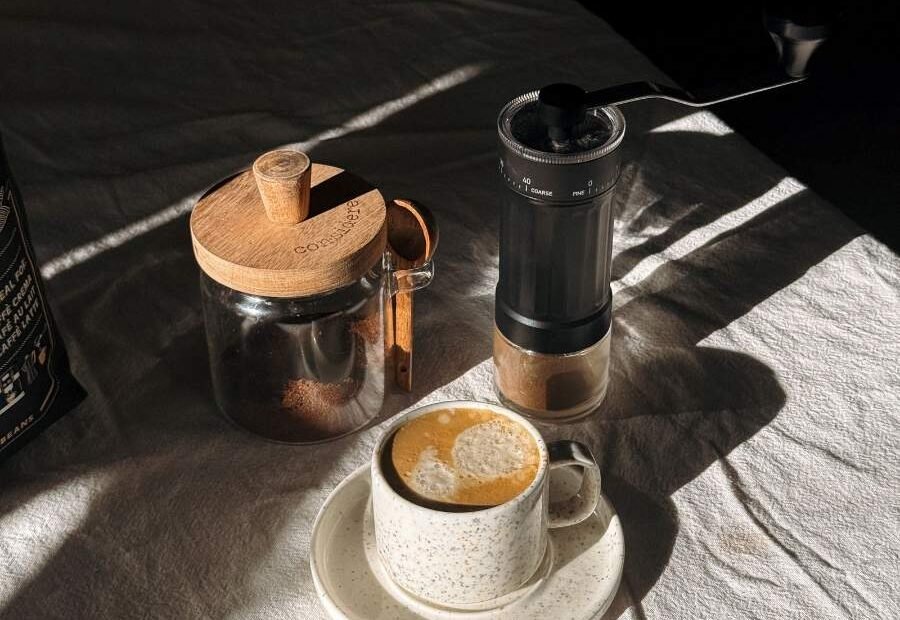
You don’t need an espresso machine to make a creamy latte at home. What you really need is strong coffee, warm milk, and a way to create some foam. The result won’t be identical to a café latte made with a traditional espresso machine, but with the right proportions and a little attention to temperature, you can make a smooth, satisfying cup using equipment you may already have in your kitchen.
What You Need to Make a Latte Without an Espresso Machine
The basic idea is simple: make a concentrated coffee, heat your milk, create some foam, and combine everything in the right proportions. Since you’re not using espresso, the coffee needs to be stronger than what you’d normally drink from a drip coffee maker.
For one latte, start with:
- 30–60 ml strong brewed coffee
- 150–180 ml milk
- 1–2 teaspoons sugar or sweetener, optional
- Cocoa powder or cinnamon, optional
You’ll also need a way to brew strong coffee and something to heat and froth the milk. A French press, moka pot, AeroPress, or even a strong drip coffee can work.
Which Coffee Should You Use?
A moka pot is one of the easiest choices because it produces a concentrated coffee that works particularly well with milk. You can also use an AeroPress with a concentrated recipe or make a smaller, stronger batch with a drip coffee maker.
If you’re using a standard coffee maker, don’t simply use less water with the same amount of coffee unless you’ve tested your machine. Instead, brew a smaller serving using a reasonable coffee-to-water ratio and adjust from there. For a homemade latte, the coffee doesn’t have to taste perfect on its own. It needs enough intensity to remain noticeable once you add a good amount of milk.
How to Make the Coffee Base
The first step is making coffee that’s strong enough to stand up to the milk. If the coffee is too weak, the finished latte can taste more like warm milk with a little coffee flavor.
Option 1: Use a Moka Pot
A moka pot is probably the closest practical alternative to espresso for this recipe. For a small serving:
- Fill the bottom chamber with water up to just below the safety valve.
- Fill the filter basket with ground coffee without pressing or tamping it down.
- Assemble the moka pot and place it over medium to medium-low heat.
- Watch the coffee as it begins flowing into the upper chamber.
- Remove it from the heat when the flow becomes lighter and you hear the brewing become more active.
The exact amount of coffee and water depends on the size of your moka pot, so follow the manufacturer’s capacity rather than trying to force a smaller recipe into a larger basket.
Option 2: Make Concentrated Brewed Coffee
If you don’t have a moka pot, you can still make a good latte. One simple approach is to brew 30–60 ml of concentrated coffee using an AeroPress or another brewing method that lets you control the amount of water. The important part is keeping enough coffee flavor in a relatively small amount of liquid.
With a drip coffee maker, you can also brew a smaller batch at a slightly stronger ratio. Just remember that coffee strength and coffee extraction aren’t exactly the same thing, so don’t keep adding more grounds indefinitely if the flavor starts becoming harsh.
How to Heat and Froth the Milk
The milk is what gives a latte its creamy texture, so this part deserves as much attention as the coffee. You want the milk hot enough to be enjoyable but not boiling. A useful target is around 60–65°C (140–150°F). If you don’t have a thermometer, heat it until it’s hot and steamy but not bubbling aggressively.
A Simple Method: Whisk the Milk in the Saucepan
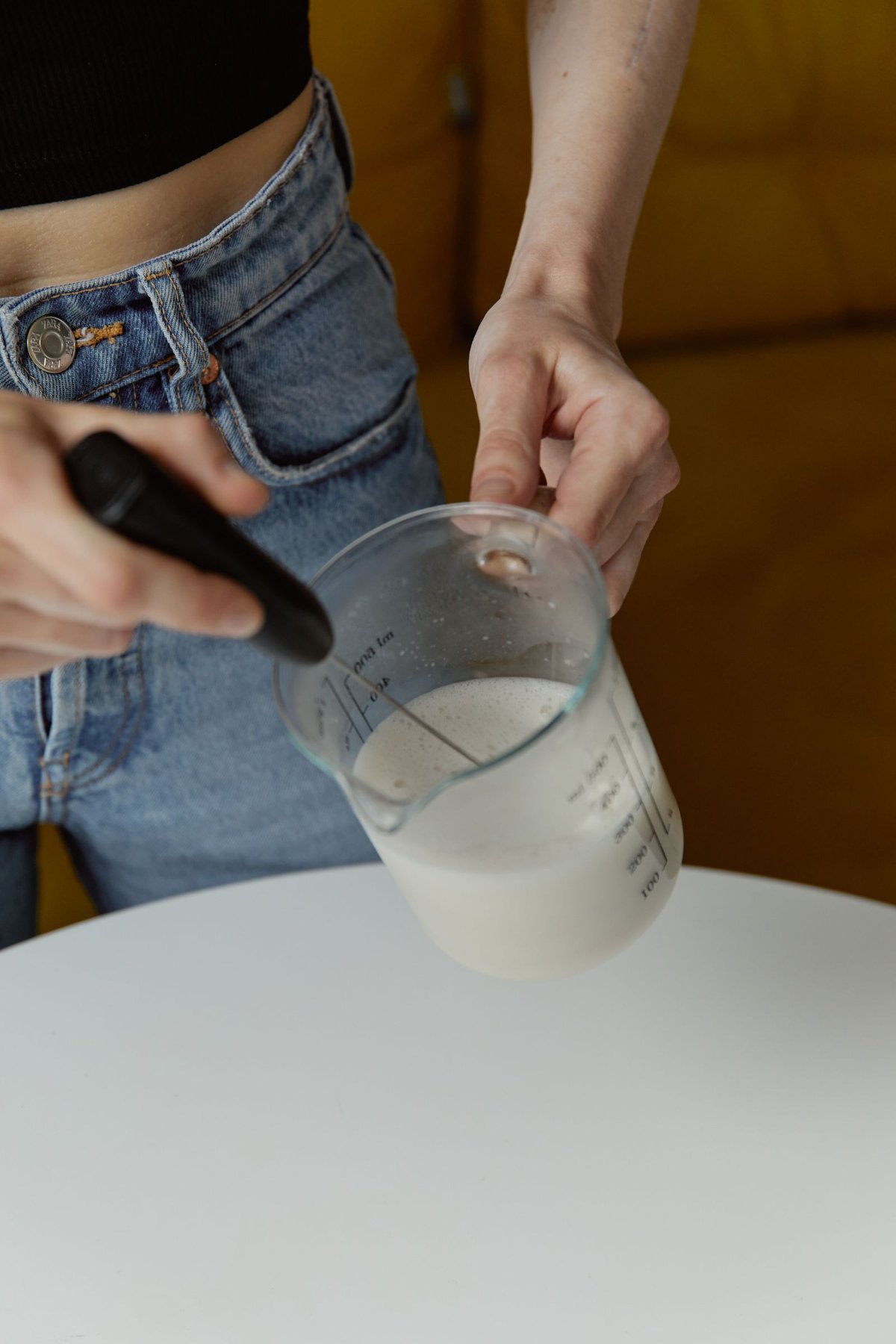
You don’t need special equipment. Warm the milk gently in a small saucepan, take the pan off the heat, tilt it slightly and whisk briskly for 20–40 seconds until a layer of fine foam forms. A small, deep saucepan makes this easier because the milk has room to move without splashing. For a latte, aim for a smooth, creamy texture rather than a thick pile of bubbles.
A handheld frother, a French press with its lid vented, or a stick blender also work. Our guide on how to froth milk without a steamer explains each method step by step.
Avoid shaking hot or warm milk in a closed jar or bottle. Heat and trapped air can build pressure, and the lid can pop off and spray hot milk. Shaking in a sealed jar is only suitable for cold milk, as in our cold foam guide.
How to Assemble Your Homemade Latte
Once your coffee and milk are ready, you’re only a few seconds away from the finished drink. For a balanced starting point, use approximately:
- 30–60 ml strong coffee
- 150–180 ml steamed or frothed milk
- A thin layer of milk foam on top
Pour the coffee into a large cup first. If you’re adding sugar, stir it into the hot coffee now so it dissolves easily. Then slowly add the warm milk. If you’ve frothed it, pour the liquid milk first and let the foam settle toward the end. Finish with a small layer of foam on top.
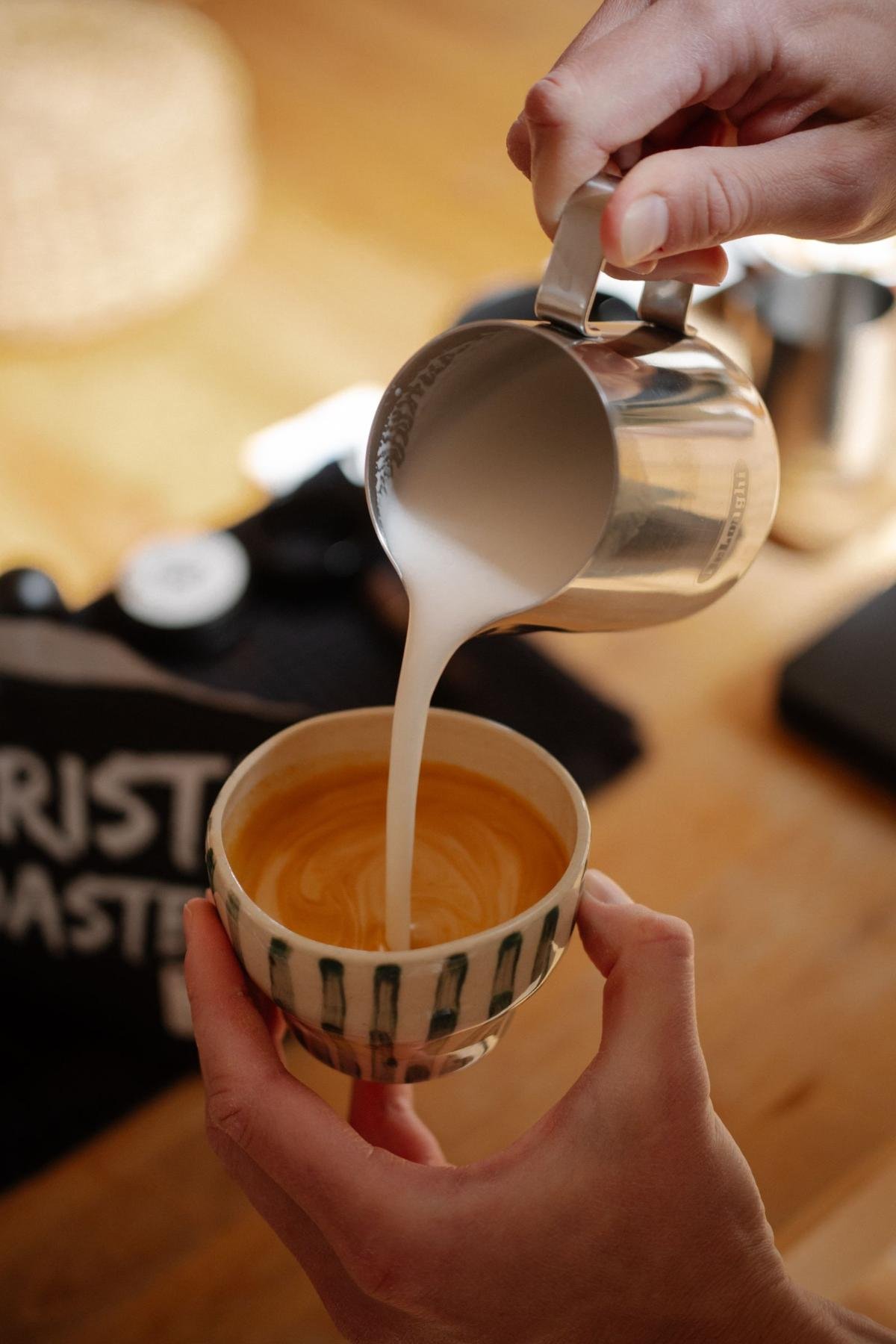
You don’t need to create elaborate latte art. The goal at home is a smooth mixture where the coffee and milk taste balanced rather than having separate layers of liquid and foam.
How Much Coffee Should You Use?
This depends on how strong you like your latte. If you’re using 30 ml of concentrated coffee, the milk will dominate more. Using closer to 60 ml will give you a noticeably stronger coffee flavor. Start with the smaller amount if you’re using a particularly intense coffee, and increase it next time if the finished drink tastes too milky.
How to Get a Better Latte at Home
Once you’ve made the basic recipe, a few small adjustments can make a surprisingly big difference.
Don’t Boil the Milk
Boiling milk can make the texture less pleasant and can give the drink a cooked flavor. You don’t need to see large bubbles forming across the surface.
Aim for hot, steamy milk around 60–65°C (140–150°F). If you don’t have a thermometer, stop heating once the milk is clearly hot and steaming but before it starts bubbling vigorously.
Don’t Make Too Much Foam
It’s easy to over-froth milk when you’re making your first homemade latte. A thick layer of large bubbles can make the drink feel more like a cappuccino than a latte. Try to create small, fine bubbles and then mix them into the milk. The finished milk should look glossy and creamy rather than resembling a mountain of foam.
Choose a Coffee That Works With Milk
Medium and medium-dark roasted coffees can work particularly well in milk-based drinks because their flavors tend to remain noticeable after the milk is added. That doesn’t mean you have to use a particular roast. A lighter roast can also make an interesting latte if you enjoy its brighter flavors.
If you’re buying beans specifically for milk drinks, look for coffee with a flavor profile you already enjoy rather than choosing based only on the roast label.
Adjust the Recipe to Your Taste
There’s no reason to force yourself to drink a latte with a ratio you don’t enjoy. Try changing one thing at a time:
- Too milky? Add more concentrated coffee.
- Too strong? Increase the amount of milk.
- Not creamy enough? Improve the milk frothing rather than simply adding more milk.
- Too bitter? Check the coffee and brewing process before adding lots of sugar.
- Too sweet? Reduce or remove the added sweetener.
Small changes are easier to evaluate than changing everything at once.
Can You Make a Latte With Plant-Based Milk?
Yes. Heat plant-based milk gently and avoid boiling it, using the same range of around 60–65°C (140–150°F). Barista-style versions are often designed to foam better in coffee drinks; how different plant milks behave when frothed is covered in how to froth milk without a steamer.
Frequently Asked Questions
Can I make a latte with regular coffee?
Yes. A latte made without espresso is essentially strong brewed coffee combined with steamed or frothed milk. The key is making the coffee concentrated enough that its flavor doesn’t disappear under the milk.
What’s the best coffee method for a homemade latte?
A moka pot is a particularly convenient option because it produces concentrated coffee that works well with milk. An AeroPress or strong drip coffee can also work.
Can I make a latte without a milk frother?
Absolutely. Whisking the warm milk in the saucepan works well, and a French press with its lid vented is another option (see how to froth milk without a steamer). Avoid shaking hot milk in a closed jar, because pressure can build and the lid can come off.
How hot should milk be for a latte?
Around 60–65°C (140–150°F) is a useful starting range. The milk should be hot and steamy but shouldn’t be boiling or aggressively bubbling.
What’s the difference between a homemade latte and a café latte?
The biggest difference is usually the coffee base and the equipment used to texture the milk. A café latte traditionally uses espresso and steamed milk, while a homemade version without an espresso machine relies on a concentrated brewed coffee.
Can I make an iced latte using the same method?
Yes. Make the concentrated coffee, let it cool slightly, then pour it over ice and add cold milk. For an iced version, you don’t need to froth the milk unless you specifically want a layer of foam.
Final Thoughts
Making a latte without an espresso machine is mostly about getting the balance right. Start with concentrated coffee, heat your milk gently, create fine foam, and adjust the coffee-to-milk ratio until the cup tastes right to you. You don’t need complicated equipment to make a good homemade latte—just a few simple ingredients and a little attention to the details that matter.
Related reading: How to Make Coffee Syrups at Home · How to Make Dalgona Coffee
Related reading: see also how to froth milk without a steamer.
