
Fresh coffee is not simply coffee that was roasted yesterday. Beans keep changing after roasting, and the best time to brew them depends on how far along they are in that process. Learning to read a roast date, recognize normal degassing, and notice the difference between lively and stale coffee makes it much easier to judge what is actually in the bag. You do not need special equipment for this: the roast date, aroma, appearance, and behavior during brewing tell you quite a lot. This guide is about judging freshness. For keeping beans fresh once you have them, see how to store coffee beans, and for choosing them in the first place, see how to buy coffee beans.
Roast Date vs. Best-By Date: Know What You Are Reading
One of the most useful details on a coffee bag is the roast date. It tells you when the beans were roasted, which gives you a starting point for understanding their age. A best-by date is different. It is generally a date associated with the period in which the coffee is expected to keep its intended quality under appropriate conditions, and it does not tell you when the beans were roasted. If you want a refresher on the rest of the label, see how to read a coffee bag label.
Why the Roast Date Is More Useful
Two bags can have similar best-by dates while having been roasted at noticeably different times. Without a roast date, it is hard to know how long the beans have actually been sitting since roasting. When a bag shows both dates, look at the roast date first.
- Roast date: tells you when the coffee was roasted.
- Best-by date: a quality-oriented date for the packaged coffee.
- No roast date: makes it harder to judge freshness before opening the bag.
- Very recent roast date: does not automatically mean the coffee is at its best, because roasted coffee needs some time to release gas.
Why Very Fresh Coffee Can Taste Uneven
Freshly roasted coffee is full of carbon dioxide produced during roasting. After roasting, the beans gradually release some of that gas in a process commonly called degassing. This is one reason coffee roasted extremely recently does not always make the most balanced cup.
What Degassing Does
As the beans release gas, their behavior during brewing changes. Coffee that is still releasing a lot of carbon dioxide can behave differently from coffee that has had more time to settle. Very fresh coffee can sometimes produce:
- A large amount of bubbling during the bloom
- Uneven flow through the coffee bed
- Difficulty getting water to contact all the grounds evenly
- A cup that tastes sharp, disconnected, or uneven
The timing varies considerably with the coffee, roast level, packaging, and other factors, so there is no single number of days that makes every coffee ready.
Fresh Does Not Mean As Soon As Possible
It is tempting to think that the fresher the coffee, the better. In practice, freshness is more about where the coffee is in its post-roast development. A coffee roasted very recently may still be changing quickly, and after some time it can become easier to brew consistently and may taste more integrated. That does not mean older coffee is automatically better. It just means that fresh and ready to brew are not always the same thing.
What Roasters Actually Recommend
Roasters publish different numbers, but they fall in a similar range. Clive Coffee suggests resting filter coffee at least 4–7 days and espresso at least 5–7 days (7–11 days is described as ideal), describing roughly 4–14 days after roasting as the peak and noting that vibrancy fades noticeably by around three months. Berlin roaster The Barn suggests about one week for filter and 12–14 days for espresso, and recommends finishing an opened bag within about 7 days.
A practical takeaway: for filter brewing, start about a week after the roast date; for espresso, wait closer to two weeks; and once a bag is open, try to finish it within a week or two. Use these as a starting point and let the cup confirm it.
How to Judge Freshness With Your Senses
Once the bag is open, your senses become useful tools. None of these signs should be treated as absolute on its own, but together they give a good impression of the coffee’s condition.
Start With the Aroma
Smell the beans before grinding them and again after grinding. Fresh coffee often has a noticeable aroma, though the character depends heavily on the coffee itself. It might smell nutty, chocolatey, floral, fruity, sweet, or spicy. The point is not that every coffee should smell extremely strong, but that you look for clarity and character. Coffee that seems unusually flat or muted compared with what you would expect from its profile may have lost some freshness. Aroma usually gets much stronger right after grinding, because grinding exposes a much larger surface area to the air.
Look at the Beans, but Do Not Judge Only by Appearance
Appearance can give clues, but it can also mislead. A common misconception is that fresh beans should always be shiny and oily. The amount of visible oil depends strongly on roast level: darker roasts are more likely to show surface oils, while lighter roasts may look dry even when they are relatively fresh. So shiny beans are not automatically fresher, dry-looking beans are not automatically stale, and surface oil is not a reliable freshness test by itself. A more useful question is whether the aroma and brewing behavior still seem lively and characteristic.
Let the Bloom Show You What Is Happening
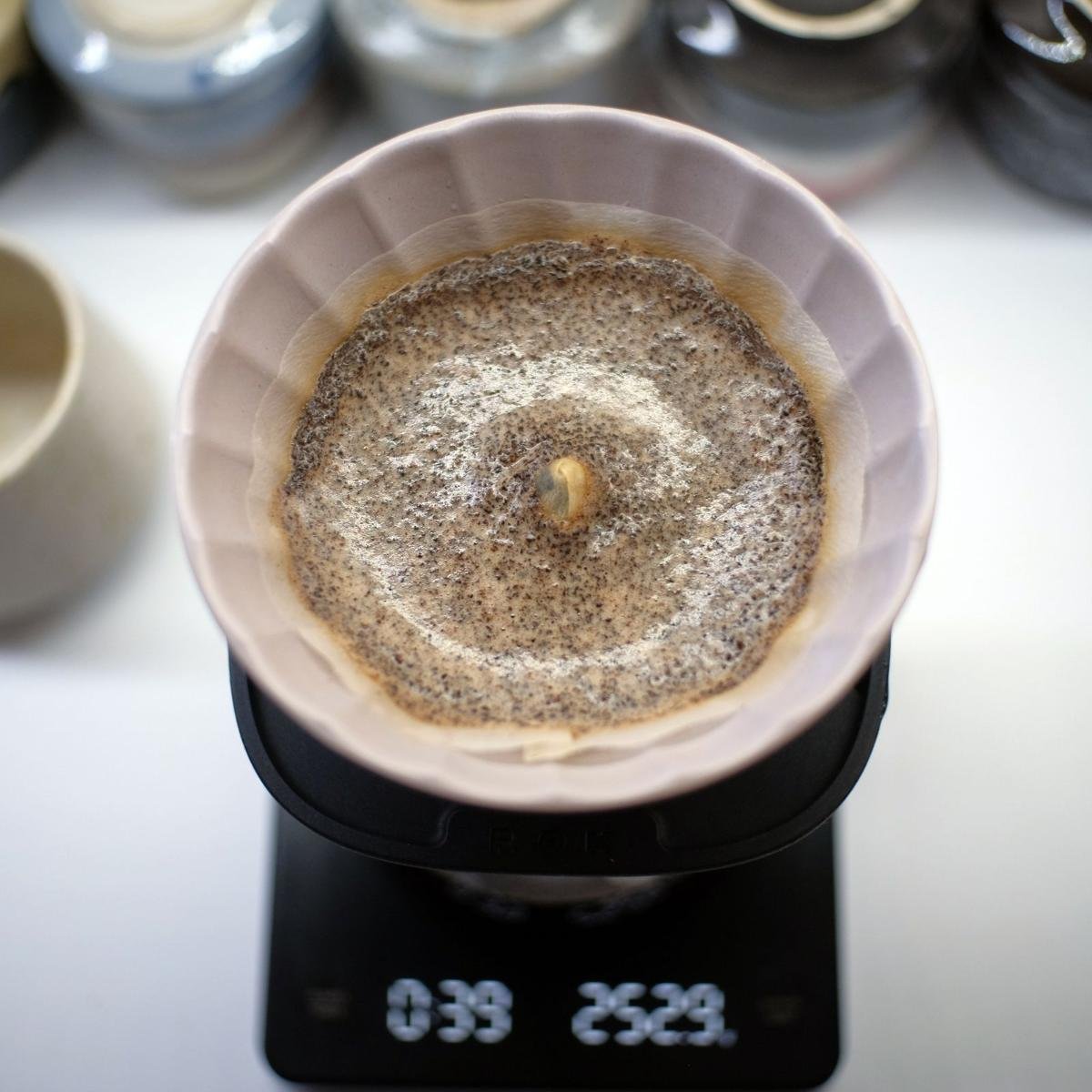
If you make pour-over, the bloom is one of the easiest ways to see how the beans behave. The bloom is the first stage, when a small amount of water is added to the grounds before the main pour. As water reaches the coffee, trapped gas escapes and the grounds expand. A noticeable bloom can mean the coffee still holds a fair amount of gas, especially with relatively recently roasted beans. If you want to practice, our V60 pour-over guide shows the bloom step by step.
Bloom size should not be treated as a freshness meter, though. A huge bloom does not necessarily mean the coffee is better, was roasted yesterday, or is ready to brew, and a smaller bloom does not automatically mean it is stale. Grind size, roast level, coffee density, brewing method, water temperature, and the amount of coffee can all change what you see. As coffee ages, the bloom generally becomes less dramatic, and coffee that has lost much of its aroma may show very little activity. Still, a coffee that produces little bloom and also smells flat and tastes dull tells you much more than a small bloom alone.
Signs That Coffee May Be Getting Stale
Stale coffee is not always easy to spot from the beans alone. The biggest clues tend to show up in the aroma and the cup. Look for several of these together:
- The aroma seems noticeably weaker or flatter.
- Ground coffee has little fragrance right after grinding.
- The brewed cup tastes dull rather than expressive, and distinctive flavor notes are harder to pick out.
- Pour-over coffee produces very little visible bloom.
- The cup seems less lively even though the recipe has not changed.
None of these signs has a universal cutoff. Coffee changes gradually, and what you notice depends on the roast, the beans, the packaging, and how the coffee was handled. If a cup tastes flat or bitter and you are not sure why, bitter vs. sour coffee and common brewing mistakes are worth a look too, since freshness is only one possible cause.
Freshness Is About More Than Age
Two coffees of the same age can behave differently. A roast designed to give a light, delicate cup may not resemble a darker roast at the same point after roasting, which is why freshness is better understood as a mix of age, roast characteristics, aroma, brewing behavior, and taste. The roast date gives you context, and your senses tell you what the coffee is doing now. For more on how roast level changes beans, read how coffee roasting works.
Whole Bean vs. Pre-Ground Coffee
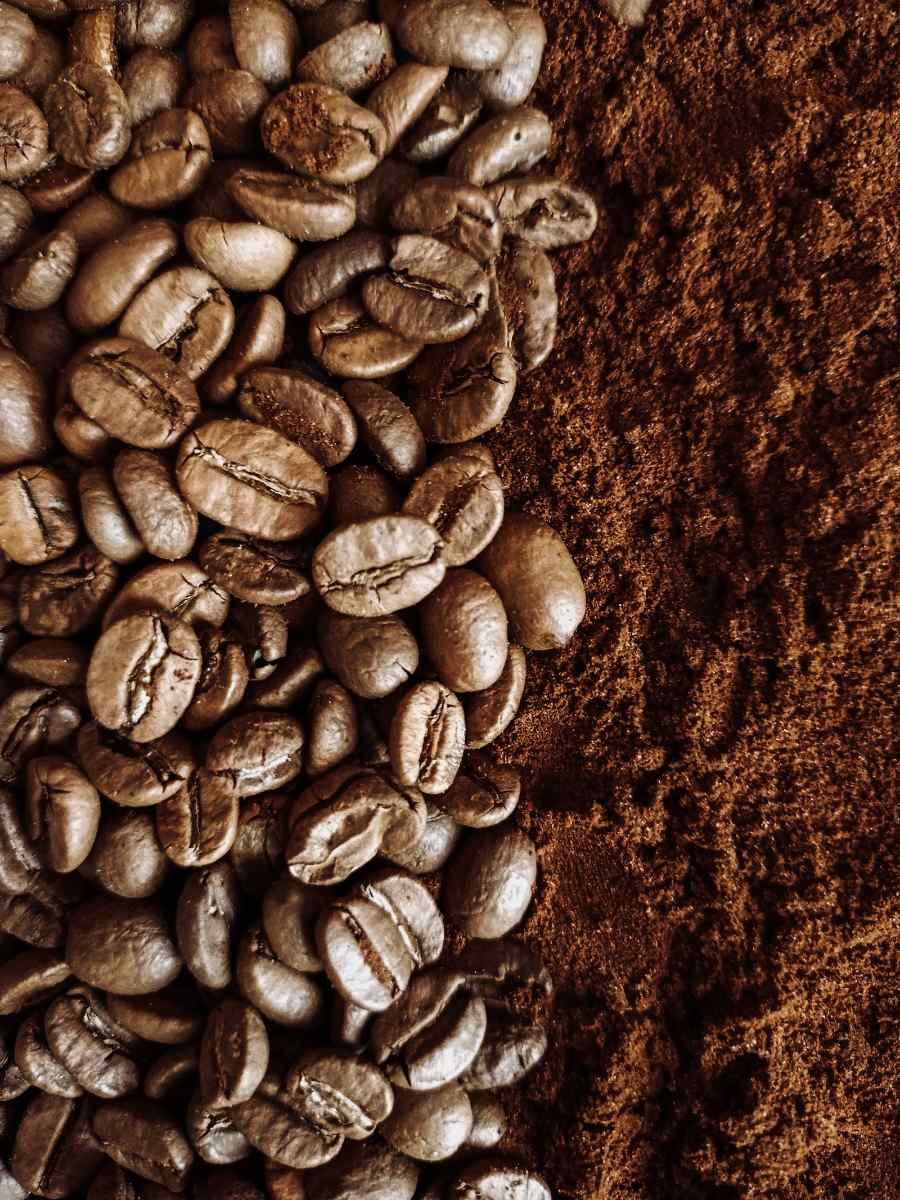
Grinding dramatically increases the amount of coffee exposed to the surrounding air, so pre-ground coffee generally loses aromatic character more quickly than whole beans under otherwise similar conditions. A whole bean has a relatively limited exposed surface, while ground coffee is thousands of small particles with far more surface exposed. You can notice this by comparing the aroma right after grinding with coffee that was ground some time earlier.
If you have both options, grinding whole beans just before brewing generally gives you a better chance of keeping the coffee’s aroma and flavor. That does not mean every pre-ground coffee is stale, only that grinding is an important part of the freshness equation. If you are considering a grinder, see how to choose a coffee grinder.
How to Judge Pre-Ground Coffee
Because you cannot inspect the beans, aroma and cup quality matter even more with pre-ground coffee:
- Aroma: does it still smell distinctly like coffee, or is it unusually flat?
- Brewing behavior: does it show some normal activity when water is added?
- Taste: does the cup have recognizable character, or does it seem dull and muted?
- Consistency: does the coffee behave similarly from one brew to the next?
A Simple Freshness Check
You can turn all of this into a short routine whenever you open a new bag:
- Read the roast date. Use it as context rather than a guarantee of quality.
- Smell the beans. Look for recognizable aroma and character rather than simply asking whether the smell is strong.
- Watch the brew. If you make pour-over, notice the bloom and how the coffee bed behaves, but do not use bloom size alone as a freshness test.
- Taste the coffee. Ask whether the cup tastes lively and expressive or unusually flat and dull.
The most reliable judgment comes from looking at these signs together, as the table below summarizes. It is intentionally simple, because no single sign tells the whole story.
Freshness Signs at a Glance
| Sign | What it can mean | How reliable? |
|---|---|---|
| Recent roast date | The coffee was not roasted long ago | Useful context, not a guarantee |
| Strong bloom | More gas is still being released | Moderate clue |
| Very flat aroma | Aromatic character may have faded | Useful clue |
| Shiny or oily beans | Often related to roast level | Low reliability by itself |
| Little bloom | Less trapped gas remains | Low to moderate by itself |
| Dull, muted cup | The coffee may have lost freshness | Stronger when combined with other signs |
| Strong aroma after grinding | Aromatic compounds are still noticeable | Useful clue |
FAQ: Coffee Freshness Questions Beginners Ask
Is coffee fresher if it was roasted yesterday?
Not necessarily. Very recently roasted coffee is still releasing gas, and some coffees taste more balanced after a little time has passed. The ideal point varies with the coffee and the roast.
How long should coffee rest after roasting?
A common starting point is about a week after the roast date for filter coffee and around 7–14 days for espresso, based on the guidance published by roasters such as Clive Coffee and The Barn. Exact timing still varies by roast and coffee, so taste is the final check.
Does oily coffee mean the beans are fresh?
No. Surface oil is strongly influenced by roast level, especially with darker roasts, so oil alone is not a dependable sign of freshness.
Why does fresh coffee bloom so much?
Freshly roasted beans can hold more carbon dioxide, which escapes when hot water reaches the grounds. That escaping gas makes the coffee bed expand and bubble during the bloom.
Can coffee still taste good if it is not very fresh?
Yes. Freshness is only one part of the coffee experience, and taste is personal. Coffee can gradually lose aromatic intensity and become less expressive over time, though.
Is whole-bean coffee fresher than pre-ground coffee?
Whole beans generally keep their aroma better because grinding exposes much more surface area to air. Pre-ground coffee can still be enjoyable, but its freshness changes more quickly.
Final Thoughts
Judging coffee freshness is less about finding one perfect number and more about learning to recognize what the coffee is telling you. Start with the roast date, then pay attention to the aroma, the bloom, and the flavor in the cup. Once those signs become familiar, it gets much easier to tell the difference between coffee that is still lively, coffee that is settling after roasting, and coffee that has simply lost some of its character.
