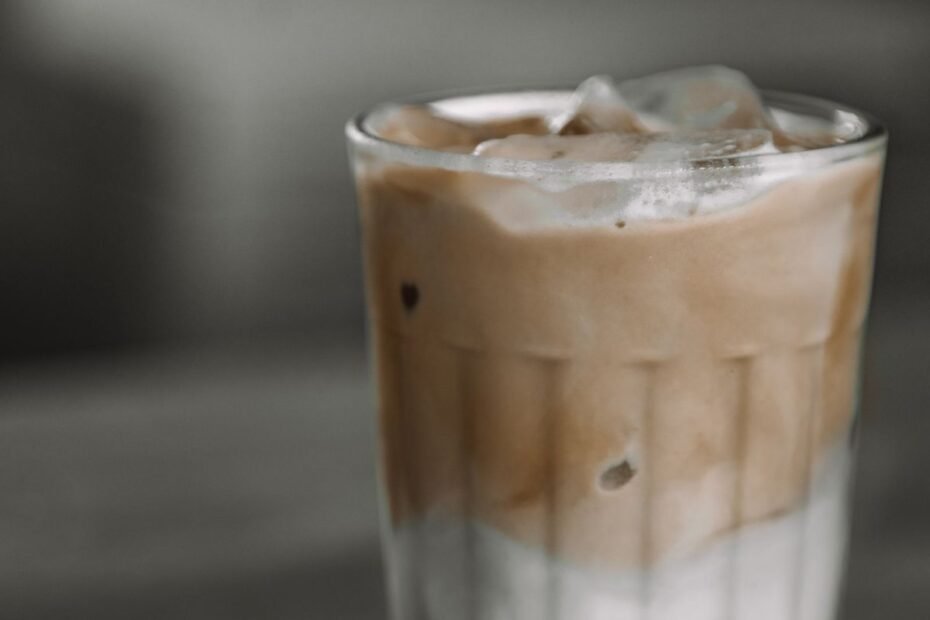
An iced latte is one of the simplest coffee drinks to make at home: espresso, cold milk, and ice are all you really need. The tricky part is keeping the coffee flavorful instead of watery or overly milky. This guide walks through an easy iced latte recipe, explains how to make one without an espresso machine, and covers a few simple adjustments that can make a noticeable difference.
What Is an Iced Latte?
An iced latte is a cold coffee drink made by combining espresso with cold milk and ice. Unlike an iced coffee made from regular brewed coffee, a traditional latte starts with espresso. The drink is usually served without the thick milk foam associated with a hot latte. Instead, the focus is on the combination of chilled milk, concentrated coffee, and ice. If you’d like a hot version first, see how to make a latte without an espresso machine.
What You Need
For one iced latte, gather:
- 1–2 shots of espresso, about 30–60 ml
- 150–200 ml cold milk
- A glass filled with ice
- Optional sweetener
- Optional vanilla or another flavoring
The amount of milk can be adjusted according to taste. Using more milk produces a lighter coffee flavor, while less milk creates a more concentrated drink.
What Kind of Milk Can You Use?
Regular dairy milk works well, but there is no requirement to use it. Depending on your preference, you can use:
- Whole milk
- Semi-skimmed milk
- Oat milk
- Soy milk
- Almond milk
- Other milk alternatives
Different types of milk can change the texture and flavor of the drink, so the choice is largely a matter of taste.
How to Make an Iced Latte at Home
The basic method is quick, but a couple of small details help prevent the drink from becoming diluted. Fresh espresso is very hot, so handle it with care.
Step 1: Prepare the Espresso
Start by making one or two shots of espresso. A useful starting point for one drink is:
- Coffee: 18 g
- Espresso yield: about 36 g
- Ratio: approximately 1:2
If you use a different espresso recipe, that’s fine. The important thing is to have a concentrated coffee that can hold its flavor after being combined with milk and ice. New to making espresso? Espresso at home covers the basics.
Step 2: Let the Espresso Cool Slightly
Fresh espresso is very hot, while your milk and ice are cold. Pouring extremely hot espresso directly over a glass full of ice can melt some of the ice immediately. This isn’t necessarily a problem, but it can dilute the drink faster. Let the espresso sit for a short time while you prepare the glass and milk. It doesn’t need to become completely cold.
Step 3: Fill the Glass With Ice
Choose a reasonably large glass and fill it with ice. Larger, solid pieces of ice are generally useful because they melt more slowly than very small pieces. Avoid leaving too little ice in the glass, since a small amount can disappear quickly once the coffee and milk are added.
Step 4: Add the Cold Milk
Pour approximately 150–200 ml of cold milk over the ice. If you prefer a stronger coffee flavor, start closer to 150 ml. If you like a lighter latte, increase the amount of milk.
Step 5: Add the Espresso
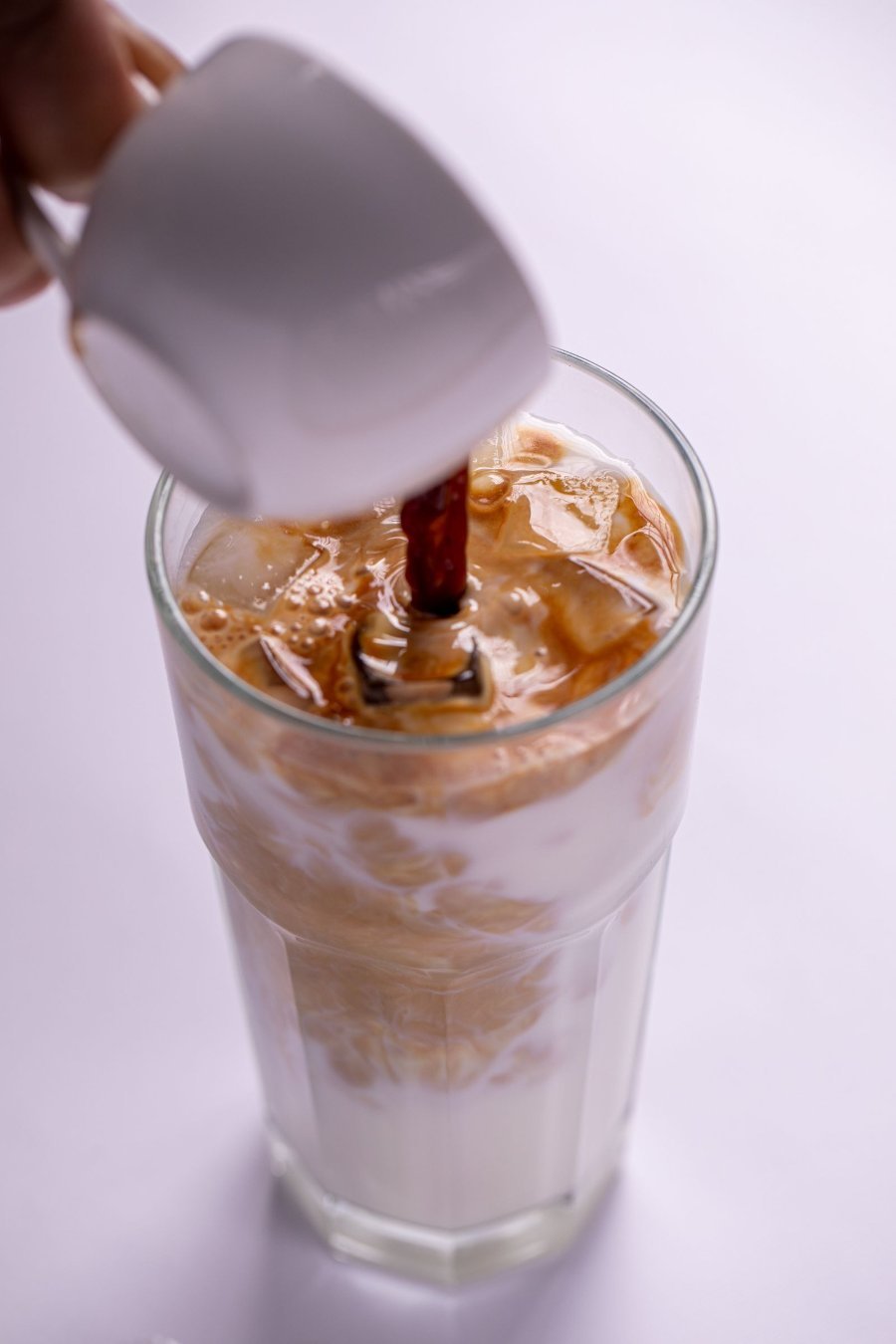
Slowly pour the espresso over the cold milk and ice. The coffee may create a layered appearance as it mixes with the milk. Stir before drinking if you want the flavor evenly distributed.
Step 6: Sweeten if Desired
If you like a sweeter iced latte, add your preferred sweetener. Liquid sweeteners are generally easier to mix into a cold drink than granulated sugar. You can also dissolve sugar into the warm espresso before adding it to the milk, which is especially useful because sugar doesn’t dissolve as easily in very cold liquid.
How to Make an Iced Latte Without an Espresso Machine
Not everyone has an espresso machine at home, and you can still make a cold milk-and-coffee drink with other brewing methods. The result won’t be technically identical to an espresso-based latte, but it can still make a satisfying iced coffee drink.
Using a Moka Pot
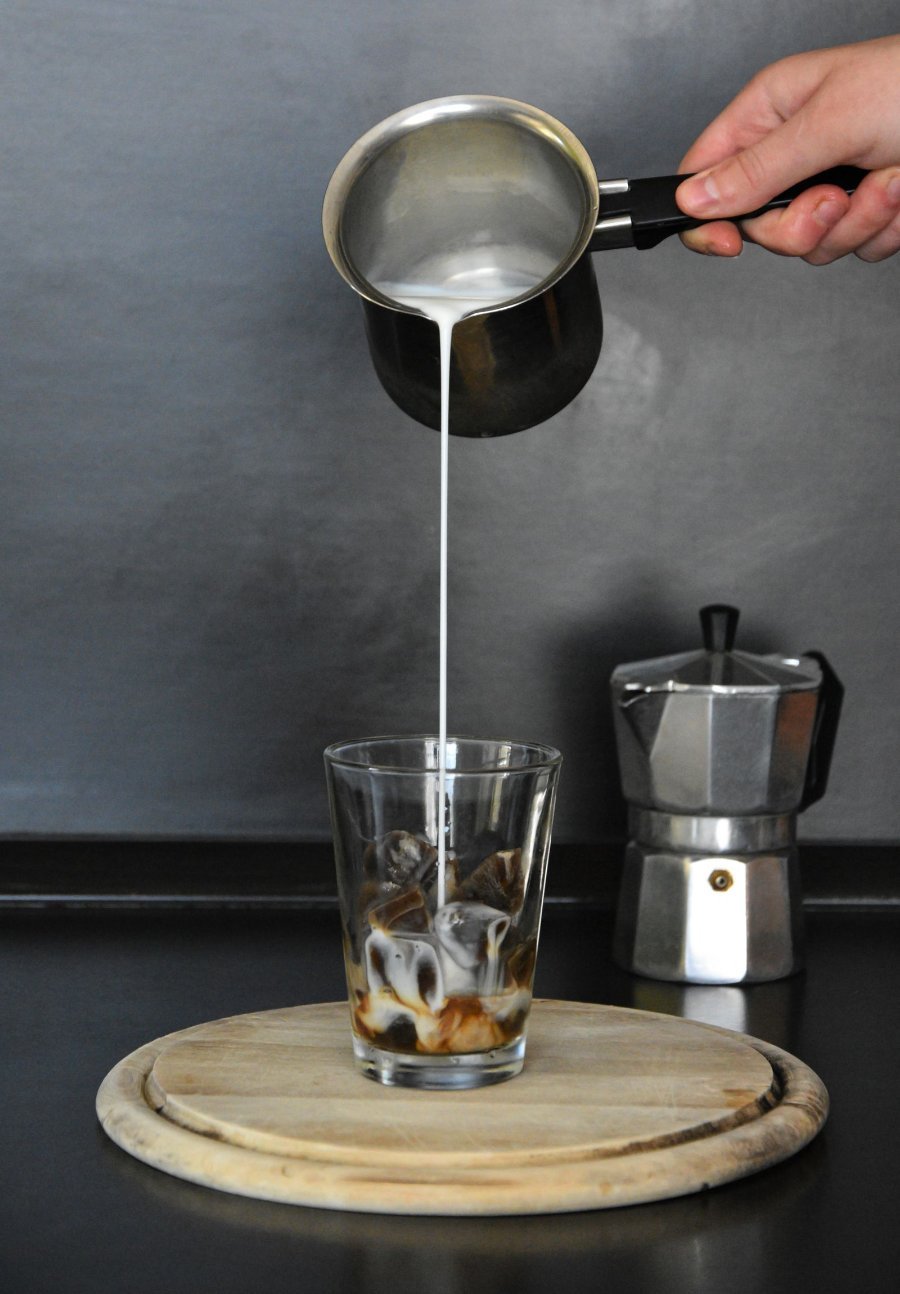
A moka pot produces concentrated coffee that works well as an alternative. If you’re new to it, how to use a moka pot walks through the process. For one drink:
- Prepare a small amount of strong moka pot coffee.
- Let it cool slightly.
- Fill a glass with ice.
- Add cold milk.
- Pour the coffee over the top.
- Stir and adjust the milk to taste.
Because moka pot coffee isn’t espresso, the flavor and texture will be different. It’s best described as an iced latte-style drink rather than a traditional espresso-based iced latte.
Using Strong Brewed Coffee
You can also make a concentrated batch of regular coffee. Use a little less water than you normally would so the coffee has enough intensity to stand up to the milk and ice, and allow it to cool before assembling the drink. A practical starting point is:
- 120–150 ml strong brewed coffee
- 150–200 ml cold milk
- Ice to fill the glass
Adjust the ratio depending on how strong you want the final drink. The coffee-to-water ratio guide can help you dial in a stronger brew.
With only a splash of milk, or none at all, the drink is closer to a simple iced coffee: regular brewed coffee, cooled and served over ice.
Using Instant Coffee
Instant coffee can also work when convenience is the priority. Dissolve the coffee completely in a small amount of hot water first, let it cool briefly, then add it to cold milk and ice. The important part is keeping the amount of water relatively small so the drink doesn’t become too diluted.
How to Keep an Iced Latte From Tasting Watery
Melting ice adds water, so an iced latte needs a coffee base strong enough to stay noticeable under the milk. Use espresso or another concentrated coffee, start with around 150 ml of cold milk for one drink and add more only if you want it lighter, and make sure the milk is already cold and the espresso has cooled for a moment so less ice melts straight away. For more ways to limit dilution, including coffee ice cubes, see our iced coffee guide.
Easy Iced Latte Variations
Once the basic recipe works, changing the flavor is simple. If you like a chocolate version, try the mocha recipe as well.
Vanilla Iced Latte
Add a small amount of vanilla syrup or vanilla extract to the espresso before combining it with the milk. If using vanilla extract, use a small amount because its flavor can become noticeable quickly.
Iced Mocha Latte
Mix chocolate sauce or cocoa with the warm espresso before adding the coffee to the milk and ice. This works best when the chocolate is completely incorporated into the coffee.
Cinnamon Iced Latte
Add a small pinch of cinnamon to the espresso or sprinkle a little over the finished drink. Cinnamon doesn’t dissolve particularly well in cold liquid, so mixing it into the warm coffee first can distribute the flavor more evenly.
Caramel-Style Iced Latte
A caramel-flavored sweetener can be added to the espresso before assembling the drink. Start with a small amount and adjust according to taste, because too much sweetness can easily hide the coffee.
FAQ: Iced Latte Questions for Beginners
Can I make an iced latte with regular coffee?
Yes. Strong brewed coffee can replace espresso, although the drink will have a different flavor and texture. Use less water when brewing if you want the coffee to stand up better to the milk and ice.
Should I cool espresso before making an iced latte?
It helps. Letting the espresso cool briefly reduces how quickly the ice melts, which can help limit dilution.
Why does my iced latte taste watery?
Usually it is melting ice combined with weak coffee or too much milk. The section on keeping an iced latte from tasting watery, above, covers the fixes.
Can I make an iced latte without an espresso machine?
Yes. A moka pot, strong brewed coffee, or instant coffee can be used as alternatives. The resulting drink won’t be exactly the same as an espresso-based latte, but the basic cold coffee-and-milk combination still works.
Can I make an iced latte ahead of time?
You can prepare the coffee in advance and refrigerate it, then combine it with cold milk and ice when you’re ready to drink it. Keeping the ice separate until serving helps prevent unnecessary dilution. For a fully make-ahead option, cold brew at home is worth a look.
Final Thoughts
A good iced latte doesn’t need a complicated recipe. Start with concentrated coffee, cold milk, plenty of ice, and a ratio that suits your taste. Once those basics are right, small changes in milk, sweetness, and flavorings are enough to create plenty of different versions at home. For pitfalls that apply to any coffee, see common coffee brewing mistakes.
Related reading: How to Make Dalgona Coffee · How to Make Cold Foam at Home
