
Chemex coffee is known for its clean flavor, elegant glass brewer, and surprisingly simple brewing process. In this guide, you’ll learn how to prepare Chemex coffee from start to finish, including the right grind size, coffee-to-water ratio, pouring technique, and easy adjustments if your brew doesn’t taste quite right.
What Is Chemex Coffee?
The Chemex is a manual pour-over coffee maker made from heat-resistant glass with a distinctive hourglass shape. It uses specially designed paper filters that are thicker than many standard pour-over filters, which helps produce a particularly clean cup with less sediment and a lighter mouthfeel. The brewer itself is simple: you place a filter in the top, add ground coffee, slowly pour hot water over it, and let the brewed coffee collect in the lower chamber.
That simplicity is part of the appeal. You don’t need complicated settings or a lot of equipment to get started, although a few basic tools can make the process much easier to repeat consistently. If you have brewed with a V60 pour-over before, the technique will feel familiar, and if you are still deciding between methods, our comparison of a drip coffee maker vs. pour-over can help.
What You’ll Need
For a straightforward beginner setup, gather:
- Chemex brewer
- Chemex paper filter
- Fresh coffee beans
- Coffee grinder
- Digital kitchen scale
- Gooseneck kettle, if available
- Timer
- Hot water
- Mug or serving cup
A gooseneck kettle isn’t absolutely necessary, but its narrow spout gives you much better control over the water flow. A digital scale is also worth using because measuring both coffee and water by weight makes it easier to repeat a recipe. If you are still shopping for a grinder, see how to choose a coffee grinder for home use.
How Much Coffee Should You Use?
A good starting point is a coffee-to-water ratio of around 1:15 to 1:17. For example:
- 30 g coffee + 450 g water
- 30 g coffee + 500 g water
- 40 g coffee + 600 g water
For a first attempt, 30 g of coffee and 500 g of water is a comfortable recipe to work with. Once you’ve tasted the result, you can adjust the ratio according to your preference. Our guide to the coffee-to-water ratio explains how to scale a recipe up or down.
How to Make Chemex Coffee Step by Step
The Chemex brewing process isn’t complicated, but the details matter. The most important things to pay attention to are the grind, water temperature, pouring speed, and total brewing time.
1. Heat the Water
Heat your water to approximately 90–96°C (194–205°F). If you don’t have a kettle with temperature control, bring the water to a boil and let it sit briefly before brewing. The exact waiting time will depend on your kettle and the amount of water, so there’s no need to obsess over a precise number. The goal is simply to avoid pouring aggressively boiling water directly onto the coffee.
2. Prepare the Filter
Open the Chemex paper filter and place it in the top of the brewer. One side of the filter will have a thicker section. Position that thicker section over the pouring spout of the Chemex, which helps the filter sit properly inside the brewer.
Before adding your coffee, rinse the filter thoroughly with hot water. This step does two useful things:
- It removes some of the paper taste from the filter.
- It warms the Chemex before brewing.
Discard the rinse water before continuing.

3. Grind the Coffee
Grind your coffee to a medium-coarse consistency. The grounds should generally be coarser than what you’d use for espresso but not as coarse as some French press recipes. A good starting point is to grind the coffee shortly before brewing, since freshly ground beans usually make it easier to get a more aromatic and flavorful cup.
If the coffee tastes weak and finishes brewing very quickly, the grind may be too coarse. If the water takes a long time to pass through and the coffee tastes harsh or bitter, the grind may be too fine. For more on this, read why coffee grind size matters.
4. Add the Coffee and Level the Grounds
Place the Chemex on your scale and add your ground coffee. For the starting recipe:
- 30 g coffee
- 500 g water
- Medium-coarse grind
Give the brewer a gentle shake or small circular movement to level the coffee bed. A relatively even bed makes it easier for water to flow through the grounds consistently.
5. Start With the Bloom
Start your timer and slowly pour enough water to wet all the coffee grounds. For 30 g of coffee, use roughly 60–90 g of water for the bloom. Make sure there aren’t large dry patches left in the coffee bed; you can gently swirl the Chemex if necessary. Let the coffee bloom for about 30–45 seconds.
During this stage, the grounds release trapped gases. You’ll often see the coffee bed expand or bubble slightly, particularly when using relatively fresh coffee.
6. Continue Pouring Slowly
After the bloom, begin adding the remaining water gradually. Pour in slow, controlled circles, starting near the center and moving outward without constantly hitting the paper filter. For the 30 g coffee recipe, gradually work your way toward a total of 500 g of water.
Try to keep the coffee bed relatively level rather than flooding it with a large amount of water all at once. You don’t need to make perfect circles; consistent flow is more important than trying to create a complicated pouring pattern.
7. Let the Coffee Drain
Once you’ve added all the water, allow it to pass through the coffee grounds and filter. The total brew time will vary depending on the coffee, grind size, filter, pouring technique, and amount you’re making. A rough target for this recipe is around 4–5 minutes.
Don’t treat that number as a rule you must force the coffee to meet. Taste is more useful than the timer by itself. If the coffee tastes good at four minutes, there’s no reason to change your recipe simply because another guide says it should take longer.
8. Remove the Filter and Serve
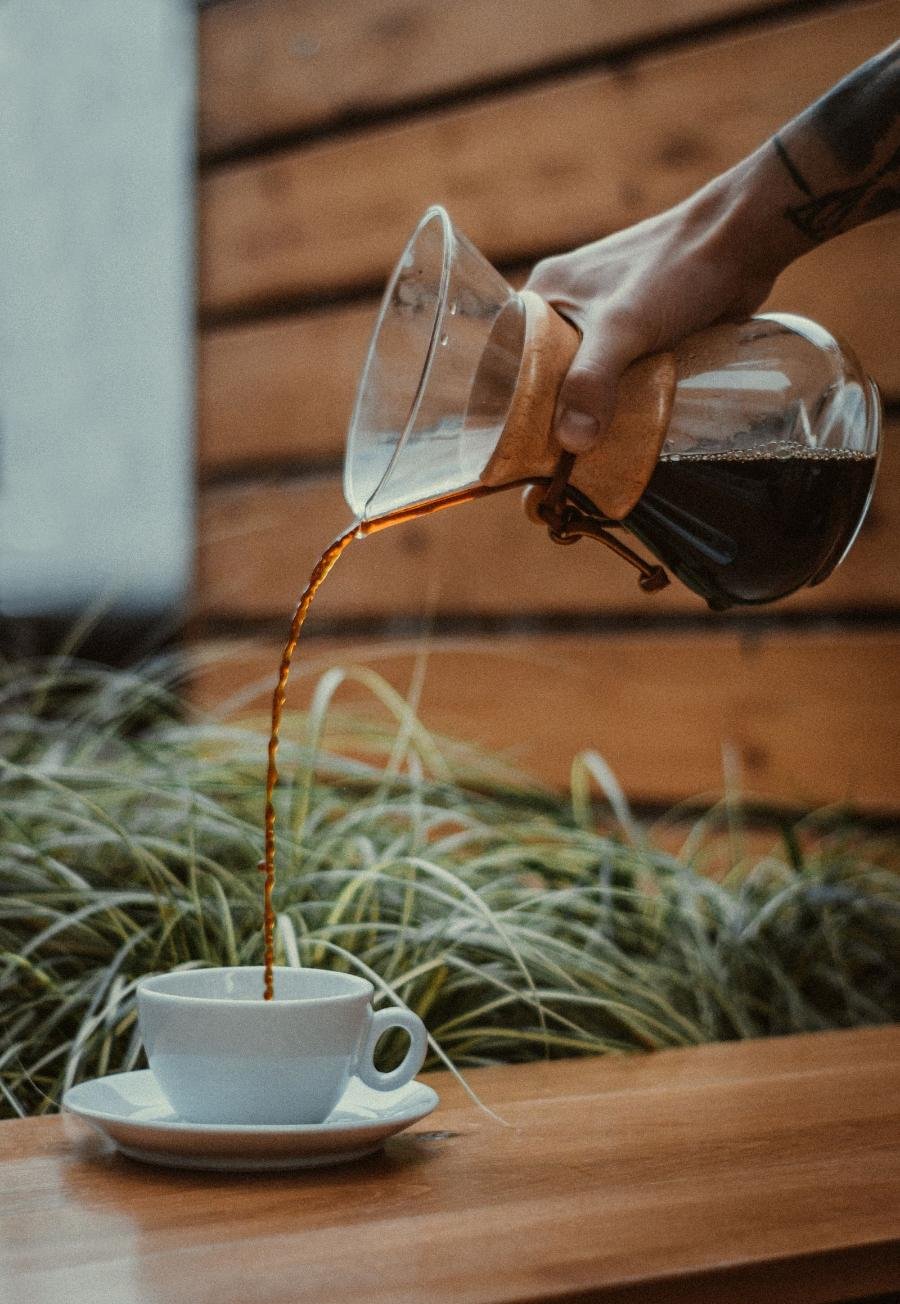
Once most of the water has drained, carefully remove the filter and used coffee grounds. Give the brewed coffee a gentle swirl before serving, which can help mix the coffee evenly, particularly when different parts of the brew have passed through the filter at different stages. Pour into your favorite mug and taste it while it’s still warm.
How to Adjust Your Chemex Recipe
One of the best things about manual brewing is that small changes can make a noticeable difference. You don’t need to change everything at once. Start with one recipe and adjust one variable at a time.
If Your Coffee Tastes Too Bitter or Too Sour
The Chemex’s thick paper filter slows drainage, so small grind changes have a large effect on total brew time. If the cup is sour and the water drained quickly, grind a little finer; if it is bitter and the brew stalled, grind a little coarser. Uneven wetting during the bloom can also leave part of the coffee under-extracted, so make sure all the grounds are saturated before continuing. Keep in mind that some coffees are naturally bright: a coffee with citrus or berry notes will taste different from a chocolate-forward coffee even when both are brewed well. For a full checklist, see bitter vs. sour coffee.
If the Coffee Tastes Weak
If the cup tastes thin or watery, consider changing the coffee-to-water ratio. For example, you could try:
- 30 g coffee + 450 g water instead of 500 g.
- Using a slightly finer grind.
- Checking that you’re actually using the amount of coffee you intended.
Sometimes the issue isn’t the brewing technique at all. The coffee itself may simply have a lighter flavor profile.
Common Chemex Mistakes Beginners Make
Chemex brewing is forgiving, but a few habits can make the results inconsistent. (Our roundup of common coffee brewing mistakes covers more of them.)
Using the Wrong Filter
Chemex filters are designed specifically for the brewer. Their thickness is part of what gives Chemex coffee its characteristic clean cup, and using an unsuitable filter can change the flow rate and the final texture.
Skipping the Filter Rinse
A quick hot-water rinse is simple and takes only a few seconds. It also warms the brewer and helps prevent the finished coffee from picking up an obvious paper flavor.
Grinding Too Fine
A very fine grind can slow the brew considerably. If the coffee bed stays flooded for a long time and the finished cup tastes harsh, try moving coarser.
Pouring Too Quickly
Dumping a large amount of water into the Chemex can disturb the coffee bed and make the extraction less consistent. A controlled pour gives you more influence over how quickly water moves through the grounds.
Changing Too Many Variables at Once
If your coffee doesn’t taste right, it’s tempting to change the grind, ratio, temperature, and pouring technique all at once. Instead, change one variable, brew again, and compare the results. This makes it much easier to understand what actually improved the cup.
Choosing Coffee for a Chemex
There isn’t one specific type of coffee that you have to use with a Chemex. Light and medium roasts are popular because the clean filtration can make delicate flavors easier to notice, and coffees with citrus, floral, fruit, caramel, or tea-like characteristics can work particularly well. Medium and darker roasts can also be brewed successfully if that’s what you enjoy.
When choosing beans, consider:
- Roast level: lighter coffees often show more acidity and delicate flavors.
- Flavor profile: choose notes that sound appealing to you.
- Freshness: reasonably fresh beans generally give a more enjoyable brewing experience.
- Grind: buy whole beans if you have a grinder and want more control.
- Origin: different growing regions can produce noticeably different flavor profiles.
There is no requirement that Chemex coffee taste light or delicate. If you prefer a fuller, more chocolatey cup, choose a coffee that naturally leans in that direction. And once the bag is open, storing your beans properly helps them stay at their best.
FAQ About Chemex Coffee
Is Chemex coffee stronger than regular coffee?
It depends on how you prepare it. The coffee-to-water ratio, serving size, and brewing method all affect the final cup, so Chemex isn’t automatically stronger or weaker than other brewing methods.
What grind size should I use for Chemex?
Start with a medium-coarse grind. If the coffee drains too quickly and tastes weak, try going a little finer; if it drains very slowly and tastes harsh, go a little coarser.
How long should Chemex coffee take to brew?
For a recipe around 30 g of coffee and 500 g of water, around 4–5 minutes can be a useful starting point. However, total time varies with the coffee, filter, grind, and pouring technique, so flavor should guide your adjustments.
Do I need a special kettle for a Chemex?
No. A regular kettle can work, but a gooseneck kettle makes it easier to control the speed and direction of your pour. If you’re just starting out, you can learn the basic technique before investing in additional equipment.
Why does my Chemex coffee taste bitter?
A bitter cup can result from extracting too much from the coffee. Try a slightly coarser grind, a slightly lower water temperature, or a somewhat faster brew, changing only one variable at a time.
Can I use pre-ground coffee in a Chemex?
Yes. Pre-ground coffee can work, especially if you don’t have a grinder. However, grinding immediately before brewing gives you more control and can help preserve the coffee’s aroma and flavor.
Final Thoughts
Chemex brewing looks more complicated than it really is. Once you have the basic ratio, a suitable grind, hot water, and a controlled pouring technique, the process becomes quite straightforward. Start with a simple recipe, taste the result, and make small adjustments rather than chasing a perfect formula, because the best Chemex coffee is ultimately the cup you enjoy drinking.
Related reading: Coffee Filters Explained
