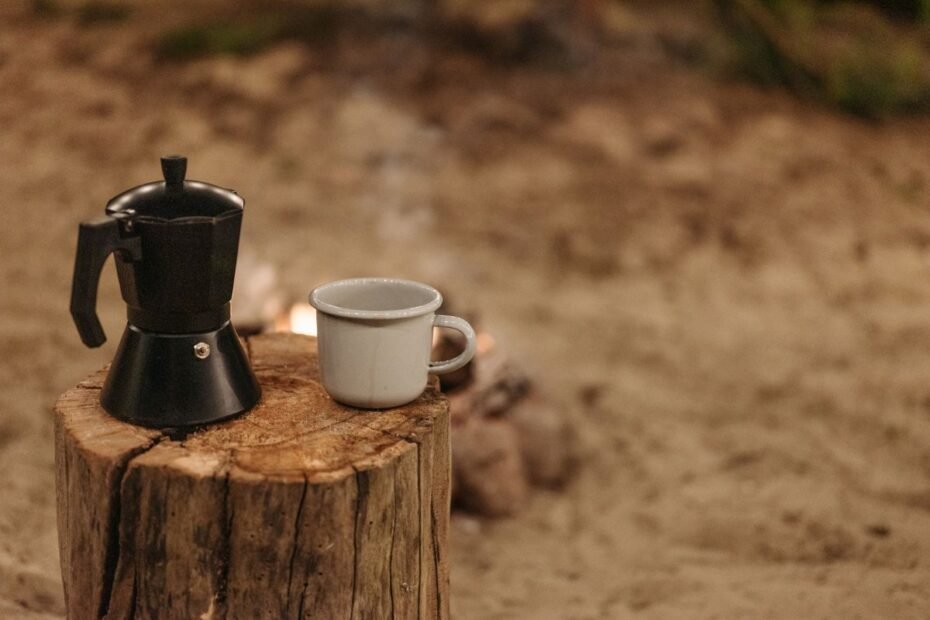
Cowboy coffee is one of the simplest ways to make a hot cup of coffee outdoors. All you really need is ground coffee, water, a pot, and a heat source, which makes it useful for camping trips when carrying extra brewing equipment is not practical. The trick is not the equipment but knowing how to control the heat, settle the grounds, and pour carefully enough to leave most of them at the bottom of the pot.
What Is Cowboy Coffee?
Cowboy coffee is a simple immersion method in which ground coffee is brewed directly in hot water inside a pot. There is no paper filter, press, dripper, or dedicated coffee maker involved. It has a long association with outdoor cooking and travel because the basic setup is so simple, and a sturdy pot over a campfire or camp stove can do the entire job. The coffee grounds remain in the pot while the coffee brews, so the final step is especially important: let the grounds settle before pouring. (If you’re at home without a machine, see how to make coffee without a coffee maker for other options.)
What Makes It Useful for Camping?
The method works well when you want to keep your cooking kit small. You need:
- A heat-safe pot
- Water
- Ground coffee
- A campfire or camp stove
- A cup or mug
A spoon is useful but not essential. The simplicity also makes cowboy coffee adaptable. If you only have one pot and one cup, you can still make it.
Is Cowboy Coffee Supposed to Be Gritty?
It can be if the coffee is poured too aggressively or the grounds are too fine. Some sediment is normal because there is no filter separating the coffee from the grounds. The goal is not necessarily to produce a completely sediment-free cup, but to keep most of the grounds at the bottom of the pot.
Cowboy Coffee Ingredients and Basic Recipe
This recipe makes approximately 2 cups, depending on the size of your mugs.
Ingredients
- 30 g coarsely ground coffee
- 500 ml water
For one serving, use approximately 15 g coffee and 250 ml water. These amounts are starting points. If you like stronger coffee, increasing the coffee slightly is usually easier than dramatically extending the brewing time. The coffee-to-water ratio guide explains how to scale the recipe.
What Grind Size Should You Use?
Use a coarse grind, similar to what you would use for a French press. The particles should be noticeably larger than those used for espresso or most pour-over brewing. A coarse grind helps because:
- It is easier to let the grounds settle.
- Fewer very small particles remain floating in the coffee.
- The final cup can contain less sediment.
- The coffee is less likely to become excessively extracted during immersion.
Avoid using finely ground coffee if you have a choice, since fine particles stay suspended longer and are much more likely to end up in the cup. If you grind at home before a trip, why coffee grind size matters explains what to aim for, and the French press beginner’s guide shows what a coarse grind looks like.
How to Make Cowboy Coffee Over a Campfire
The basic method is simple, but outdoor heat can be unpredictable. A campfire can go from gentle heat to aggressive boiling quickly, so paying attention to the pot is more important than following a timer perfectly.
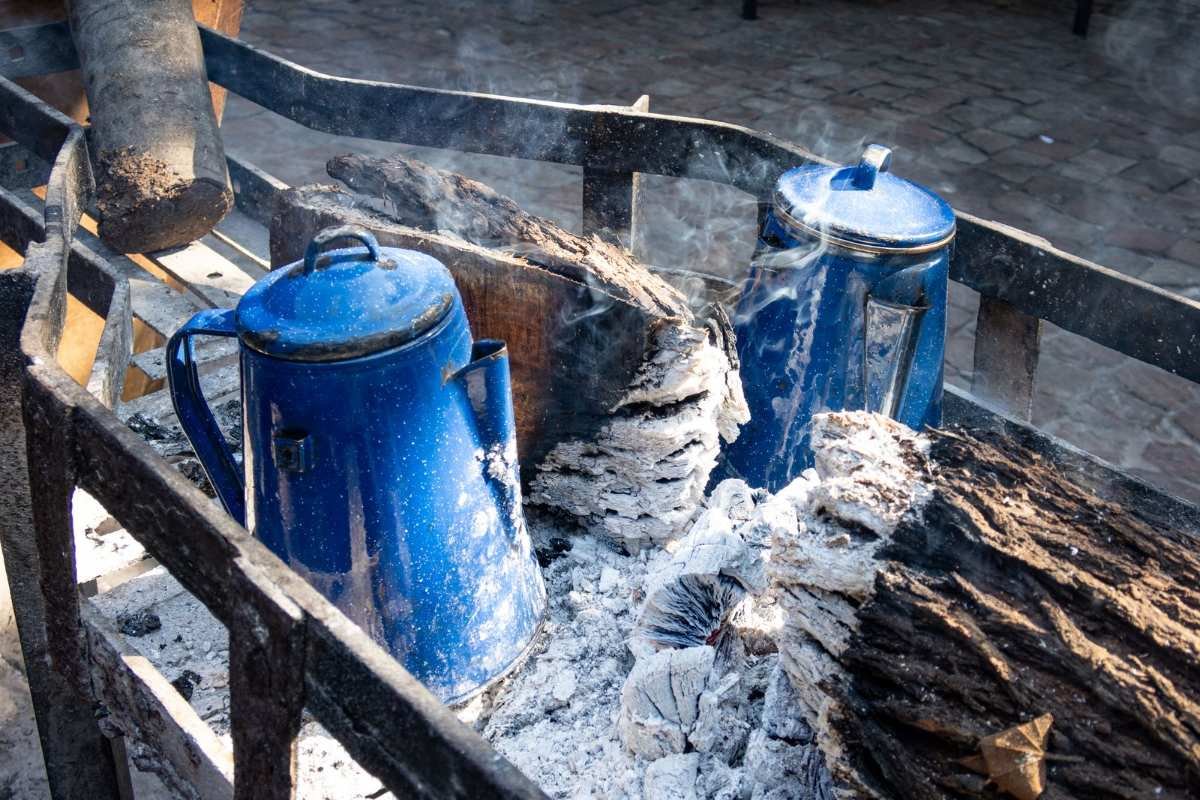
- Measure the water. Pour 500 ml of water into a sturdy, heat-safe camping pot. If possible, use a pot large enough to leave some space above the water, which makes it easier to handle and reduces the chance of boiling water spilling over the sides.
- Heat the water. Place the pot over your campfire or another appropriate heat source and heat the water until it is very hot and approaching a simmer. There is no need to maintain an aggressive rolling boil. If the fire is very strong, move the pot slightly away from the hottest part of the heat source.
- Add the coffee. Once the water is hot, add 30 g of coarse-ground coffee and stir gently once so that the grounds become evenly wet. The coffee may initially float on the surface, which is normal.
- Let it brew. Allow the coffee to steep for approximately 4 minutes. Keep the heat gentle during this stage, since the goal is to brew the coffee, not to cook it at a hard boil. If your fire is difficult to control, moving the pot to a cooler part of the cooking area can help.
- Let the grounds settle. This is one of the most important steps. After brewing, remove the pot from the heat and leave it undisturbed for 1–2 minutes. As the water stops moving, many of the coffee grounds will sink toward the bottom. Some campers also give the pot a very gentle tap on the side before letting it sit, but unnecessary movement can suspend the grounds again. For the cleanest cup possible, simply letting the pot rest is often the easiest approach.
- Pour slowly. Pick up the pot carefully and pour the coffee into your cup, slowly and steadily. As the pot gets closer to empty, avoid tipping it sharply. The last portion contains more settled grounds, so leaving a small amount of coffee in the pot can prevent a large amount of sediment from reaching your cup. If you are making coffee for several people, pour gently into each cup rather than stirring the pot between servings.
How to Make Cowboy Coffee on a Camp Stove
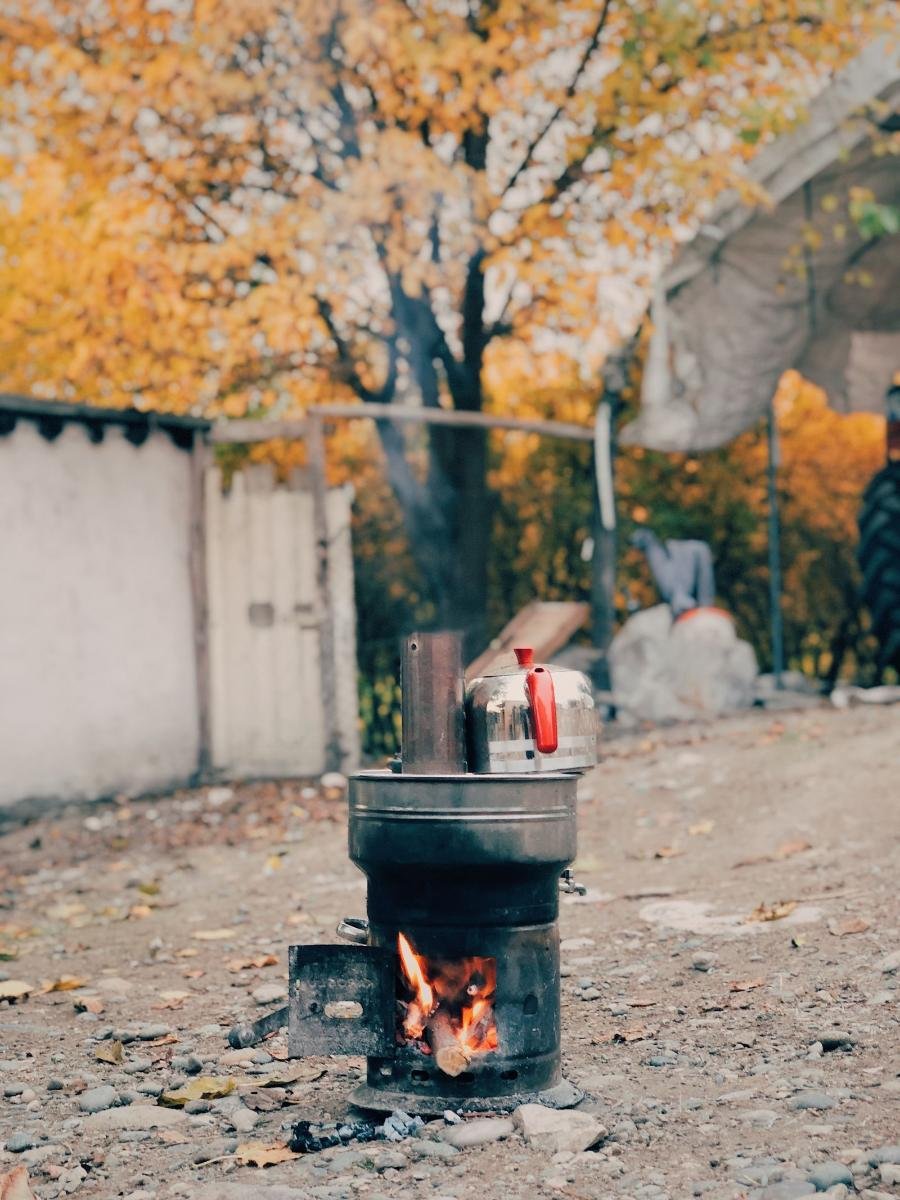
A camp stove offers more control than an open fire, but the basic recipe stays the same.
- Add 500 ml water to the pot.
- Heat until very hot and close to a simmer.
- Add 30 g coarse-ground coffee.
- Stir gently once.
- Brew for approximately 4 minutes.
- Remove the pot from the burner.
- Let the grounds settle for 1–2 minutes.
- Pour slowly into your cup.
Because the heat is easier to control, a camp stove can make it simpler to avoid aggressive boiling. However, there is no need to chase an exact temperature while camping. A practical brewing routine is more useful than constantly checking a thermometer.
What Can Go Wrong With Cowboy Coffee?
Cowboy coffee is forgiving, but a few common problems can make the cup less enjoyable. For more general troubleshooting, see bitter vs. sour coffee and common coffee brewing mistakes.
Gritty Coffee
Possible causes are a grind that is too fine, a pot that was disturbed before pouring, coffee poured too quickly, or the final grounds-heavy portion ending up in the cup. What to try:
- Use a coarser grind.
- Let the pot sit longer after brewing.
- Pour more slowly.
- Leave the last small amount of liquid behind.
A little sediment is normal with this method. The goal is to minimize it, not necessarily eliminate every particle.
Bitter Coffee
Possible causes are brewing for too long, a very fine grind, excessive heat, or repeated boiling. What to try:
- Reduce the brewing time slightly.
- Use a coarser grind.
- Keep the pot away from aggressive heat.
- Avoid repeatedly boiling the coffee.
If the coffee is already very dark roasted, it may naturally have a stronger roasted character. Brewing adjustments can change the extraction, but they will not completely change the character of the beans.
Weak Coffee
Possible causes are too little coffee, too much water, a grind that is too coarse, or a brewing time that is too short. What to try:
- Increase the coffee slightly.
- Reduce the amount of water.
- Make sure the grounds are coarse rather than extremely large.
- Give the coffee enough contact time.
Start by changing one variable rather than changing everything at once.
Burnt or Harsh Coffee
Possible causes are a pot sitting directly over very intense flames, coffee repeatedly boiling, or excessive brewing heat. What to try:
- Move the pot farther from the hottest part of the fire.
- Use indirect heat where possible.
- Remove the pot once the brewing stage is complete.
- Avoid placing the finished coffee back over the fire.
Coffee does not need to be kept boiling to stay hot.
Cowboy Coffee When You Only Have a Pot and a Cup
Sometimes camping means working with whatever is already in the pack. If all you have is one pot and one cup, you can still make a reasonable cup of cowboy coffee using 250 ml water and 15 g coarse-ground coffee.
- Heat the water in the pot.
- Remove the pot from the strongest heat.
- Add the coffee and stir gently once.
- Let it steep for about 4 minutes.
- Remove the pot from the heat completely.
- Let the grounds settle for another 1–2 minutes.
- Pour slowly into the cup, stopping before the final grounds-heavy liquid reaches it.
There is no need for a second container. If your cup is small, reduce the water proportionally rather than filling it completely and risking a spill. A lid can be useful during heating, but be careful when opening it, because steam and hot surfaces can cause burns. A lid is not required for brewing.
Simple Cowboy Coffee Variations
The basic method is deliberately simple, but a few small changes can make outdoor coffee more interesting.
Stronger Cowboy Coffee
For a stronger cup, try increasing the coffee from 15 g to 17–18 g per 250 ml water. Keep the brewing time similar at first rather than immediately brewing for longer.
Lighter Cowboy Coffee
For a milder cup, use around 12–13 g coffee per 250 ml water. This is often a better adjustment than dramatically shortening the brewing time.
Coffee With a Little Milk
If you have a way to safely keep milk cold during the trip, a small amount can soften the coffee’s flavor. Add it to the cup rather than the brewing pot so you can adjust each serving individually.
Sweetened Camp Coffee
Sugar can be added directly to the cup after pouring. Adding it individually is convenient when several people want different levels of sweetness.
Outdoor Safety and Leave-No-Trace Basics
Making coffee outdoors involves boiling water, hot metal, and sometimes an open flame. A simple method still deserves careful handling.
Around an Open Fire
- Follow local fire regulations and campsite rules.
- Use established fire areas where required.
- Keep loose clothing, dry vegetation, and flammable materials away from flames.
- Never leave a fire unattended.
- Make sure the fire is fully extinguished before leaving.
- Be especially careful during dry or windy conditions.
Handling Hot Water and Pots
- Use appropriate handles or heat protection when moving the pot.
- Pour slowly and keep your feet stable.
- Keep children away from the cooking area.
- Avoid placing a hot pot somewhere where it can easily be knocked over.
- Be careful of steam when opening lids.
Leave No Trace
Camping coffee should leave as little impact as possible. Do not dump coffee grounds into streams, lakes, or other natural water sources. Follow local campsite guidance for disposing of food waste and used grounds, and pack out anything that should not remain at the site.
FAQ: Cowboy Coffee Questions
Can I make cowboy coffee with finely ground coffee?
You can, but coarse coffee is much easier to work with. Fine grounds remain suspended longer and are more likely to produce a gritty cup.
How long should cowboy coffee steep?
Around 4 minutes is a useful starting point. If the coffee tastes too strong or bitter, try reducing the brewing time rather than changing several variables at once.
Do I have to boil the coffee?
No. The water should become very hot, but aggressive boiling is not necessary. Keeping the brewing heat gentle can help avoid a harsh or burnt-tasting cup.
How do I keep coffee grounds out of my cup?
Let the pot rest for 1–2 minutes after brewing, then pour slowly without disturbing the settled grounds. Stop before pouring the final grounds-heavy portion from the bottom of the pot.
Can I make cowboy coffee on a camp stove?
Yes. A camp stove is actually convenient because the heat is easier to control. The same basic method works: heat the water, add coarse coffee, steep, settle, and pour.
Can I make cowboy coffee with only one pot and one cup?
Yes. The pot can be used for both heating and brewing, and the coffee can be poured directly into the cup after the grounds settle. You simply need to leave a small amount of grounds-heavy liquid behind.
Final Thoughts
Cowboy coffee is less about having the perfect camping setup and more about keeping the process simple. With roughly 15 g of coarse coffee per 250 ml of water, gentle heat, a few minutes of brewing, and a careful pour, a pot and cup are enough to make a satisfying outdoor coffee. Give the grounds time to settle, respect the heat source, and let the simplicity of the method work in your favor.
