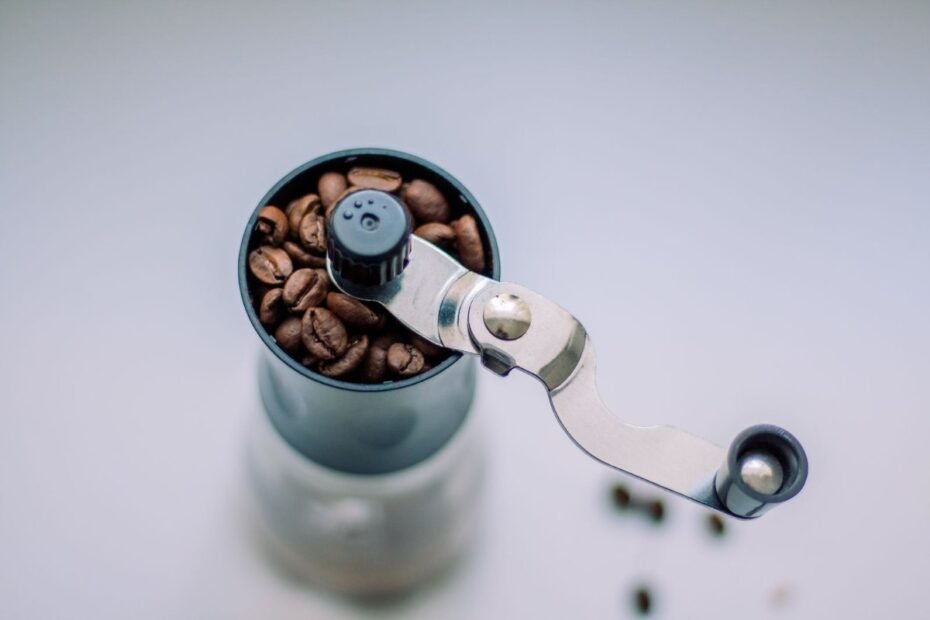
A good coffee grinder can make a bigger difference to your daily cup than many people expect. But choosing one can quickly become confusing when you start seeing terms like burrs, grind settings, manual, electric, conical, and flat.
The good news is that you don’t need the most expensive grinder to make better coffee at home. You mainly need to understand what type of grinder suits your brewing method, how much coffee you normally make, and which features are actually useful for your routine.
Why Does a Coffee Grinder Matter?
Grinding coffee is more than simply turning whole beans into smaller pieces. The size and consistency of those pieces affect how water moves through the coffee and how much flavor is extracted during brewing. When coffee is ground too fine or too coarse for a particular brewing method, the resulting cup may taste unbalanced. If you want to see this in action, our guide to why coffee grind size matters goes into more detail.
Freshly ground coffee vs. pre-ground coffee
Coffee begins changing after it is ground because more of its surface area is exposed to air. That’s one reason many home coffee drinkers prefer grinding their beans shortly before brewing.
Grinding at home gives you two practical advantages:
- You can grind only the amount you need.
- You can change the grind size depending on your brewing method.
You don’t have to buy an expensive grinder to enjoy this benefit. Even a simple manual burr grinder can be a useful step up from buying coffee already ground.
Grind size affects different brewing methods
Each brewing method works best with its own grind range, from coarse for French press to fine for espresso. When you shop, the key question is whether a grinder can reach and repeat the grinds for the methods you actually use. Our coffee grind size chart lists a starting point for each method.
Burr Grinders vs. Blade Grinders
One of the first decisions you’ll encounter is whether to buy a burr grinder or a blade grinder. The two work quite differently.
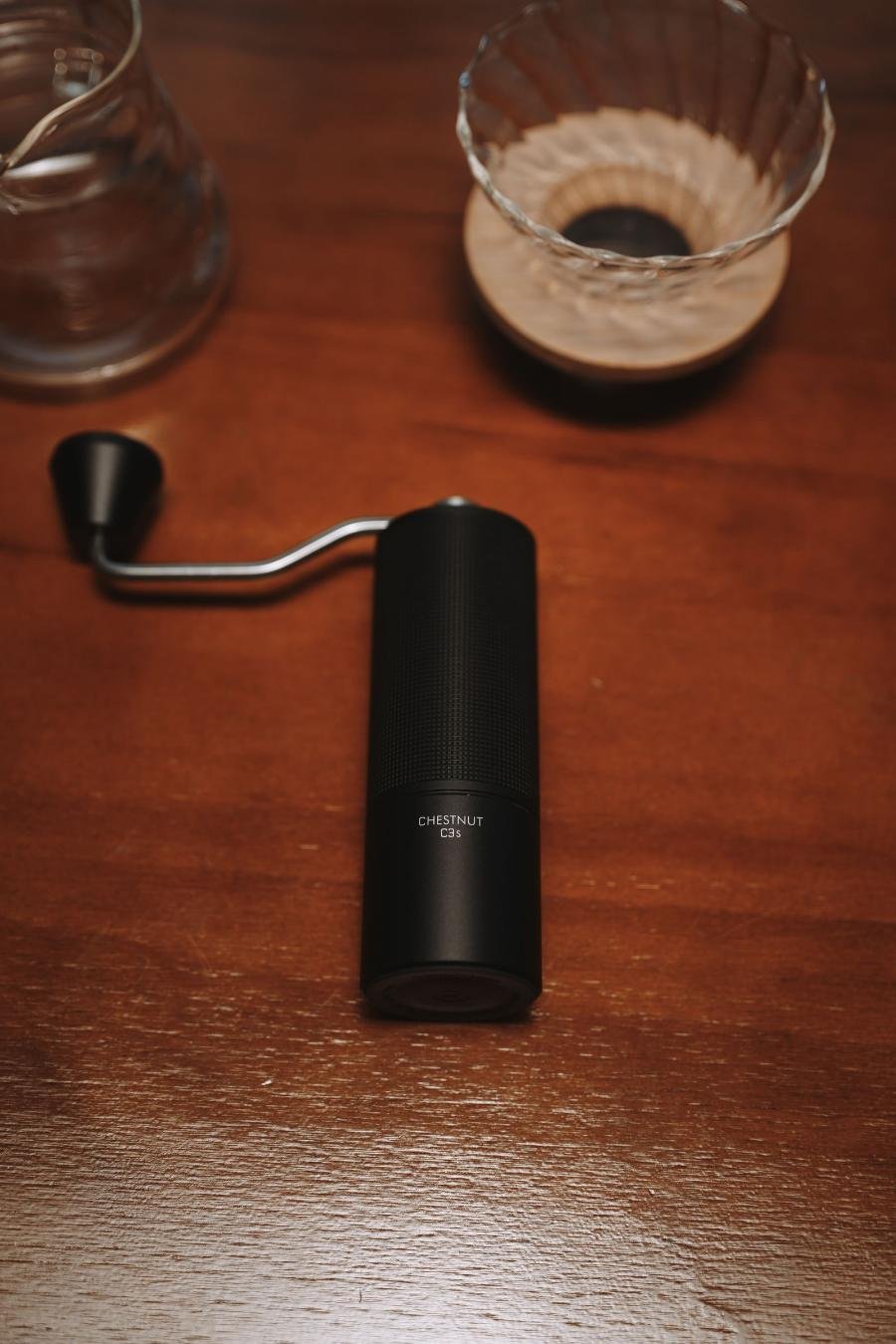
In short, a blade grinder chops the beans with a spinning blade, which leaves a mix of very fine particles and larger pieces, while a burr grinder crushes them between two burrs set a chosen distance apart, which gives a more even grind you can adjust. Blade grinders are compact and inexpensive; burr grinders cost more but make it much easier to repeat a recipe or fine-tune the cup. For a detailed explanation of how each one works and why grind consistency matters, see burr vs. blade grinders.
Which one should you choose?
If you’re serious about improving your coffee and have the budget for it, a burr grinder is usually the better long-term choice. A blade grinder can still be perfectly adequate for someone who mainly wants convenience and isn’t interested in adjusting recipes.
The important thing is to match the grinder to your expectations rather than assuming that every coffee drinker needs expensive equipment.
Manual vs. Electric Coffee Grinders
Once you’ve decided to look at burr grinders, the next question is whether you want a manual or electric model. Both can work well at home.
Manual grinders
A manual grinder uses a hand crank to grind the beans.
Advantages
- Usually quieter
- Doesn’t require electricity
- Often compact
- Easy to store
- Can offer good grind control at a relatively modest price
Disadvantages
- Requires physical effort
- Takes longer when preparing larger amounts
- May become inconvenient if you make several cups every day
Manual grinders can be particularly appealing if you usually prepare one or two cups at a time. They’re also convenient for people who want a simple setup without adding another appliance to the kitchen counter.
Electric grinders
Electric grinders do the work with a motor.
Advantages
- Faster
- Convenient for larger quantities
- Easier for daily use
- Useful when making coffee for several people
Disadvantages
- Usually more expensive
- Can be noisier
- Takes up more counter or storage space
- Some inexpensive models offer limited grind control
If you regularly make several cups in the morning, an electric grinder may be worth the extra convenience.
A simple way to decide
Think about your normal routine.
Choose a manual grinder if:
- You usually make one or two cups.
- You don’t mind turning a handle.
- You want something compact.
- Quiet operation matters to you.
- You want to keep the setup simple.
Consider an electric grinder if:
- You make coffee for several people.
- You grind larger amounts regularly.
- Speed is important.
- You don’t mind keeping another appliance on the counter.
What Features Should You Look For?
Once you’ve narrowed down the type of grinder, the specifications can still feel overwhelming. Fortunately, you don’t need to prioritize every feature equally.
Grind-size adjustment
This is one of the most useful features to pay attention to. A grinder with adjustable settings lets you move between different grind sizes for different brewing methods.
If you only use one brewing method, you may not need dozens of settings. But having enough adjustment to make small changes can be helpful when you’re trying to improve a recipe.
Burr material
You may see grinders with different burr materials, including stainless steel and ceramic. Both can be used successfully for home coffee. Rather than choosing a grinder solely because of the burr material, consider the entire grinder:
- Grind consistency
- Adjustment system
- Build quality
- Ease of cleaning
- Replacement parts
- Price
- Manufacturer support
The burr material is only one part of the overall design.
Grind consistency
Consistency is more useful than simply having a huge number of grind settings. Imagine a grinder with 50 advertised settings, but each setting produces a very uneven mixture of particle sizes. The number 50 doesn’t automatically make it better.
A grinder that gives you reliable results at the settings you actually use can be much more useful.
Capacity
Consider how much coffee you normally prepare. If you make one cup at a time, you don’t necessarily need a large hopper or grinding chamber. If you’re regularly making coffee for a family, a larger capacity may make your morning routine easier.
Ease of cleaning
Coffee grinders collect small particles and oils over time. A grinder that’s easy to open and clean is much more likely to receive regular maintenance. Our guide on how to clean your coffee maker and grinder covers the basics.
Look for a design that gives you reasonable access to the grinding area without requiring a complicated disassembly every time you want to remove old grounds.
Noise
If you live with other people or make coffee early in the morning, noise can matter more than you might expect. Manual grinders are generally quieter, while electric grinders vary considerably depending on their motor and construction.
If noise is important to you, consider it alongside the other features rather than treating it as an afterthought.
How to Choose a Grinder for Your Brewing Method
Your preferred brewing method should have a major influence on your decision.
For French press
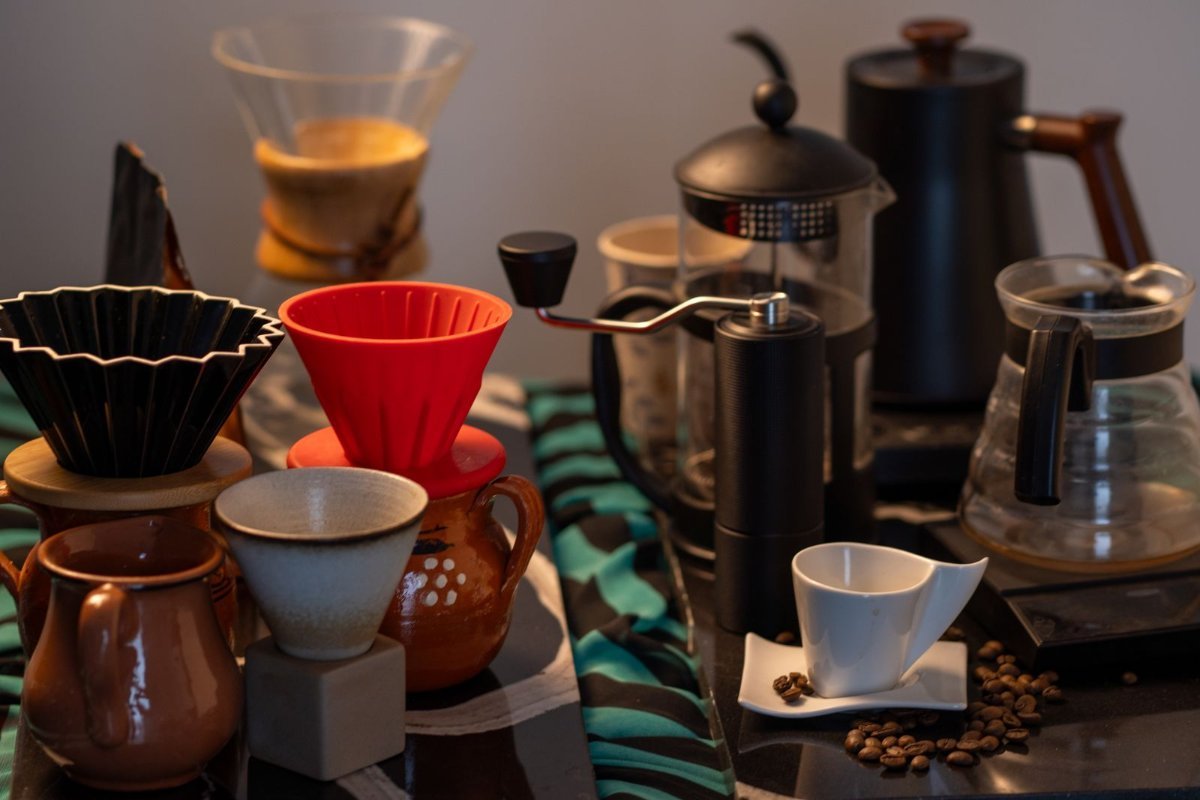
Look for a grinder that can produce a reliable coarse grind. You don’t necessarily need a grinder designed specifically for French press. What matters is being able to achieve the grind size you need without excessive inconsistency. If that’s your main method, our French press beginner’s guide shows what the coarse grind is for.
For pour-over
Pour-over brewing benefits from being able to make relatively precise grind adjustments. If you regularly use a V60 or another pour-over brewer, having enough control to make small changes can be particularly useful.
For espresso
Espresso requires a much finer grind and usually benefits from a grinder with more precise adjustment. If espresso is your main goal, don’t buy a grinder based only on how well it handles coarse settings for French press or drip coffee.
Check that the grinder is specifically capable of producing and adjusting fine espresso grinds.
If you use several brewing methods
This is where grinder versatility becomes especially valuable. If you switch between French press, pour-over, moka pot, and espresso, look for a grinder that covers the range of grind sizes you actually need.
However, be realistic about your setup. A grinder that is excellent for filter coffee isn’t automatically the best choice for espresso simply because the manufacturer lists both on the box.
Common Coffee Grinder Buying Mistakes
A little research before buying can save you from paying for features you won’t use.
Buying based only on price
The most expensive grinder isn’t automatically the right grinder for you. Think about your brewing method, how often you make coffee, and how much control you actually need.
Choosing a grinder with too few useful settings
A very basic grinder may work well if you only brew one way. But if you switch between methods, limited adjustment can quickly become frustrating.
Ignoring cleaning and maintenance
A grinder that is difficult to clean may become less pleasant to use over time. Before buying, check how the burrs and grinding area are accessed and whether replacement parts are available.
Buying an espresso grinder for simple filter coffee
If you only make French press or pour-over, you don’t necessarily need to spend extra money on espresso-specific features. Buy for the coffee you actually drink rather than the coffee setup you imagine having someday.
Focusing too much on the number of settings
More settings can be useful, but the number itself doesn’t tell you how good the grinder is. Consistency, adjustment control, usability, and reliability are often more meaningful.
Coffee Grinder FAQ
How much should I spend on a coffee grinder?
There isn’t one correct budget. Spend according to how often you brew and how much control you want; a simple burr grinder can be a sensible starting point without jumping immediately into expensive equipment.
Do I need an electric grinder for home coffee?
No. A manual grinder can work very well, particularly if you usually make one or two cups. Electric grinders become more attractive when speed and larger quantities matter.
Can one grinder work for French press and espresso?
Some grinders can cover both ranges, but espresso requires much finer and more precise adjustment. If espresso is your main brewing method, choose a grinder designed to handle that level of control.
How often should I clean my coffee grinder?
It depends on how often you use it and the type of coffee you grind. A basic cleaning every so often and more thorough maintenance when you notice accumulated grounds or changes in performance is a practical approach.
Should I buy a grinder with many grind settings?
Not necessarily. The important thing is having useful, repeatable adjustment for the brewing methods you use rather than simply having the highest number of settings.
Final Thoughts
Choosing a coffee grinder doesn’t have to turn into a hunt for the most expensive equipment. Start with your brewing method, decide whether manual or electric makes more sense for your routine, and prioritize consistent grinding, useful adjustment, and easy maintenance. Once you have a grinder that fits the way you actually make coffee, learning to adjust the grind can be much more rewarding than constantly buying new equipment.
