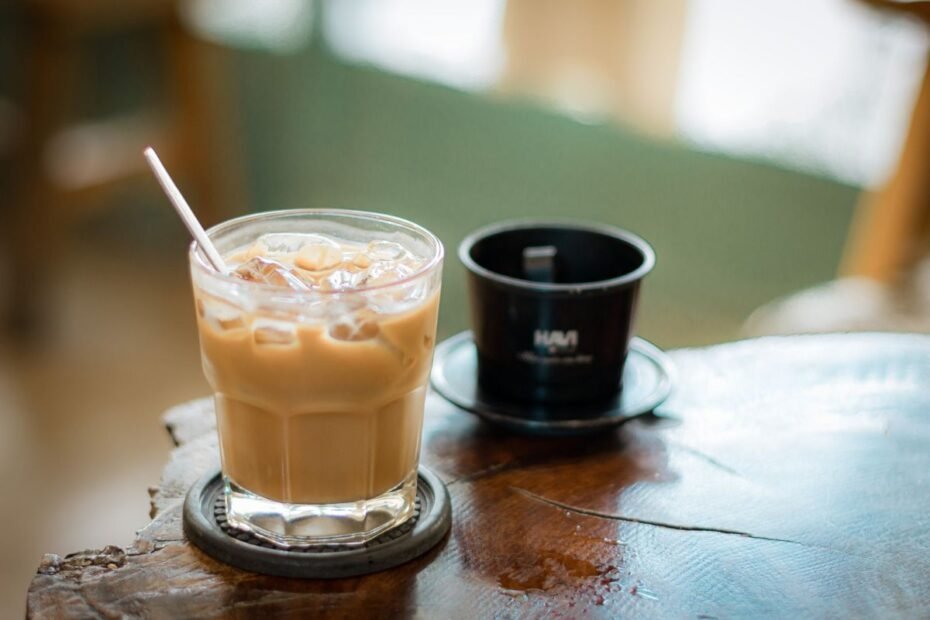
Vietnamese iced coffee, known as Ca Phe Sua Da, is one of those drinks that doesn’t need a long ingredient list to have a lot of character. Strong brewed coffee, sweetened condensed milk, and plenty of ice come together to make a rich, sweet, refreshing drink. The traditional preparation uses a small Vietnamese phin filter, but you can adapt the recipe if you don’t have one. The key is brewing coffee that’s concentrated enough to hold its flavor against the condensed milk and melting ice.
What Is Ca Phe Sua Da?
Ca Phe Sua Da translates roughly to Vietnamese iced coffee with milk. In practice, the “milk” is usually sweetened condensed milk, which gives the drink its distinctive sweetness, creamy texture, and caramel-like flavor.
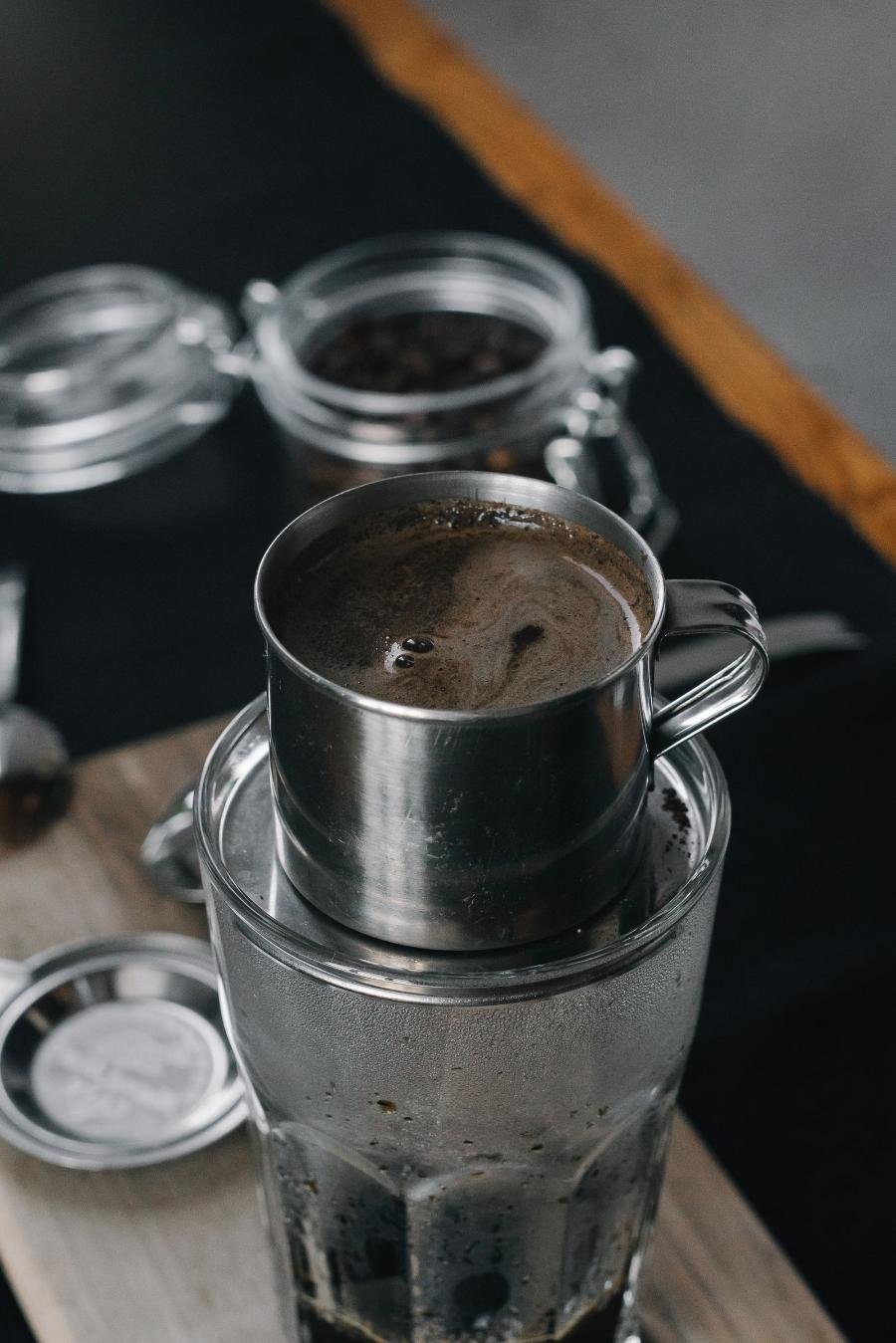
The coffee is traditionally brewed slowly through a phin, a small metal Vietnamese coffee filter that sits directly on top of a glass or cup. The brewed coffee drips onto the condensed milk, and the mixture is then stirred and poured over ice.
Vietnamese coffee is often associated with robusta beans, which can produce a strong, earthy, full-bodied cup. That’s useful in this recipe because the coffee needs enough intensity to remain noticeable after you add condensed milk and ice. You don’t need to use exactly the same coffee every time, though. If you’re starting at home, choose a dark or medium-dark roast with a strong flavor and adjust the amount of condensed milk to suit your taste.
What makes Vietnamese iced coffee different?
There are three things that give this drink its familiar character:
- Strong brewed coffee for a concentrated base
- Sweetened condensed milk for sweetness and creaminess
- Ice to cool and dilute the drink
The balance between these ingredients matters. Too much condensed milk can cover the coffee completely, while weak coffee can disappear once the ice melts.
Ingredients for Vietnamese Iced Coffee
This recipe makes 1 serving.
For the coffee
- 20–25 g Vietnamese-style coffee or another strong coffee
- 120–150 g hot water
- Water at approximately 90–96°C
- 30–40 g sweetened condensed milk
- A full glass of ice
A traditional phin can vary in size, so treat these quantities as a starting point rather than a rigid formula. If your filter is smaller, use the amount of coffee recommended for that particular phin.
For the most recognizable flavor, a Vietnamese-style robusta blend works particularly well. However, a strong dark roast can also produce a satisfying drink if that’s what you already have at home. The condensed milk is where you have the most room to adjust. Start around 30 g if you prefer a stronger coffee flavor, then increase toward 40 g if you like the drink noticeably sweeter and creamier.
What equipment do you need?
The traditional setup is simple:
- 1 Vietnamese phin filter
- 1 heatproof glass or cup
- A spoon
- A kettle
- A kitchen scale, if available
- A separate glass filled with ice
A scale isn’t essential, but it makes the recipe much easier to repeat. Once you find a coffee-to-water and condensed-milk ratio you enjoy, you can make the same drink more consistently.
How to Make Ca Phe Sua Da Step by Step
The phin method is slower than using a standard drip brewer, but that’s part of the experience. You don’t need to rush the brewing process.
1. Add the condensed milk
Place 30–40 g of sweetened condensed milk in the bottom of your serving glass. Using a clear glass makes it easy to see the coffee collect above the condensed milk, although any heatproof cup will work.
2. Prepare the coffee
Add 20–25 g of ground coffee to the phin filter. The grind should generally be medium-fine: finer than a typical drip grind but not as fine as espresso. If the grounds are too fine, water may take too long to pass through the filter. If they’re too coarse, the coffee can run through quickly and taste weak.
Gently shake the phin or tap it lightly to level the grounds.
3. Add a small amount of hot water
Place the phin on top of the glass and add about 20–30 g of hot water to wet the coffee grounds. Wait approximately 20–30 seconds. This short pre-infusion gives the grounds time to absorb water before the main brewing stage. There’s no need to press aggressively on the coffee. The goal is simply to wet the grounds evenly.
4. Add the remaining water
Pour the remaining hot water into the phin until you reach your intended brewing amount, around 120–150 g total water for this recipe. Put the lid on and allow the coffee to drip naturally.
A phin brew can take several minutes. The exact timing depends on the filter, grind size, coffee, and how tightly the internal filter presses against the grounds.
5. Let the coffee finish dripping
Don’t stir the coffee while it’s dripping. Let the phin do its job. A steady but relatively slow drip is what you’re looking for.
If the coffee races through the filter in a very short time, your grind may be too coarse or the coffee bed may not be providing enough resistance. If almost nothing comes through for a long period, the grind may be too fine or the internal filter may be pressing too firmly.
6. Stir the coffee and condensed milk
Once the brewing is finished, remove the phin and stir the hot coffee and condensed milk thoroughly. Keep stirring until the condensed milk has completely blended into the coffee. At this point, the mixture will be very strong and sweet, but the ice will dilute it and bring everything together.
7. Pour over plenty of ice
Fill a separate serving glass generously with ice. Pour the coffee and condensed milk mixture over the ice. Give it another gentle stir and taste it.
If the drink is too sweet, use a little less condensed milk next time. If it’s too strong, a few additional ice cubes or a small splash of cold water can soften it.

How to Get Better Results With a Phin
The phin is a simple brewer, but small changes can noticeably affect the finished drink. Once you’ve made the basic recipe a few times, you can start adjusting individual variables instead of changing everything at once.
If the coffee tastes weak
Try one of these changes:
- Use a slightly finer grind.
- Increase the coffee from 20 g to 25 g.
- Reduce the amount of brewing water.
- Make sure the coffee isn’t dripping unusually quickly.
The easiest adjustment is usually changing the coffee amount while keeping everything else the same. That makes it easier to understand what changed.
If the coffee tastes bitter or harsh
A very dark roast combined with a slow extraction can produce a particularly intense cup. Try using a slightly coarser grind or reducing the brewing time. You can also experiment with water closer to 90–92°C rather than using water near the top of the suggested temperature range.
The ideal balance is partly a matter of taste. Vietnamese iced coffee is meant to be bold, so some intensity is expected.
If the drink is too sweet
Reduce the condensed milk. Instead of starting with 40 g, try 25–30 g and increase it gradually if needed. You can also brew a slightly stronger coffee so the sweetness doesn’t dominate the drink. It’s easier to add sweetness than to remove it, so starting conservatively is useful.
Can You Make Vietnamese Iced Coffee Without a Phin?
Yes. A phin is traditional, but you can still make a good version using equipment you already have. The important part is creating a strong, concentrated coffee rather than simply making a normal cup of drip coffee and pouring it over ice.
Using a drip coffee maker
Brew a smaller amount of water with a little more coffee than you normally would. For example, you could start with 25 g of coffee and around 200–250 g of water, depending on your machine and how concentrated you want the result. Stir the hot coffee with 30–40 g of condensed milk, then pour it over plenty of ice.
Using a French press
Use a relatively strong coffee-to-water ratio and steep for around 4 minutes before pressing. You can start with 25 g of coffee and 250 g of water, then adjust from there. The resulting coffee won’t taste exactly like a phin brew, but it can still work very well with condensed milk and ice. If you need a refresher on the method, our French press guide covers it step by step.
Using an AeroPress
An AeroPress is another convenient option when you want a concentrated coffee base. Try 18–20 g of coffee with around 100–120 g of hot water, then adjust the grind, temperature, and strength to taste. The AeroPress beginner recipe explains the basic technique.
The goal isn’t to perfectly reproduce a phin. You’re looking for a concentrated coffee that can stand up to the condensed milk and ice.
Common Mistakes to Avoid
Vietnamese iced coffee is forgiving, but a few mistakes can throw off the balance.
Using regular milk instead of condensed milk
Regular milk won’t give you the same sweetness or texture. If you want the traditional style, sweetened condensed milk is the important ingredient. You can certainly make other iced coffee drinks with regular milk, but they won’t be the same Ca Phe Sua Da.
Brewing weak coffee
This is probably the easiest way to end up with a disappointing result. Once you add condensed milk and a large amount of ice, weak coffee becomes even more diluted. Start with a concentrated brew and adjust from there.
Using too little ice
It might seem strange to add a lot of ice to a strong coffee, but the ice is part of the drink. It cools the coffee quickly and gradually dilutes its intensity. A nearly full glass of ice usually works better than a few cubes floating in the drink.
Grinding the coffee too finely
The phin needs some resistance, but that doesn’t mean the coffee should be ground like espresso. If the grounds are extremely fine, water may struggle to pass through the filter. Aim for a medium-fine starting point and adjust based on the brewing speed.
Frequently Asked Questions
What coffee should I use for Ca Phe Sua Da?
Vietnamese robusta or robusta-based blends are traditional choices and work particularly well because of their strong, full-bodied flavor. A dark or medium-dark roast can also work if you don’t have Vietnamese coffee.
How much condensed milk should I use?
Start with 30–40 g per serving. Use less if you prefer the coffee to be more prominent and more if you enjoy a sweeter drink.
Why is my phin coffee dripping too fast?
The grind may be too coarse, or the coffee bed may not be providing enough resistance. Try grinding slightly finer and make sure the coffee is distributed evenly before brewing.
Why is my Vietnamese coffee so bitter?
Very dark coffee, water that’s too hot, a grind that’s too fine, or an unusually long extraction can all contribute to bitterness. Change one variable at a time so you can see which adjustment improves the cup.
Can I make Ca Phe Sua Da with instant coffee?
You can make a quick drink using strong instant coffee, but it won’t have the same flavor as coffee brewed through a phin. If you want the traditional character, freshly ground coffee brewed with a phin is the better starting point.
Can I prepare the coffee ahead of time?
You can brew the coffee ahead and refrigerate it, but freshly brewed coffee usually gives the drink a more pronounced aroma. If preparing ahead, cool it promptly and keep it refrigerated in a covered container.
Final Thoughts
Ca Phe Sua Da is a great example of how a few simple ingredients can create a coffee with a very distinctive personality. The combination of strong coffee, sweetened condensed milk, and ice is what makes the drink work, and the phin gives you a simple way to brew that concentrated base at home. Once you’ve tried the basic recipe, adjust the coffee strength and condensed milk until you find the balance you enjoy.
