
A cortado is a small coffee drink made by combining espresso with a relatively small amount of warm milk. The milk softens the intensity of the coffee without turning the drink into a large, milk-heavy beverage, which makes it a simple option for anyone who enjoys a strong coffee with a smoother texture. The exact definition varies from one café to another, but the basic idea is the same: espresso, a little warm milk, and roughly equal parts of each. You can recreate that balance at home with an espresso machine, or with strong coffee made another way.
What Is a Cortado?
The word cortado comes from Spanish and is commonly linked to coffee that has been cut with milk. In practice, it is a small drink where espresso meets a modest amount of warm milk, usually in roughly equal volumes. If you are new to espresso drinks, our guide to coffee drinks explained shows where it sits among the others.
A Simple Cortado Formula
For one serving, start with 40 to 60 ml of double espresso and 40 to 60 ml of warm milk, plus a small amount of syrup or sweetener if you like. That gives you a small drink rather than a large mug. The proportions do not need to be exact, because different cafés use different sizes and ratios. The goal is to keep the character of a small, coffee-forward drink with just enough milk to soften the espresso.
How It Differs From Other Milk Coffees
Cortado, flat white, macchiato, and latte can overlap depending on the café, and the names do not guarantee identical recipes everywhere. The table below is only a general guide. For more detail on one of the closest neighbors, see how to make a flat white at home.
| Drink | Milk | Typical character |
|---|---|---|
| Cortado | Small, roughly equal to the coffee | Small, balanced, coffee-forward |
| Flat white | More milk, usually finely textured | Smooth and creamy |
| Macchiato | A small amount of milk or foam | More espresso-forward |
| Latte | A larger amount of milk | Larger and milkier |
A cortado is generally smaller than a latte and contains less milk. Compared with a macchiato, it usually has enough milk to noticeably change the texture and intensity of the drink.
Ingredients and Equipment
A cortado needs very little: 40 to 60 ml of double espresso, 40 to 60 ml of milk, and optionally a small splash of syrup. For the closest traditional result, use freshly made espresso. If you do not have an espresso machine, 40 to 60 ml of strong coffee from a moka pot or an AeroPress can work as a home substitute. It will not be identical, but it keeps the idea of a small, concentrated coffee. New to espresso itself? Start with espresso at home for beginners.
What About the Milk?
The milk should be warm and lightly textured rather than heavily foamed. You are aiming for a smooth texture that blends with the coffee, and a thick cap of foam is not needed. Dairy milk, plant-based milk, or another milk alternative that heats and froths well can all be used. Different milks behave differently when heated, so the texture varies, and the choice is partly a matter of preference.
How to Make a Cortado at Home
Safety first: hot coffee, heated milk, steam, and hot containers can cause burns. Heat milk gently, keep your face and hands away from escaping steam, and handle hot containers with care. The process is simple, but milk temperature and texture make a noticeable difference.
1. Prepare the Coffee
Prepare about 40 to 60 ml of double espresso. If you are using a moka pot or AeroPress, make a small amount of concentrated coffee, so you do not end up with a large cup of diluted coffee. With espresso, serve soon after extraction so the drink can be assembled while the coffee is still hot.
2. Warm the Milk
Measure about 40 to 60 ml of milk. With a steam wand, introduce a small amount of air while heating, then continue until the milk is smooth and warm. Without one, pour the milk into a small saucepan and warm it gently, stirring now and then. It should become hot and pleasant to drink, but it does not need to boil. If you have a kitchen thermometer, around 55 to 65 °C is a useful target. Without one, look for hot milk with light steam rather than vigorous bubbling.
3. Lightly Froth the Milk
You do not need a professional steam wand for a suitable texture. After warming the milk, try one of these simple methods:
- Small whisk: whisk the milk gently for a few seconds to create a light layer of fine foam.
- Hand frother: use it briefly, and stop before the milk becomes very foamy.
Avoid shaking hot milk in a sealed jar, because steam pressure can force the lid off. The aim is lightly textured milk, not a thick mound of foam.
4. Combine the Coffee and Milk
Pour the warm milk slowly into the espresso, starting from about 40 to 60 ml of each. The milk should blend with the coffee rather than sit on top as a separate layer. If you made a little foam, let some smooth milk go in first and spoon the remaining light foam on last.
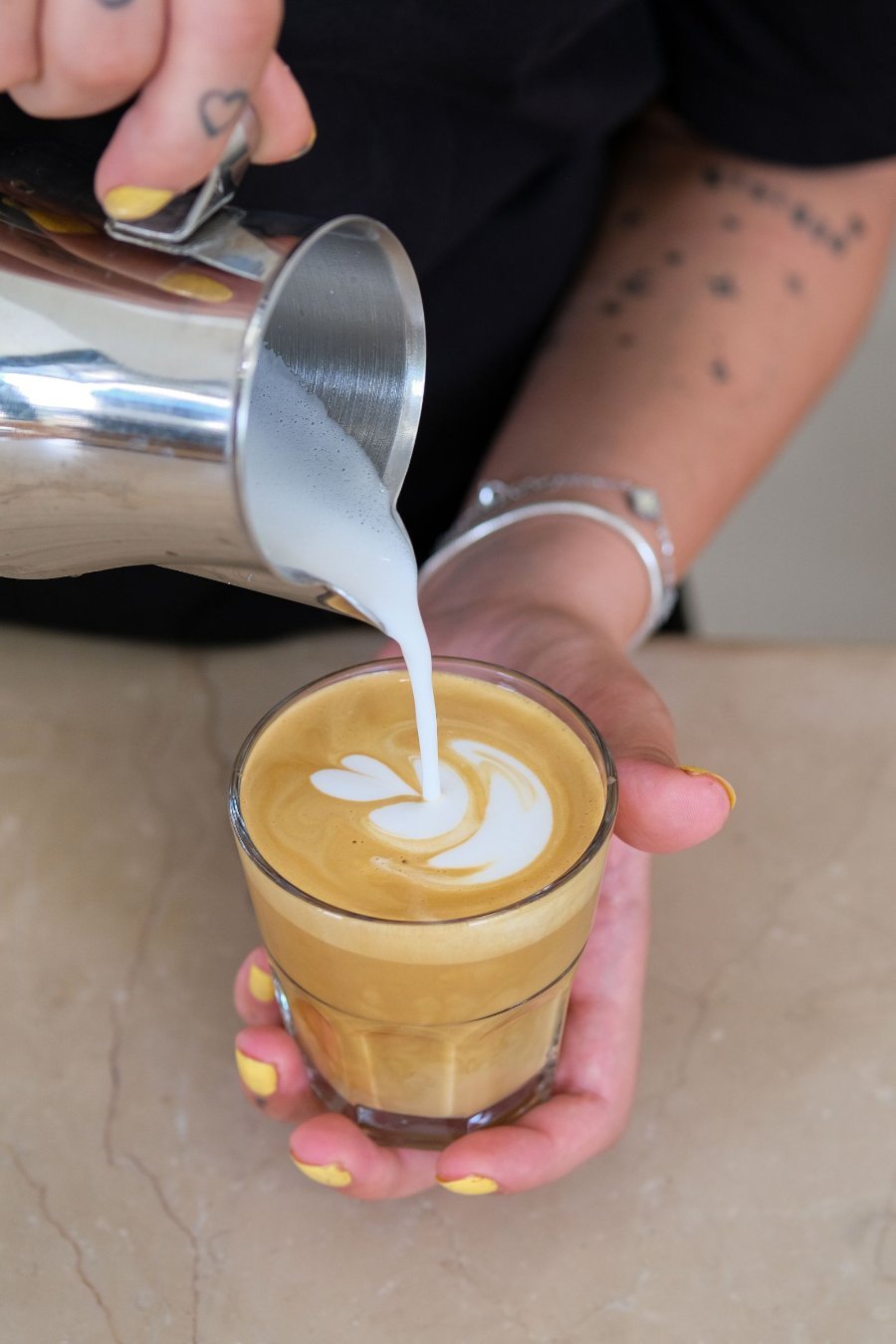
5. Serve Immediately
A cortado is small enough to cool quickly, so serve it right away in a small heat-resistant glass or cup. The compact size helps keep the coffee-to-milk balance. If you add syrup, start with a small amount, because too much can easily cover the coffee. Our guide to making coffee syrups at home shows a few simple options.
Getting the Milk Texture Right
Milk texture is one of the easiest parts of a cortado to overdo. Very hot milk can make the drink unpleasantly hot and change its texture, so gentle heating is easier to control. Aim for smooth milk with fine, small bubbles and just enough texture to give the drink a soft mouthfeel. If the milk looks like the thick foam used for some cappuccinos, there is probably more air in it than necessary. There is room for preference here, and a slightly foamier cortado is not wrong, since café recipes vary.

Variations to Try
Once the basic recipe feels comfortable, a few small changes give you different versions without changing the structure. For a slightly sweet cortado, add a small splash of your preferred syrup before combining the milk and coffee, keeping the amount modest so the coffee stays noticeable. For a plant-based version, substitute a plant-based milk for dairy, knowing that texture and foam differ considerably between options and may need a little adjustment. For a stronger coffee presence, stay closer to 40 ml of milk, and for a softer drink move toward 60 ml.
Troubleshooting Your Cortado
If the first attempt does not taste quite right, change one variable at a time.
- Tastes too strong: increase the milk from 40 ml toward 50 to 60 ml, and check whether the coffee itself is unusually concentrated.
- Tastes too milky: reduce the milk or increase the coffee slightly. The drink should still be small and coffee-forward.
- Milk feels heavy: there may be too much foam or the bubbles may be too large. Add less air and whisk or froth for a shorter time.
- Drink is too hot: the milk was probably heated too aggressively. Use gentler heat and stop before it begins bubbling.
- Coffee and milk do not blend: pour the milk slowly instead of dropping a large amount of foam on top. A smoother milk texture helps the two combine.
- Coffee flavor gets lost: a large amount of weak brewed coffee loses the concentrated character of a cortado. If you are not using espresso, keep the serving small and the coffee strong.
- Too sweet: if you add syrup, start with a small splash and adjust to taste.
Serving Tips for a Better Home Cortado
Use a small cup or glass instead of a large mug, prepare the milk while the coffee is being made, keep the milk lightly textured, and serve shortly after combining. Start with equal amounts of coffee and milk and adjust to taste. The ideal balance is subjective: some people enjoy a more pronounced espresso flavor, while others prefer a little more milk. If you want a milkier version without an espresso machine, try our latte without an espresso machine.
FAQ: Cortado at Home
Is a cortado the same as a flat white?
Not exactly, although the drinks can overlap. A cortado is generally smaller and uses a relatively small amount of milk, while a flat white is often served with more finely textured milk. Café definitions vary.
Can I make a cortado without an espresso machine?
Yes. A small amount of strong coffee made with a moka pot or AeroPress can be used as a substitute. The flavor and texture will differ from espresso, but the coffee-to-milk idea stays similar.
Should cortado milk be foamy?
Only lightly. The goal is generally smooth, warm milk with fine texture rather than a thick layer of foam.
What size glass should I use for a cortado?
A small heat-resistant glass or cup works well. Because the drink is usually roughly equal parts coffee and milk, a large mug can make the proportions feel wrong.
Can I add flavored syrup to a cortado?
Yes. A small splash makes a sweeter variation, although it is best kept modest so the coffee remains noticeable.
Can I use plant-based milk?
Yes. Plant-based milks can be used, although their heating and frothing behavior varies, so the final texture may differ from one milk to another.
Final Thoughts
A cortado is one of the simpler milk-and-coffee drinks to recreate at home. Start with a small, concentrated coffee, add roughly the same amount of warm, lightly textured milk, and serve it immediately. Once the basic balance feels right, small adjustments to the milk, coffee strength, or sweetness let you make it fit your own taste without losing its compact, coffee-forward character.
